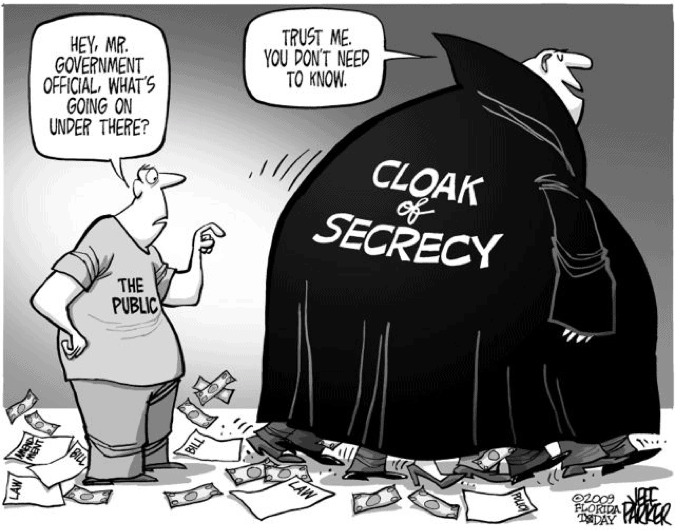
Blast from the Past: Hazardous Fuels Program Accountability

Thanks to Matthew for posting the NBC report.. I’ve posted some things here and here about this issue. The article states correctly that this push has been going on for some years.. I went back to some docs from the past and was surprised how much the discussion resembles that of the present day. Maybe there should have been some bucks for revising accountability measures in the IRA? I think using the scenario planning prioritization was an effort to address some of the concerns. Perhaps there are others? Budget structure? Of course the FS may be too busy responding to the many zillion other things it’s supposed to do, with employees retiring and difficulties hiring..

Guess which year this was written by whom? First correct answer gets.. to write a TSW post on their topic of choice.

Accountability Must Now Become A Priority

With the Congress and the administration now prepared to double or triple the Forest Service’s and Interior’s funding for reducing hazardous fuels and with up to five times the current fiscal year’s appropriation already available from within the Forest Service’s existing budget for these activities and related research, we believe that the Forest Service and Interior must act quickly to develop a framework to spend effectively and to account accurately for what they accomplish with the funds.
For example, according to the Forest Service, priority for treatments to reduce hazardous fuels should be given to areas where the risk of catastrophic wildfires is the greatest to communities, watersheds, ecosystems, or species. However, currently neither the Forest Service nor Interior knows how many communities, watersheds, ecosystems, and species are at high risk of catastrophic wildfire, where they are located, or what it will cost to lower this risk. Therefore, they cannot prioritize them for treatment or inform the Congress about how many will remain at high risk after the appropriated funds are expended. According to the report on managing the impact of wildfires released by the administration last Friday, regional and local interagency teams will be
assigned the responsibility for identifying communities that are most at risk.

Moreover, rather than allocating funds to the highest-risk areas, the Forest Service allocates funds for hazardous fuels reduction to its field offices on the basis of the number of acres treated. Thus, the agency’s field offices have an incentive to focus on the easiest and least costly areas, rather than on those that present the highest risks but are often costlier to treat, including especially the wildland-urban interfaces. Similarly, both the Forest Service and Interior use the number of acres treated to measure and report to the Congress their progress in reducing the threat of catastrophic wildfires. For instance, they report that they have increased the number of acres treated to reduce hazardous fuels from fewer than 500,000 acres in fiscal year xxx to more than 2.4 million acres in fiscal year xxxx. However, they cannot identify how many of these acres are within areas at high risk of long-term damage from wildfire.

The Forest Service and Interior note that reducing the threat to communities, watersheds, ecosystems, and species can often take years and that annual measures of progress must, therefore, focus on actions taken. We agree, but believe that they must be able to show the Congress and the American public that these actions, such as the number of acres treated, occur within the highest-priority areas. Furthermore, over time, they should be able to show reductions in areas at high risk of long-term damage from wildfire.

Finally, although we have not examined this issue as thoroughly at Interior, our work to date at the Forest Service has shown that, over time, the link between how the Congress appropriates funds and how the agency spends them has weakened as the Forest Service’s field offices have been required to address issues and problems—such as hazardous fuels reduction—that are not aligned with its budget and organizational structures. Forest Service field offices must now combine projects and activities from multiple programs and funding from multiple sources to accomplish goals and objectives related to reducing hazardous fuels. We have observed that the agency could better ensure that the up to $325 million a year that may already be available from within its existing budget to fund hazardous fuels reduction activities and research will be used for these purposes by replacing its organizational and budget structures with ones that are better linked to the way that work is routinely accomplished on the national forests. We have also observed that the Forest Service’s research division and state and private programs should be better linked to the national forests to more effectively address hazardous fuels reduction as well as other stewardship issues that do not recognize the forests’ administrative boundaries. However, according to the Forest Service, it has no plan to replace its program structure with one that is better linked to the way that work is routinely accomplished on the national forests.
FOIA in the Supreme Court

The U. S. Supreme Court has issued its decision in United States Fish and Wildlife Service. v. Sierra Club (March 4, 2021), the Freedom of Information Act case we have discussed previously.  The EPA changed its proposal for cooling water intake structures at power plants after receiving a draft biological opinion from the consulting agencies that found the proposal would jeopardize listed species.  In a 7-2 decision, the Court reversed the lower court decisions and held that a draft biological opinion on the effects of the original proposal, which was shared informally between the EPA and the consulting agencies, was exempt from disclosure under FOIA as a predecisional and deliberative document.  Specifically, “the determinative fact is not their level of polish—it is that the decisionmakers at the Services neither approved the drafts nor sent them to the EPA.”  This shows that the consulting agencies did not “treat them as final,” which is consistent with the context of the consultation regulations.

The ESA consultation process makes this case more confusing than it needs to be.  Normally, drafts circulated among members of a government team would qualify as deliberative, but here the team is comprised of multiple agencies following prescribed interagency consultation procedures.  A “draft” biological opinion is specifically identified by consultation regulations, and it must be provided by the consulting agencies if requested by the action agency.  In this case, the draft was provided by consulting agency staff without official signatures.  Without those signatures, it was not the final position of the consulting agencies, even though it had the effect of EPA changing its proposal.  With those signatures, apparently a draft biological opinion would have been “final” for the purpose of FOIA, and should have been disclosed.  (This may or may not have been the result of good lawyering, but it would be good lawyering to so advise in the future.)

The Court doesn’t dig into the other aspects of this FOIA exemption, one of which is that factual material is not deliberative and must be released, or therefore the question I raised about the need to disclose the science on which the deliberations were based. Apparently, that would happen here on a remand to determine what is “segregable” non-exempt material.  I wonder whether the scientific conclusions about the effects of the original EPA proposal are also considered deliberative because they were not yet “officially approved.”

A more typical case, which does address this question, is this new one from the D. C. District Court involving Florida Key deer and its Species Status Assessment (Sierra Club v. United States Fish and Wildlife Service, Feb. 26. 2021).

On its face, a factual scientific report, produced “independently from any” regulatory or policy decisions, see FWS Letter Describing SSA, does not qualify as deliberative…  Nothing in this description indicates that the report contains “advisory opinions, recommendations[, or] deliberations” regarding the agency process at issue.

Yet, while the privilege does not generally extend to mere factual recitations, (citation omitted) “the D.C. Circuit has cautioned against overuse of the factual/deliberative distinction.”  Such hesitation stems from the recognition that the drafter’s selection of facts can itself reveal the decisionmaking process.

This case also addresses the need for agencies to demonstrate harm to their deliberative process that would result from disclosing these records, which the Supreme Court does not address in the EPA case.  Public response to the case, including suggestions for congressional action, is discussed here.  (This article includes a picture of the the power plant at issue.)

BLM apparently leaderless


Speaking of “politicals” making decisions, here is the latest on one of them, following the announcement that BLM’s acting director would not be nominated for the position.

The Trump administration’s method of keeping the controversial acting head of the Bureau of Land Management (BLM) in power even after his nomination is withdrawn is likely not legal, according to experts who have reviewed the orders.

But Pendley is still running the agency because of succession orders dictating that the acting chief will lead the department if the director role remains unfilled.

Legal experts say the succession orders are dubious because the officials whose tenure has been questioned are the ones assigning themselves their new positions. The order was written and signed by Pendley, essentially giving himself the authority to act as director.

That runs afoul of the Federal Vacancies Reform Act and allegedly the Appointments Clause of the Constitution.  This law limits temporary appointments to 210 days.  Not mentioned in this article is the consequence of such an illegal appointment, which is  – (Congressional Research Report, citing 5 U.S.C. § 3348(d)):

Unless an acting officer is serving in compliance with the Vacancies Act, any attempt to perform the functions and duties of that office will have no force or effect.

The most direct means to enforce the Vacancies Act is through private suits in which courts may nullify noncompliant agency actions…  The Vacancies Act renders noncompliant actions “void ab initio,” meaning that they were “null from the beginning,” by providing that such actions have “no force or effect.”

Do you suppose anyone might sue to void any of Pendley’s illegal political decisions?

Interior Dept. to limit freedom of information

To add to the lawsuits that result when the government misses its deadline to provide information subject to the Freedom of Information Act, we may soon see a lawsuit against USDI’s effort to not have to provide the information in the first place.  Comments on their proposed new FOIA regulations were due Monday.

(The purpose is to) “streamline the FOIA submission process in order to help the Department inform requesters and/or focus on meeting its statutory obligations.”

The department proposes limiting the number of requests that individuals or groups could file each month, and to “not honor a request that requires an unreasonably burdensome search or requires the bureau to locate, review, redact, or arrange for inspection of a vast quantity of material.”

A department spokeswoman said making the process more efficient would “ensure more equitable and regular access to federal records for all requesters, not just litigious special interest groups.”

FOIA represents a strong statement from Congress about the importance of open government.  Responses to FOIA requests often reveal illegal activity and become the basis for lawsuits. Still, every administration seems to stamp its own bias on its FOIA procedures, and this is Trump and Zinke.

As a practical matter, it can take a lot of agency resources to comply with FOIA requirements.  But as a legal matter, the law is pretty clear about what has to be provided and how fast.  Regulations can’t change that.  There is nothing in the law that excuses agencies from honoring a request if they happen to take actions that generate “vast” quantities of material, or if some aspect of providing required material is “burdensome.”

(Could the USDA Forest Service be brewing something similar?)


Utah Representative Mike Noel’s Motives Under Scrutiny Regarding Relentless Crusade Against Alleged Federal Lands Overreach

Cedar Mesa Grand Gulch

We have spent a bit of time on this blog hashing out the goods and bads of Presidential national monuments establishment under the Antiquities Act, and particularly subsequent reductions enacted by a subsequent Administration. In the latest reduction-saga President Donald J. Trump substantially reduced Bears Ears and Grand Staircase Escalante National Monuments in a Utah.

Some of us, particularly environmentalists and Democrats, thought the recent reduction to be a gleeful move to “stick it to the out-group” by a President hell-bent on undoing anything and everything done by the previous Obama Administration. In this case three added benefits would accrue to the reduction move: sticking it to the Clinton Administration, supporting “the base” by claiming benefits to energy-related resource extractive industries, and showing solidarity with the bright Red (Republican) Utah Delegation. It was no secret that the Utah Delegation had been courting the Trump Administration to reduce or eliminate at least these two National Monuments—stressing that the Monuments were established by midnight political attacks, or stunts, by outgoing Democratic Presidents only to score points with their base.

Recently, another shoe just dropped in the ongoing debacle over Bears Ears and Grand Staircase Escalante National Monuments. The Salt Lake Tribune notes, 3/9/2018:

…As one of the harshest critics of Bears Ears and Grand Staircase, [Utah State Rep. Mike Noel, R] faced a backlash after a Montana-based conservation group published documents last month showing that Noel’s company owned land inside the original boundaries of Grand Staircase that was cut out by Trump’s proclamation.

He had not disclosed the land-owning company on his legislative conflict-of-interest form, at least not by the name registered with the state.

Western Values Project responded Friday to Noel’s reported retirement by asserting that there are “ongoing investigations” of him. “He must still be held accountable for his actions,” the group said, “even if he is no longer willing to face the public as a legislator.” …

Surprised?

What if forest plans were a blank check?

There’s an interesting observation in this opinion piece about the process for amending the Allegheny forest plan to allow construction of the Atlantic Coast Pipeline. It required replacing standards in the forest plan for this “project” – here’s one of them:

“Standard SW06: Severe rutting resulting from management activities shall be confined to less than 5 percent of an activity area with the exception of the construction of Atlantic Coast Pipeline, where the applicable mitigation measures identified in the COM (Construction Operations & Maintenance) Plan and SUP (Special Use Permit) must be implemented.”

The problem this author points out is that the COM was written by the permittee and it wasn’t written when the public NEPA process was going on. The result was the Forest essentially writing a blank check for plan components that the Forest did not evaluate the effects of and the public did not get a chance to comment on. I think there’s some (legal) problems here.

This story got my attention because I’ve been looking at a lot of plan components being proposed for forest plans being revised under the 2012 Planning Rule.  One common theme is to not make any commitments in a forest plan, often using language that says essentially, “we’ll figure it out later,” often project-by-project.  It’s kind of hard to evaluate the effects of that forest plan decision. Sometimes it’s kind of like this example – where the forest plan defers to someone else, for example the states to tell them how to manage for wildlife. But there’s an even bigger problem when there are legal requirements that a forest plan must meet, particularly those related to plant and animal diversity.  A plan component that writes a blank check for a future decision does not demonstrate legal compliance.

In Search of Common Ground II – It Takes Two: Forest Management and Social Management

Here are two current articles that get some things wrong but if we ignore those items and focus on the big picture that they present rather than on the details, I believe that we will find that we have more in common than we thought.

Between the two articles we see the full picture for PRIORITIZED actions to begin the long battle ahead to recover from national ashtrays, lost lives, lost homes and infrastructure, significantly decreased health of both humans and forests. It is a two pronged battle that includes both sound forest management and social management.

A) Using Forests to Fight Climate Change – California takes a small step in the right direction.

“The state’s proposed Forest Carbon Plan aims to double efforts to thin out young trees and clear brush in parts of the forest, including by controlled burning. This temporarily lowers carbon-carrying capacity. But the remaining trees draw a greater share of the available moisture, so they grow and thrive, restoring the forest’s capacity to pull carbon from the air. Healthy trees are also better able to fend off bark beetles. The landscape is rendered less combustible. Even in the event of a fire, fewer trees are consumed.

The need for such planning is increasingly urgent. Already, since 2010, drought and beetles have killed more than 100 million trees in California, most of them in 2016 alone, and wildfires have scorched hundreds of thousands of acres.

California’s plan envisions treating 35,000 acres of forest a year by 2020, and 60,000 by 2030 — financed from the proceeds of the state’s emissions-permit auctions. That’s only a small share of the total acreage that could benefit, an estimated half a million acres in all, so it will be important to prioritize areas at greatest risk of fire or drought.

The strategy also aims to ensure that carbon in woody material removed from the forests is locked away in the form of solid lumber, burned as biofuel in vehicles that would otherwise run on fossil fuels, or used in compost or animal feed.”

B) Why are California’s homes burning? It isn’t natural disaster it’s bad planning

This Op-ed by Richard Halsey (director of the California Chaparral Institute who sometimes posts on NCFP) is well written and, though I would disagree on some statements in his post, I present those that I do agree on in an attempt to show that there are specific components that are middle ground that we all should be able to agree on and focus on rather than focusing on what won’t work. Once we change our emphasis, hostility between opposing sides should decrease and progress should increase.

“Large, high-intensity wildfires are an inevitable and natural part of life in California. The destruction of our communities is not. But many of the political leaders we elect and planning agencies we depend upon to create safe communities have failed us. They have allowed developers to build in harm’s way, and left firefighters holding the bag. ”

“others blame firefighters for creating dense stands of chaparral in fire suppression efforts—when that’s the only way chaparral naturally grows, dense and impenetrable.”

“”we need to recognize that fire disasters aren’t natural, they’re social. And they require social solutions.”” (quote from University of Colorado geographer Gregory Simon)
–> Pay attention to the statement “fire disasters aren’t natural, they’re social”. My first reaction was “not true” but in the context of the Op Ed, I think that the author is making an appropriate distinction between the words “Catastrophic” and “Disaster” by reserving “Disaster” for those situations where the catastrophe falls mainly on humans.

“We also need to examine the best practices of other fire-prone regions. Communities in Australia often install external, under-eave/rooftop sprinklers, which have proven quite effective in protecting structures during wildfires. (Australians understand that wet homes do not ignite.) Such systems should be standard in all new developments in high fire hazard zones. It is likely they would have protected many of the homes consumed in Ventura’s Thomas fire this week.”

“As we do with earthquakes and floods, our goal should be to reduce the damage when wildfires arrive, not pretend we can prevent them from happening at all. That mindset starts at the planning department, not the fire station.”

C) Relevant Prior Posts with included references:

1) Finding Common Ground
IN SEARCH OF COMMON GROUND
Frustration: Will It Lead to Change?

2) Wildfire
Fuels management can be a big help in dealing with wildfires
Air Pollution from Wildfires compared to that from Prescribed burns
Inside the Firestorm
The Impact of Sound Forest Management Practices on Wildfire Smoke and Human Health
Humans sparked 84 percent of US wildfires, increased fire season over two decades
More on Wildfire and Sound Forest Management
Scientific Basis for Changing Forest Structure to Modify Wildfire Behavior and Severity
Articles of Interest on Fire
The Role of Sound Forest Management in Reducing Wildfire Risk
15 Minute TED Talk: “Forest Service ecologist proposes ways to help curb rising ‘Era of Megafires’”

FOIA Improvement Act – coming next year

I saw FOIA from the government side when I was a regional FOIA coordinator as an unfunded mandate that made agency staff drop their priority work, but then sometimes get bogged down in attempts to deny requests under changing administration policies regarding the “presumption of openness.”  But when I hosted a FOIA conference, I invited a newspaper reporter as a guest speaker to offer the rest of the world’s perspective.  Which is a lot like the one in this editorial.

New Interactive Maps Show National Forest Timber Sale Data

From Headwaters Economics:

Headwaters Economics produced two interactive maps that help users better understand the commercial activities on National Forests such as the timber economy–gross receipts, timber harvest sales, and timber cuts–at a variety of scales.

Gross Receipts from Commercial Activities allows users to view and download data on gross receipts from all commercial activities at the National Forest, State, and National Forest Region scale for the updated period Fiscal Year 1986 to 2013.

Timber Cut and Sold Reports allows users to view and download cut and sold data on timber volume, value, and price at the National Forest, State, and National Forest Region scale for the updated period Fiscal Year 1980 to 2013.

Update: Montana Citizens Given Zero Notice or Opportunity to Participate in Gov Bullock’s 5.1M acre “Fast Track” Logging Proposal

Last week Steve shared this article about Montana Governor Steve Bullock nominating 5.1 million acres of National Forest lands in Montana for “fast track” logging under the recently passed Farm Bill.

Since that article appeared in the Missoulian I attempted to gather basic information from the Gov’s office and the MT DNRC regarding what type of public notice or public process was used to come up with these 5.1 million acres of National Forest land.  For days both the Gov’s office and MT DNRC refused to provided the information, and then when they finally said they’d provide basic information, such as “Was there public notice? Were notes taken?” they stonewalled by telling me I’d have to pay them to answer these basic questions.  After I told them that as a Montana citizen I have a constitutional right to an “open government” (and after a reporter got involved) they finally sent me 3 pieces of paper.

Many of you may have an interest in the fact that, with zero notice given to the public and with zero notes taken, Gov Bullock’s office hand-picked a total of 7 people who met 5 times on the phone and came up with 5.1 million acres of Montana’s National Forest lands that they have nominated for priority “fast track” logging through a weakened and streamlined “Categorical Exclusion” NEPA process that also significantly reduces meaningful public input.

It’s estimated that this “fast track” logging would apply to 60% to 75% of the forested acres of the Lolo, Bitterroot and Kootenai National Forests outside of designated Wilderness areas, but would include previously unlogged forests and critical wildlife habitat.

It should be noted that with the exception of one of the 7 hand-picked people, all of them are also big supporters (and in some cases the authors) of Senator Tester’s mandated logging bill, the Forest Jobs and Recreation Act.

This whole situation should also lend further evidence to what I’ve been saying for years now, and that’s the fact that not all “collaboration” is created equal, and when it comes to Montana public land and National Forest issues we have some incredibly rotten examples of “collaboration.”

The Great Falls Tribune’s John Adams has the story in today’s paper.

HELENA – Critics of Gov. Steve Bullock’s recent nomination of 5.1 million acres of U.S. Forest Service land as priority for “restoration” say the public was left out of the process.

On April 7, Bullock, a Democrat, announced he submitted a letter to the Forest Service nominating more than 8,000 square miles of timber land from northwestern to southcentral Montana to increase the pace of scale of restoration on federal public land.

Bullock said the lands he nominated under a provision in the recently passed farm bill are declining in health, have a risk of increased tree deaths or pose a risk to public infrastructure or safety.

But critics of Bullock’s recent action said there was no notice of the process and no opportunity for meaningful public input on a plan that could potentially open up the majority of non-wilderness timber lands across the state to fast-track timber harvests.

“I didn’t know anything about this until I read about it in the newspaper,” said Michael Garrity, director of the Alliance for the Wild Rockies.

State forester Bob Harrington, of the Department of Natural Resources and Conservation, acknowledged in an email to the Tribune that the process for choosing the lands Bullock would nominate was not open to the public.

While Harrington, in earlier media reports, couched the process as a “collaboration,” on Monday he said just six people were invited to join an “ad-hoc group” to advise him on identifying priority landscapes national forest lands.

Members selected for the ad-hoc group included Bruce Farling of Montana Trout Unlimited; Barb Cestero of the Greater Yellowstone Coalition; Sanders County Commissioner Carol Brooker; Julia Altemus of the Montana Wood Products Association; Keith Olson of the Montana Logging Association; and Gary Burnett, of the Blackfoot Challenge and Southwest Crown Collaborative.

All participants except for Brooker were involved in drafting and promoting Sen. Jon Tester’s proposed Forest Jobs and Recreation Act.

According to Harrington, the ad hoc group met five times via conference call between Feb. 28 and April 4. Only the Feb. 28 meeting had an agenda, and the meetings were not noticed to the public and no meeting minutes or audio recordings were made.

“They were primarily discussions about the proposed landscape boundaries and focused on a series of maps that were produced along the way, as well as timelines for each of the collaborative groups and/or USFS staff to submit proposed changes to us,” Harrington said in an email.

Matthew Koehler is a longtime Missoula-based forest activist with the nonprofit WildWest Institute. Jake Kreilick, WildWest’s restoration coordinator, is an active member the Lolo Forest Restoration Committee, one of the collaborative groups cited by Bullock in his proposal to the agriculture department.

Koehler pointed out that the agenda for the first ad-hoc conference call, which took place Feb. 28, listed an April 1 deadline for submitting a proposal to the governor “after broader public review/input.”

But the broader public review and input never happened before the governor submitted his letter to the Forest Service, Koehler said.

“What just transpired here is that the governor’s office and the Department of Natural Resources and Conservation hand-selected a group who got together, with no public notice, and over the course of five phone calls they decided that 5.1 million acres of Montana forests should be opened to logging under weakened and streamlined public input processes and limited environmental impact analysis,” Koehler said. “Over the course of five conference calls, seven people came up with 5.1 million acres of fast-track public lands logging. That’s more than a million acres per conference call.”

Bullock’s spokesman, Dave Parker, said there will be future opportunities for the public to weigh in.

[Update: The Billings Gazette newspaper reports that on 4/16/14 Bullock’s spokesman, Dave Parker, “threatened to exclude The Gazette from further advisories from the governor….” – mk]

“This is only the first step in the process, one which ensures vigorous public participation on a project-by-project basis,” Parker said. “The process of designating the landscapes was necessary due to the time frame established by the passage of the farm bill.”

Governors had 60 days from the enactment of the farm bill in February to make their nominations to the Department of Agriculture.

“Governor Bullock is proud to have an incredibly diverse coalition, from the Greater Yellowstone Coalition and Trout Unlimited, to the Wood Products Association and Montana Logging Association, working on this project,” Parker said. “We look forward to creating jobs, restoring the health of our forests and improving habitat for fish and game. We understand that there will be some who instinctively throw rocks at collaboration, which is their right, but they are in the minority.”

Garrity argued that there is no scientific basis for declaring the 5.1 million acres of forest outlined in Bullock’s nomination as “characterized by declining forest health, a risk of substantially increased tree mortality, or an imminent risk to the public infrastructure, health or safety.”

Garrity said the bark beetle epidemic has run its course across much of the state, and that the dead and dying trees that remain in the forest provide important habitat for birds and other native species as well as food sources for grizzly bears — which eat ants and other insects that live in dead trees — and denning habitat for endangered lynx.

“By any ecologist’s definition of what is healthy, these forests are healthy,” Garrity said. “When Teddy Roosevelt decided he wanted to protect our National Forests, he didn’t want them protected just to be tree farms. He wanted to protect them because they are important watersheds for the American public and they provide habitat for native species. Based on that they are healthy forests.”

Koehler estimates that if Bullock’s nomination is approved as it stands now, between 60-75 percent of all the forested acres outside of designated wilderness in the Kootenai and Lolo National Forests would be prioritized for timber harvests under the categorical exclusion provision, which limits the requirement for rigorous environmental analysis.

“What that means is less public involvement, and less analysis about how the timber sale could affect bull trout, or Westslope cutthroat trout, or threatened and endangered species such as the grizzly bear, and lynx, and wolverines,” Koehler said. “Does the public want a say in how their lands are managed, or do they want hand-selected groups meeting secretly behind closed doors undermining America’s public lands legacy and the ability of Americans to fully participate in the management of their public lands?”