Friday Round-up and Important Correction

From NY Times virtual fencing story

Important Error Correction. I was gently reminded by a retiree that I was wrong about who made the appeals decisions, it was the DRF.  Also I didn’t mention that OGC was at the table.  I don’t know that every RO has an OGC office in the same building, but it was very important for our work to have them close at hand.  We had several acting RF’s through time, and they had different levels of interest/experience in the kinds of projects, legal requirements and potential pitfalls.  Again, also substantial variation in personalities. My memory is that if the Forest Supe (Appeal Reviewing Officer) and the RART Team came up with something and OGC raised concerns, the DRF would tend to go with what OGC said, because, after all Appeals were basically pre-litigation checks, in a sense.  I also didn’t point out that objections are different from appeals (or at least were intended to be) so I’m not sure how they are currently handled and whether that varies by Region.

A variety of interesting things..

1. F&AM Director to Stay On. The Hotshot Wakeup reported that the F&AM Director for the Forest Service, Sarah Fisher has agreed to stay on for the FY26 Fire Season to help with transition. According to THW, she is widely respected in the wildfire community.

2. Story in NY Times About PERC’s Virtual Fencing
Via PERC you can get the story for free. Great videos.

Virtual fencing is infinitely adjustable. Ranchers can set precise limits on pastures to keep cows away from sensitive areas like streams or sagebrush. They can move cows around more often to prevent overgrazing, which stresses ecosystems. It can also make cows eat less-palatable invasive species such as cheatgrass and medusahead.

The collars also let ranchers monitor where their cows are, which has many benefits. A big one is reducing conflict with predators. If a rancher sees on their phone that cows are bunched up, it could be a sign that a wolf or grizzly is lurking. Tracking also makes it easier to help a cow or calf that is injured. If ranch hands notice that an animal has died, they can remove the carcass before it attracts predators.

Wild animals can get stuck in wire fences and die, or they can just plow through. One season, Mr. Taylor replaced the same section of fence three times. Now, with virtual fences, he can simply leave gates open.

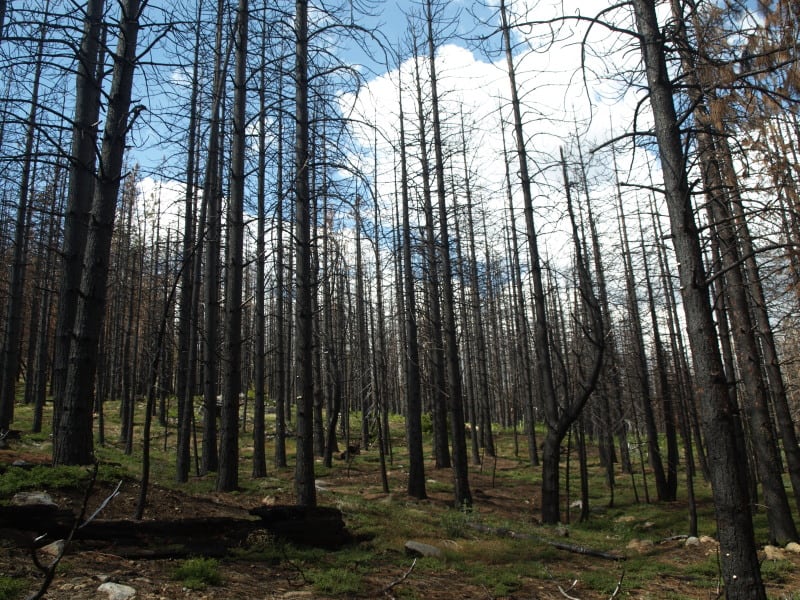
Mr. Graves is leveraging another perk of virtual fences: They can’t burn down. Last September, wildfire burned nearly 100,000 acres of the Bighorn Mountains, destroying thousands of miles of fence. He’s encouraging private landowners and the United States Forest Service to replace burned fences with virtual fences, and to use virtual fences to keep cattle off the burned landscape while it recovers.

3. Permitting Reform Current Drama
I thought Shawn Regan’s piece in City Journal on the current permitting reform efforts was well done. One of the current disagreements is over permit certainty..

To address those concerns, Westerman recently added an amendment addressing permit certainty. The provision would prohibit federal agencies from revoking, suspending, or otherwise interfering with already-approved permits. The amendment was a direct response to the Trump administration’s efforts to cancel previously permitted wind and solar projects, a campaign that has alarmed clean energy developers and their Democratic allies.

But permit certainty ought to appeal to Republicans too. Republicans have their own scars from the Obama and Biden years, when projects like the Keystone XL pipeline were approved, canceled, revived, and re-canceled again depending on who occupied the White House. A durable permitting regime that protects approved projects from the whims of future administrations should, in theory, attract bipartisan support. Yet some Republicans now worry that the provision too significantly hamstrings Trump’s ability to target disfavored renewable projects—illustrating just how difficult it is to build a coalition around neutral rules.

4. Podcast: Sara Ghafouri and the Legal Frontlines of Forestry
i always like Nick Smith’s interviews as he tends to ask the same questions I would ask, plus others that I would never think of, but have interesting answers.

AFRC General Counsel Sara Ghafouri provides an in depth look at the legal landscape shaping active forest management in the West. Sara shares what is new in AFRC’s Legal Program, recent legal wins, and the biggest challenges and opportunities facing forest management over the next year. She also breaks down how AFRC decides when to engage in litigation, how changes in the courts are influencing outcomes, and why it is essential to bring workers, local governments and community voices into the courtroom.

5. ABA podcasts on forest law.
Here’s a link, it sounds like it is going to be a series. I think their idea is that there are more laws for public forests than private ones, so started there.

We are pleased to be joined by Professor John Leshy, author of Our Common Ground and the preeminent scholar on the history of America’s public lands. Public land management is the cornerstone of forest law in the United States, and Professor Leshy’s insights into its scope and evolution are invaluable in helping to piece together the fundamentals of forest law.

Forest law presents a daunting barrier of entry to the uninitiated. Forest law is composed of and delimited by a broad swath of statutes, regulations, and norms, all shaped by a diverse array of stakeholders. The implications of forest management decisions are vast and varied, ranging from the hyperlocal—with decisions concerning timber harvest and wildfire mitigation bearing directly on the continued prosperity and existence of some rural communities—to the planetary, as climate change intensifies and the health of the world’s forests grows ever further imperative to slow its most devastating effects. Complicating things further, today, forest law in the United States is undergoing rapid changes at the federal level.

6. Salvage Speed Record in Idaho

“This was a collective effort,” said Kyle Laven, Supervisory Forester and GNA Program Manager for the USFS, Boise National Forest. “From start to finish, this sale was prepared and awarded in six weeks; immediately after the categorical exclusion was signed, which was an immense turnaround in itself.”

On Oct. 22, just 22 days after the fire was contained, the GNA Rock Fire Salvage sale on the Boise National Forest sold 224,000 board feet to Tamarack Resort. Harvest work on both the IDL sale and the complementary GNA sale is wrapping up this week and will resume in the spring.
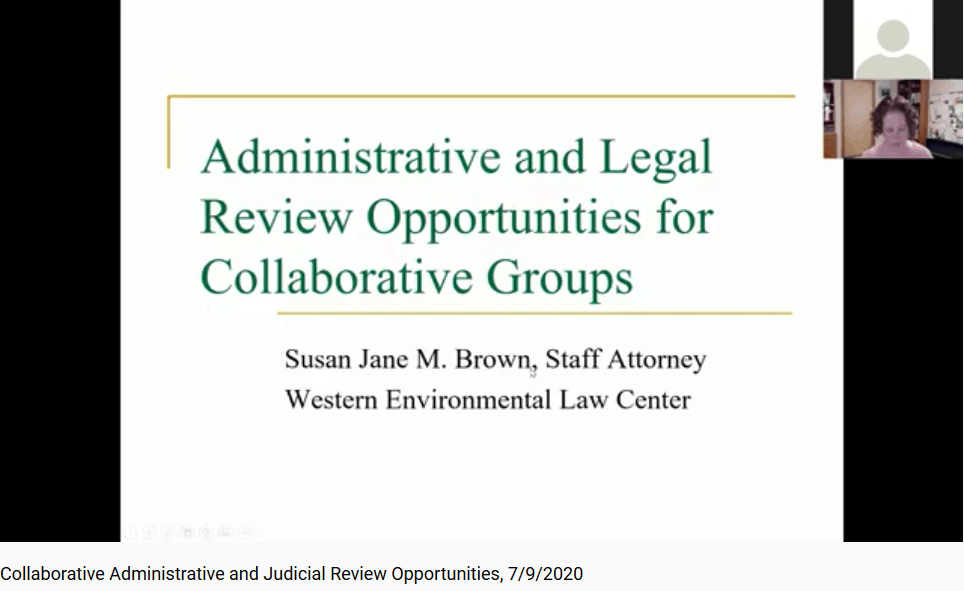
Administrative and Judicial Review Opportunities for Collaborators: Webinar with Susan Jane Brown

Susan Jane Brown posted about this webinar a while back. I was driving and listened in, except for when the call dropped, so I missed some of the Q&A. I thought Susan Jane Brown did an excellent job of explaining how cooperative groups can get involved, among a variety of other topics. She was clear, accurate and easy to understand in explaining a complex topic- not an easy thing to do. Sustainable Northwest put on the webinar, so thanks to them!

Here’s a link to the webinar.
Here’s Susan’s white paper
So.. how can collaborative groups get involved in litigation?

She has an informative discussion about the roles and difficulties of collaboratives becoming Amicus curiae and even how to hire an attorney.

In general, some things collaborative groups may want to consider when retaining a lawyer include:
• Cost. Pro bono and reduced cost attorneys are not the norm, and most lawyers will want to be paid for their representation. As mentioned previously, most private attorneys charge their clients based on hourly rates, and will vary based on experience, expertise, and location (for example, an attorney in John Day, Oregon who does not specialize in environmental litigation and recently graduated from law school will charge a much different rate than a Washington, DC lawyer who has been practicing natural resources law before the Supreme Court for 40 years). You should always ask prospective attorneys about their hourly rates.

• Expertise. Experience with federal environmental law is extremely useful in litigation of the type discussed in this memo, but not necessary. Simply because a prospective attorney has little experience with environmental or natural resources law does not mean they will not be able to competently and zealously represent a collaborative group in litigation. Nevertheless, familiarity with the issues common to this type of litigation is a relevant consideration.

• Scope of representation. When engaging an attorney, it is critical to know what you are getting for your money and time. Will the attorney represent the collaborative group in just the district court, or on appeal if the Forest Service loses the case? Will the attorney engage in any post-litigation work, such as review of settlement agreements? What happens if the attorney puts in more work than expected: is the collaborative group responsible for paying the attorney for that additional work? Must the collaborative group pay for any time the attorney’s clerk spends writing a brief? These are some of the questions you should ask prospective attorneys about what they will be doing for your collaborative group. After these discussions, your attorney will prepare an attorney-client representation agreement that will set out in writing the rights and responsibilities of both the client and the attorney.

• Personality. As collaborative groups know, it is all about relationships. Whether you like and can get along with a prospective attorney is an extremely important consideration, given that you may be spending substantial time with that person, not to mention paying them for an important service: representing you on an issue in which you are heavily invested. Someone may be an excellent attorney but an impossible person.

It all sounds very expensive (and difficult to become an effective Amicus curiae). I wonder whether collaborative groups have approached foundations about support for legal costs? I know the larger foundations do fund environmental groups. I also wonder if when the policy landscape favors litigation as a policy tool, policies tend to be unduly influenced by well-intentioned but distant rich people?

Range of variation webinar (and more)

This is a topic that at least Sharon and I like to debate (though for some reason she didn’t weigh in here).  The Western Environmental Law Center is offering this hour and half webinar on July 17.  As far as I know, it’s open to the public.

PNW Forest Collaboratives Workshop Series Part 3: Historical Range of Variability (HRV): Uses and Various Approaches
 
Range of Variability (ROV) concepts – including Natural (NRV), Historic (HRV), Current (CRV), and Future (FRV) – are frequently used by the US Forest Service to help define land management goals. Nathan Poage, Forest Service Ecologist, joins us to provide an introduction to ROV terminology and examples of how the Malheur, Umatilla, and Wallowa-Whitman National Forests in the Blue Mountains have applied ROV concepts during project planning when addressing key requirements of the Eastside Screens. The discussion will include overviews of tools commonly used to conduct ROV analyses. Q&A will follow the presentation.
This webinar will be on Friday, July 17 from 10-11:30am Pacific Time.
Registration is required for this event. Register today by clicking this link.
Note that it also involves the Eastside Screens.  I don’t think I can make it, but I’d be interested in hearing about it.  I also wanted to point out that this is about how to apply these concepts to projects developed under antiquated forest plans that don’t include the concepts.  It was this kind of thinking that drove development of the requirement to do this instead as part of revising forest plans under the 2012 Planning Rule.  Natural Range of Variation (NRV) embraced by the Planning Rule is a required desired condition for ecosystems, which should not change over time, and therefore should not be redecided for each project.  I’d be interested in knowing how, once ROV is determined for a particular project here, it is then documented and used for future projects in the same ecosystem.
But maybe there would be more interest in this one:
PNW Forest Collaboratives Workshop Series Part 2: Collaborative Administrative and Judicial Review Opportunities
In this follow-up webinar to NEPA 101, WELC attorney Susan Jane Brown will give a presentation on and answer your questions about collaborative administrative and judicial review opportunities, and dig deeper into the administrative review process for the Forest Service, judicial review of agency decisions, and how collaborative groups can engage in these processes.
This webinar will be on Thursday, July 9 from 10-11:30am Pacific Time.
Registration is required for this event. Register today by clicking this link.

Samo-Samo for CASPO

No Threatened Status for the California Spotted Owl. Current protections remain. The article is a good read, with some of the “usual suspects”.

http://www.calaverasenterprise.com/news/article_a866d476-14d2-11ea-b7e0-7b830918c726.html

Enjoined timber sale “renegotiated”

The Johnson Bar Salvage Sale on the Nez Perce-Clearwater National Forest has been approved by the Forest Service and the litigants.  (Johnson Bar has been previously discussed here in several posts.)

Following the injunction, Nez Perce-Clearwater National Forest Supervisor Cheryl Probert pulled the project and committed to a rewrite that was completed earlier this year. The environmental groups filed objections to the new logging plan, but those objections were resolved through negotiations between the agency, the environmental groups and timber companies.

“Nobody got 100 percent of what they wanted in this effort. But they have been really good about working through the process and understanding it’s in all of our best interests to get something done out there,” Probert said.

Bill Higgins of the Idaho Forest Group — one of the timber companies that successfully bid on the sale — estimated it will produce 25 percent to 40 percent of the original volume

“It’s not the best outcome,” he said. “The original project implementation on the schedule they were on was the desired outcome. This is making the best of kind of a bad situation.”

The project eliminates logging in areas that are visible from the river and places the groups feared were prone to erosion and landslides or areas that could degrade steelhead spawning habitat.

What’s not to like about this?  Maybe only that they could have done this without the litigation step, but apparently the litigation step was needed to convince the Forest Service that it couldn’t just do what it wanted without a fight.  (Anticipating Sharon’s argument, let’s assume that the timber purchasers and local governments were not formally “at the table,” but they were free to advise the Forest Service on what they wanted.)

Fremont-Winema wins sucker lawsuit

In Oregon Wild v. Cummins, the Oregon district court upheld the Fremont-Winema National Forest’s compliance with the requirement of INFISH to “modify grazing practices … that retard or prevent the attainment of [Riparian Management Objectives (“RMOs”)] or are likely to adversely affect inland fish.”   The court quoted a prior case for INFISH requirements: “INFISH contemplates that its objectives are `targets’ that will not be met instantaneously” and “[t]he attainment of RMOs is to be assessed on a watershed level.”  While plaintiffs identified streams that did not meet RMOs, the Forest had monitoring data that showed overall improvement in stream conditions. While past grazing practices had contributed to degraded conditions, the court held that now, “there is nothing to indicate that grazing is contributing to any failure to attain INFISH RMOs at a watershed level.”

The court dismissed Endangered Species Act claims regarding the impacts of grazing on two listed sucker species because the Forest was obligated to reinitiate consultation on its grazing permits on a 10-year schedule, which was now ongoing and must be completed prior to further grazing. It also dismissed a challenge to an EA used to approve livestock grazing because plaintiffs failed to exhaust their administrative remedies by appealing the decision (which would have stayed any further grazing until the appeal was resolved).   Finally, there was no significant new information that would require supplementing the EA for grazing allotments.

Region 1 – A Years Worth of Harvests Tied Up In Litigation

How many times on this site have we heard that acreage and timber volume tied up in litigation is insignificant? This would seem to indicate otherwise:

“Covering Idaho, Montana and portions of the Dakotas, Region 1 of the U.S. Forest Service has reached a grim milestone.

Over 35,000 acres of forest projects on Region 1 National Forests are stymied by litigation. The amount of timber tied up in lawsuits (355 million board feet) is now more than region’s entire timber harvest of 321 million board feet”

Owls/logging/fire debate in ongoing “collaboration” in Arizona

This story seems to deal with some substantive and procedural questions that are popular on this blog.  Environmental groups are offering alternatives that the Forest Service doesn’t seem interested in.

Elson, the Flagstaff District Ranger, acknowledged that some parts of the FWPP plan do fly in the face of the Mexican spotted owl recovery plan’s recommendations. But overall, the plan is in the best interest of the species, he said.

“The recovery plan would say we generally don’t want to disturb the owls during breeding season, but that is the necessary price to achieve reduced wildfire risk,” which poses the greatest threat to the birds, he said.

For example, doing thinning or prescribed burning in owl habitat areas during the spring and summer months, which overlap with breeding season, will allow that work to happen two to three times faster, Elson said. And that means a reduced wildfire risk in the area will happen sooner, he said.

Why does the Forest Service get to decide that NOT following the recovery plan is in the best interest of the species – that wildfire poses the greatest threat?  How “necessary” is it really to do a treatment “faster?”  (Doesn’t that just mean that resources could instead be used to treat other areas?)

Forest Service Must Re-initiate Consultation With USFWS on Lynx

This looks to have far-reaching effects on those National Forests within the “core habitats”. This looks like a forced settlement situation, where the Forest Service will probably pay dearly for their loss in court.

http://cdn.ca9.uscourts.gov/datastore/opinions/2015/06/17/13-35624.pdf

Interesting:

Although the court granted summary judgment to Cottonwood and ordered reinitiation of consultation, it declined to enjoin any specific project.

Rim Fire Images

The media does like to sensationalize events like the Rim Fire, often implying that the lands have been “destroyed”. The Rim Fire is so huge and burned across so many differing kinds of vegetation that you cannot summarize too much. Even my own “sampling” from the access roads doesn’t cover very much of the impacts and effects of a 250,000 acre wildfire.

Much of the wildfire burned in plantations generated from previous wildfires. Here is an example of one of those plantations that wasn’t thinned. I can see why it wasn’t but, maybe a “pre-commercial thinning” kind of task could have been included into one of the other commercial plantation thinning projects that I worked on, back in 2000.

P9206850-web

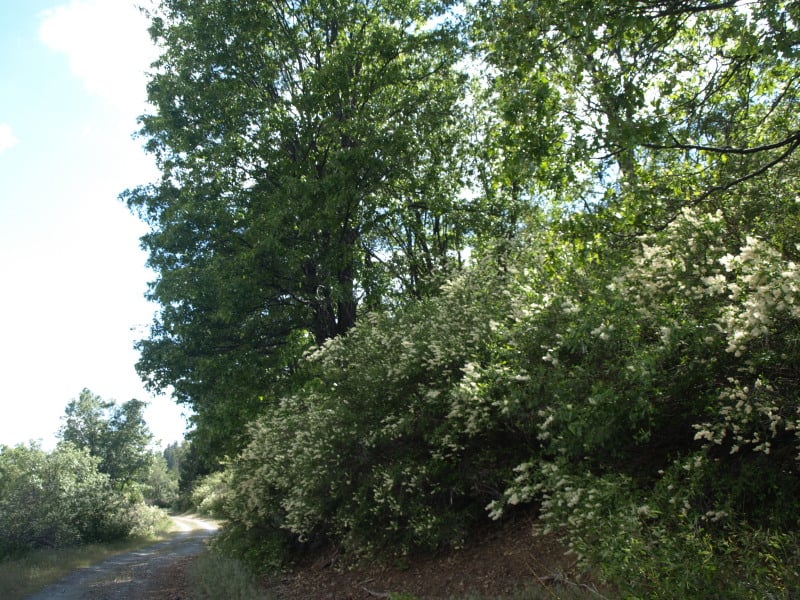
In the same area were blocks of land that were left for “Mother Nature”, after the early 70’s Granite Fire. Here is what a 40 year old brushfield looks like. Those blocks are choked with deer brush, whitethorn and manzanita, with very few conifers, and fewer oaks than the “natural stands” (as they called the unburned portions).

P9206847-web

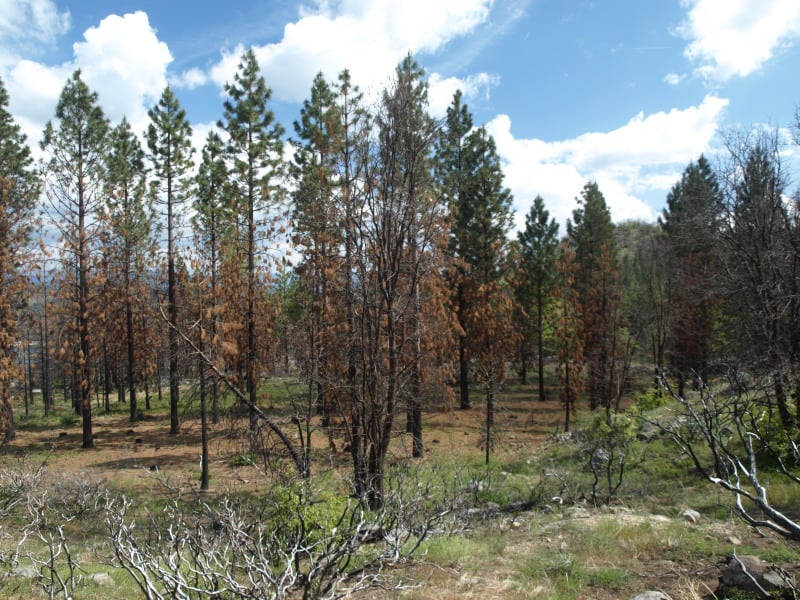
As you can see, sometimes there is a fine line between a total plantation loss and one that has survived a wildfire. This is one of the thinned plantations, near Cherry Lake.

P9206842-web

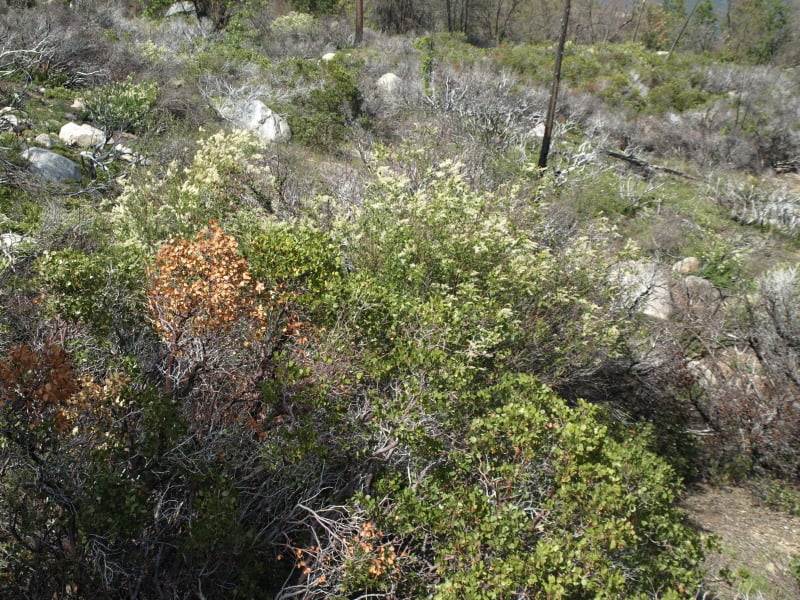
Here is another example of an “old growth” brushfield. While this one didn’t burn much, there are many examples of them burning at moderate to high intensities. Looking at Google Maps, I can find examples where the flames from the brushfields were pushed into the thinned plantations. The Forest Service should be treating those old brushfields with prescribed fire, instead of “whatever happens”.

P9206833-web

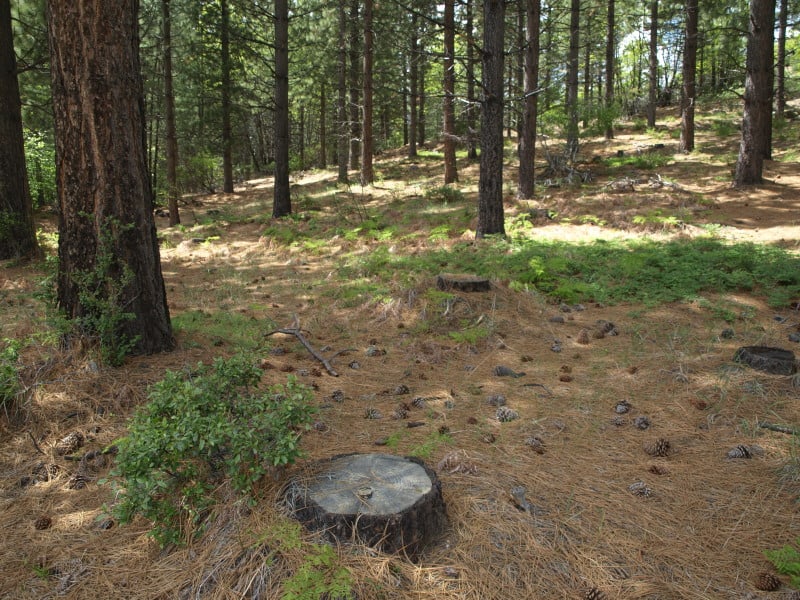
This unburned stand, within the fire perimeter, is a good example of the work we did back in 2000. I don’t really know of any other reason why this large patch, near Cherry Lake, didn’t burn

P9206819-web

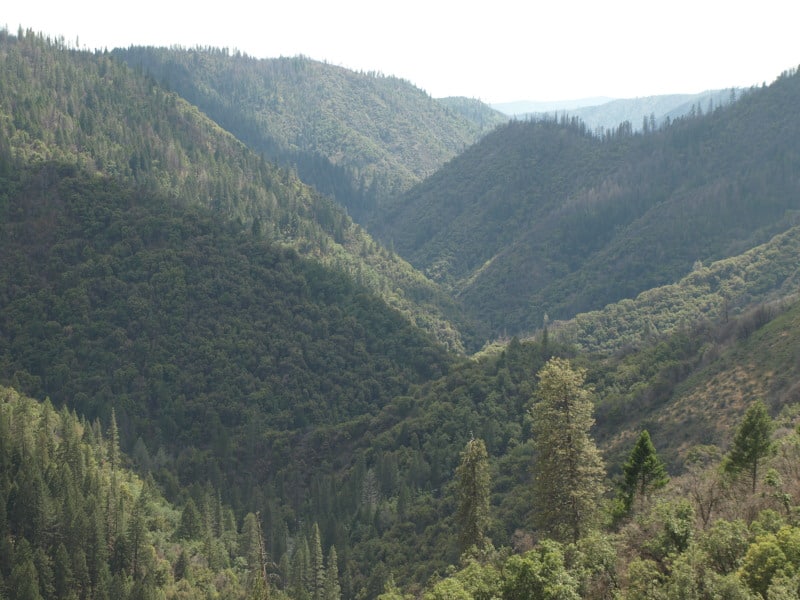
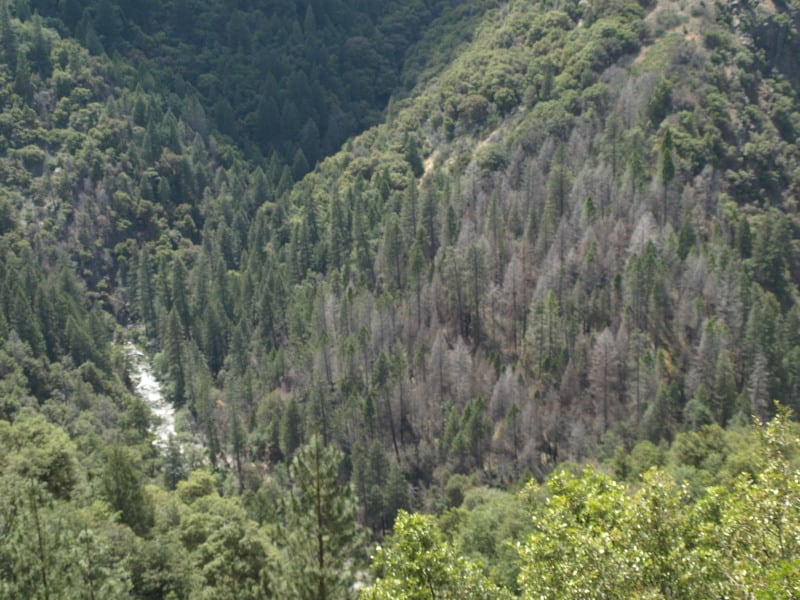
The Clavey River, long-cherished by the local eco-community, acted like a conduit for the Rim Fire, as it burned so many acres in just one day. However, you can see that the intensity and damage is rather minimal. There is a fork in the river, down there, and the main fork of the fire went up that way, finding more conifers to burn. (It also found the big block of Sierra Pacific Industries lands.) I found it very interesting that the isolated pockets of Douglas-firs had very high mortality, but only a low-to-moderate intensity.P9206804-web

Here is one of those pockets, alongside the Clavey River. In the past, this kind of pocket would be thrown into a large helicopter salvage project.

P9206800-web