Budd Falen: Standing Up for Rural Constituents

Salon

Karen Budd Falen was the Deputy Solicitor for Parks and Wildlife in the Department of Interior for three years, and she left with the rest of the Trump administration, capping off a notable career in opposing public lands.  She appears to come by that view honestly, being raised on a Wyoming ranch and representing ranchers as an attorney (including the Bundys).  She reflects in this short piece on her legacy of changing the Endangered Species Act regulations and National Environmental a Policy Act regulations to promote more “local control” (as well as with the Land and Water Conservation Fund).

I take issue with her arguments in both cases that the laws the regulations implement (ESA and NEPA) were intended to allow social and economic considerations to play the role she has provided for them.  These statutes are both clearly aimed at the “natural environment,” and not local “custom and culture.”  Remarkably, she appears to admit that, “the listing of a species should be based only on science,” but then she has made it harder to do that with various changes in the ESA implementing regulations (which go beyond those she describes here in relation to critical habitat).

My fundamental disagreement with her and those she represents concerns this statement (and I suspect it may be a reason for differing opinions on this blog):

In my view, local elected officials should have more sway on issues directly affecting them than someone from midtown New York who has never faced the realities of making a living from the land.

The major gloss-over here is that endangered wildlife and federal lands don’t belong more to local people and their elected officials.  Her view that local interests should have more influence is not supported by either of these laws, and it is not the view held by most of the people that these resources do belong to.  Should the Biden administration not reverse these regulations, courts will have another opportunity to slap down the misinformation from her, and organizations she has worked for like the Mountain States Legal Foundation, that has led to ideas like “county supremacy” limiting how national forests are managed.

(Here is a little background from just before Trump decided she could not get confirmed as BLM Director.)

Good news for wildlife on two national forests

Here are two different kinds of success stories about restoring wildlife species that have been missing from national forests.


Grizzly bears – Lolo National Forest.

Current efforts on the Lolo National Forest demonstrate one way that forest plans can improve conditions for at-risk species; in this case the plan is contributing to conservation of the federally threatened grizzly bear. Grizzly bears have been sighted in recent years in this part of the Forest, but none are females or considered to be residents.

In 2011, the forest plan was amended to include what is commonly referred to as the Access Amendment (similar amendments also applied to the Kootenai and Idaho Panhandle national forests, prior to the revision of their forest plans).  The amendment established “standards” for motorized road and trail density in grizzly bear management units (BMUs, there is one on the Lolo).  In many cases, the current conditions did not meet these standards, so in the terminology of the 2012 Planning Rule, these would be desired conditions or objectives to be achieved.  In addition, their achievement was assumed in the biological opinion on the effects of the forest plan on grizzly bears prepared by the Fish and Wildlife Service, and failure to achieve them would likely trigger the need to reinitiate consultation on the forest plan (which had happened on the Flathead National Forest).  So there is a little added incentive, but here is what they are doing now.

The Forest has completed the “BMU 22 Compliance Environmental Assessment.”  In it they have proposed to formally close some roads that are effectively closed already and 21 trail miles currently open to motorized use.  In response to public comments, they are also considering an alternative that would close fewer trails, and instead close some roads currently open to motorized use.  In addition to other closures included with some prior vegetation management projects both alternatives “would bring the Forest into compliance with the Forest Plan motorized access management standards for the Cabinet-Yaak grizzly bear recovery zone.”

Brown-headed nuthatch – Mark Twain National Forest

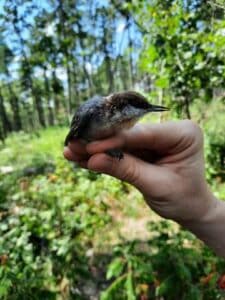
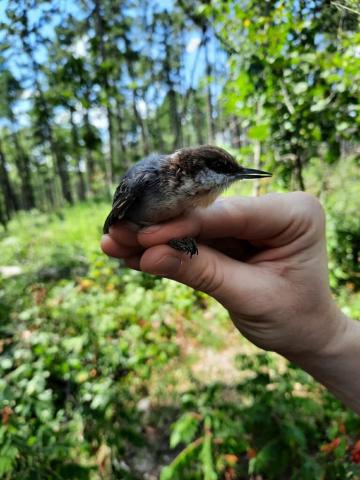
The nuthatch is not at-risk range-wide, but they have not been found in Missouri for at least a century.  The species requires shortleaf pine and oak woodland forests, which have been greatly reduced from historic levels.  The loss of these forests has prompted an ecosystem restoration effort across Missouri, Arkansas and Oklahoma (notably using the Collaborative Forest Landscape Restoration Program).  Restoration of such forests is a desired outcome of the Mark Twain forest plan.  Curiously, there is no mention of the brown-headed nuthatch in the 2005 forest plan, although it does address other species using the same habitat:

Objective 1.4a Improve open woodland conditions on at least 10,500 acres to provide habitat for summer tanager, northern bobwhite, Bachman’s sparrow, and eastern red bat.

The EIS states that the nuthatch is a Management Indicator Species for forest plan monitoring, but that doesn’t seem to be in the plan itself.  Of course, a species that is absent from a national forest would not make a good MIS.  In any case, it looks like there was no interest by the Mark Twain in reestablishing a species that was not present on the forest under that rules applicable to forest planning in 2005.

However, Forest Service, state and university researchers came to the rescue of the species, determining that sufficient woodlands now exist in Missouri to support a population of Brown-headed Nuthatches, that populations in Arkansas were robust enough to supply birds to Missouri, but that nuthatches are not likely to make the return on their own because of the distance and habitat fragmentation.  The Mark Twain National Forest site was chosen for the release of 100 birds because it is the largest area of open pine woodlands in the state.

Under the 2012 Planning Rule, the Forest Service would probably argue that this species is not “known to occur” in the plan area, so the requirement to provide ecological conditions for it (as a species of conservation concern) would not apply.  However, the separate requirement for ecological integrity requires “species composition and diversity” to occur within the natural range of variation.  That should make the Forest Service more proactive in reestablishing species that historically occurred there.  (The forest plan also omits the listed red-cockaded woodpecker, which also uses these habitats, is also absent, but must be conserved and recovered.)

(For a look at how the natural range of variation might work under the 2012 Planning Rule see Table A-2, “Desired conditions for natural community types.”)

Can States Regulate Oil and Gas on Federal Lands?

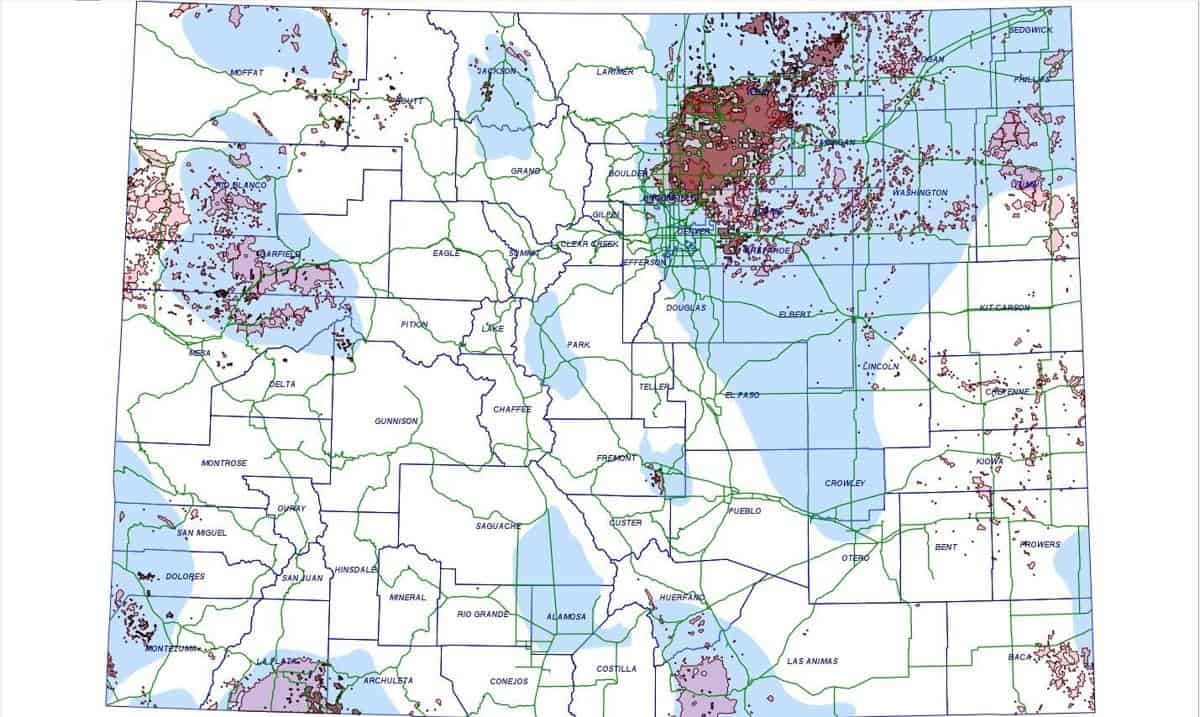
A map of Colorado’s oil and gas activity. The blue-shaded area are the oil/gas basins, including the Denver-Julesburg, the largest. Purple and brown mark oil and natural gas fields.

Colorado Politics had an interesting article about Colorado’s never-ending oil and gas regulation debates (they’re never-ending because some groups want to stop permitting oil and gas altogether).

Federal versus state authority

Kinder Morgan, a pipeline company, pleaded for changes around oil and gas activity on federal lands, as did the American Petroleum Institute. Among them: a claim that the state cannot veto federally-approved land use. They asked that the COGCC change a rule that makes it clear that the commission cannot deny a comprehensive area plan (which outlines an oil and gas development) located on federal-owned or managed surface lands already approved by a federal land manager. However, the COGCC could consult with the appropriate federal agency as well as the operator, according to Ana Gutierrez of Hogan Lovells, representing Kinder Morgan.

The commission should also add a rule on site-specific data, mapping and analysis on geologic hazards, such as fault lines, rock falls, mudflows and unstable slopes.

In response, Assistant Attorney General Joel Minor said relevant federal statutes dating back to 1920, as well as case law, do recognize state authority to regulate oil and gas activity on federal lands. That includes state authority to protect the environment and wildlife resources on federal lands, he said.

Is that just about oil and gas on federal lands, or does it apply to everything (mines, windfarms, etc.)? Does it only work if states want to be more protective?

Meanwhile, if you think governments in D control will be spared lawsuits about the environment..Wild Earth Guardians is suing the State of Colorado for moving too slowly towards its climate goals.

Such a plan is still months away. The state has been working with an outside consultant on a roadmap to guide its policymaking to meet the climate targets. Putnam expects the effort to wrap up by the end of September.

He added the lawsuit won’t force the state to move any faster. If anything, he worries it could divert scarce legal resources away from the rulemaking process into a legal defense. In a statement from the Governor’s Office, spokesperson Conor Cahill expanded on the point, writing the administration has taken “unprecedented action” to retire coal-fired power plants and electrify Colorado’s economy.

“It’s very unfortunate that some seek to distract from the nationally-leading success of Colorado in order to justify a risky and expensive strategy such as a state-based cap and trade system that has not demonstrated the ability to effectively cut emissions elsewhere. Coloradans trust that Governor Polis will continue to act boldly and swiftly and utilize the tools and resources available to create good green jobs, address climate change, and ensure we can all breathe cleaner air,” wrote Cahill.

Nichols countered the state doesn’t need to waste time fighting the lawsuit. All it needs to do is submit rules to put Colorado on track to meet its climate goals.

“We don’t rush into lawsuits. It’s not something we take lightly, but the stakes are so high here,” he said.

In my experience, speed has never been the ally of crafting good rules about complex phenomena with diverse stakeholders and interests.

Reimagining The Rural West – WGA Workshop- Today !!


This is going on today in Post Falls Idaho… you can watch it on Youtube.

You can also make comments on Youtube. But I’m interested in your thoughts here.  Which one did you watch and what did you think? You can watch them later as well.

Here are a couple of that look interesting (including participation by sometime commenter Chelsea McIver, and two R-1 FS folks):

10:15 a.m. Natural Resource Management and Infrastructure Challenges: Responsible management of forests and rangelands relies on high-quality local infrastructure. The lack of sawmills, timber processing machinery, and adequate roads all reduce the business case for forest and rangeland management activities – from traditional timber sales to innovative forest thinning and rangeland management projects. Panelists will discuss historical changes to natural resources markets, strategies to create markets supporting ecosystem-based goals, and federal programs that can aid rural infrastructure challenges. Moderator: Idaho Governor Brad Little. Panelists: Matt Krumenauer, Vice President Special Projects, U.S. Endowment for Forestry and Communities; Chelsea Pennick McIver, Research Analyst, Policy Analysis Group, University of Idaho; Cheryl Probert, Forest Supervisor, Nez Perce-Clearwater National Forests, U.S. Forest Service; Tom Schultz, VP of Government Affairs, Idaho Forest Group.

2:30 p.m. Community Collaboration and Revitalization in North Idaho: Through the North Idaho Tourism Alliance (NITA), 12 communities are working together to capitalize on their region’s assets, including spectacular scenery, access to outdoor recreation and local history. Panelists will discuss how their communities have evolved and how collaboration is helping to build a more vibrant economic future. Panelists: Stephanie Sims, Executive Director, International Selkirk Loop & NITA Board Chair; Colleen Rosson, Executive Director, Silver Valley Economic Development Corporation & NITA Board Vice Chair.

1:00 p.m. Broadening the Outdoor Recreation Economy: Outdoor recreation draws people from urban areas to rural communities, bringing economic benefits and bridging the urban-rural divide. To grow the outdoor recreation economy, rural communities need infrastructure, workforce, and businesses to support visitors and local residents. This panel will explore how different organizations are working to build and strengthen recreation economies. Moderator: Jim Ogsbury, Executive Director, Western Governors’ Association Panelists: Lindsey Shirley, University Outreach & Engagement Associate Provost, Oregon State University Extension Service; Jorge Guzmán, Founder and Executive Director, Vive NW; Tara McKee, Program Manager, Utah Office of Outdoor Recreation; Joe Alexander, Region 1 Director of Recreation, Minerals, Lands, Heritage, and Wilderness, U.S. Forest Service.

2:10 p.m. Cooperative Models Across the Rural West: Cooperative ownership and funding systems support local food systems, infrastructure assets, housing initiatives and a host of other critical efforts in the rural West. Panelists will discuss how cooperative models can support diverse rural development goals and examine how federal and state policies influence cooperative efforts. Moderator: Jim Ogsbury, Executive Director, Western Governors’ Association. Panelists: Lori Capouch, Rural Development Director, North Dakota Association of Rural Electric Cooperatives; Tim Freeburg, Board Member, Pacific Northwest Farmers Cooperative; Kate LaTour, Government Relations Manager, National Cooperative Business Association; Tim O’Connell, West Region Coordinator, Rural Development Innovation Center, U.S. Department of Agriculture.

Check it out and tell us what you think!


Forest Service tries again on Blue Mountains plan revision

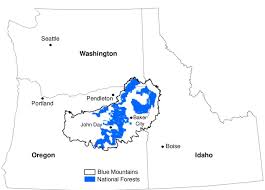
The revision of the three national forest plans encompassing the Blue Mountains of eastern Oregon and Washington is becoming a poster child for failing to finish forest planning.

Northwest Regional Forester Glenn Casamassa announced in March 2019 the Forest Service was scrapping the proposed Blue Mountains Forest Plan Revision, which includes the Umatilla, Wallowa-Whitman and Malheur. A final draft of the plans had been released in June 2018. It was not the first time the Blue Mountain Forest Plan had been paused.A draft version of the plans was completed in 2014, and received so much backlash that local forest supervisors decided to develop new plan alternatives.

So they’re trying something new:

The Blues Intergovernmental Council has been formed to help frame the process of developing a new methodology for forest planning for the Wallowa-Whitman, Malheur and Umatilla national forests. A series of meetings between county commissioners and key Forest Service personnel have been held across the Blue Mountain region over the past year to help kickstart a framework for cross-jurisdiction work.

“The underlying intent is to ensure that we can develop plans for the three national forests that would provide the opportunity for durable relationships with our communities and to make an important difference on the landscape for the long term,” said Eric Watrud, the forest supervisor on the Umatilla National Forest.  Watrud said the council includes state and county representatives in Oregon and Washington, four treaty tribes and regulatory agencies, in addition to the Forest Service.

“The attempt here is to create just a more open, inclusive approach where the Forest Service is working closely with our communities in order to make sure that we are developing a plan that is gonna stand the test of time,” he said. “We have the responsibility of stewarding the management of these three national forests, which are a national and local treasure. And so there’s a tremendous amount of interest, and our intent is to make sure that we’re incorporating that feedback, incorporating those ideas and local suggestions in order to make sure that we accomplish that goal.”

A better process for local input – that’s ok. But this is obviously “inclusive” of only “local” “communities.”  I assume this is only part of the story (as suggested by the forest supervisor’s careful reference to “a national and local treasure”), but I hope they aren’t (maybe again) setting up expectations that won’t be met.

Stewardship contracts – a better tool for the job than a roadless rule?

I wouldn’t have thought that one is a substitute for the other, and maybe this suggests that Utah defined its problem wrong initially.  But they’re happy enough with the way their Shared Stewardship agreement is working that they have put their roadless rule proposal on a back burner.  At least some greens seem happy, too, and least those concerned about roadless areas.  Priority-setting, within the framework of a forest plan, is one thing that I think lends itself to collaboration.

Amid debate about state-specific exemptions to the Roadless Rule, Congress created the capacity to negotiate “stewardship contracts” ranging up to 20 years with states in the 2018 Consolidated Appropriations Act.  It allows the Forest Service to rely on “state’s guidance for designing, implementing, and prioritizing projects geared toward reducing the risks of damaging wildfires and promoting forest health.”


Wilderness Society Senior Resource Analyst for National Forest Policy Mike Anderson said conservationists are encouraged by what Shared Stewardship agreements could foster in addressing critical needs.  “Working side-by-side to identify the major risks and implement projects that are actually going to make a difference on the land is something conservationists, I think, can generally can support,” he said. “We think it is good.”


(Utah Public Lands Policy Coordinating Office lead counsel) Garfield said under the agreement, projects “can happen, and are occurring, within and without the roadless area, when necessary.”    ‘The existing rule provides a lot of exceptions that the Forest Service can use for forest restoration,” he said. “The Forest Service wasn’t using those” exceptions in many cases.  Garfield said PLPCO will be watching closely over the next four years to see if the Shared Stewardship agreement works out before withdrawing its petition. “I won’t say everything we hoped to accomplish under a state-specific Roadless Rule will be achieved under the Shared Stewardship agreement,” he said, “but a lot of progress is being made.”

(One error in this article – the Idaho and Colorado state roadless rules have been approved.)

“Coloradans know what’s best for our state – not Washington”: The CORE Act and the Role of State Politicians in Federal Land Management

Sometimes our usual public lands disagreements get wrapped up in partisan politics, which always invoke more heat than light. I thought this article was interesting, given that we were just discussing the roles of State politicians in deciding what happens on federal lands in Alaska. Here in Colorado, we have local people who disagree among themselves about what is best. We also have federal elected officials who disagree with each other. So we have an opportunity to ask “if politicians themselves disagree within the state, who can best be said to be making a claim of legitimacy based on geography?”

Senator Bennet seems to be arguing for Colorado (state) as a legitimate level for decisionmaking on federal lands.

“Coloradans know what’s best for our state – not Washington,” Bennet said in a written statement on Tuesday. “The CORE Act was drafted by Coloradans, for Coloradans – engaging with stakeholders across the state for nearly a decade to hammer out a reasonable public lands bills with broad support.”

Of course, not all Coloradans agree about this bill, as we’ve previously discussed, including the local Representative, Scott Tipton. So Congressional Districts are not the right level, but States are. Which is OK, but then (1) would that make Alaska state influences equally legitimate, or not? Note: Colorado did its own Roadless Rule (ultimately signed off by Obama/Hickenlooper)
Or perhaps Utah?

(2) What is it that makes Front Range congressfolk so interested in public lands not in their district?

“The White House also said that not enough local input has been addressed when it comes to the legislation, which is expected to get a vote this week in the U.S. House.” And of course, again, is the question there wasn’t enough input, or that it wasn’t listened to? I don’t believe that folks working on legislation do a “response to comments” so that the rest of us could figure this out. (3) What exactly is “local input”, how local is it and would we know it if we saw it? And how could the rest of us judge it without a “response to comments?”

Lawsuit drives proposed changes in elk feeding permit


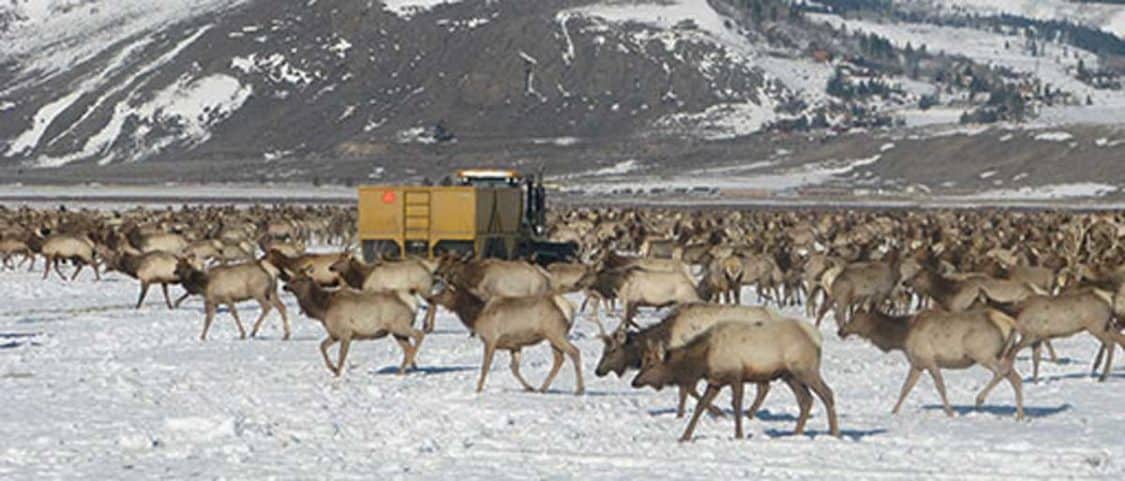
The State of Wyoming has been feeding elk during the winter at several locations on the Bridger-Teton National Forest for decades.  Environmental plaintiffs challenged a 2016 decision to authorize the continued use of the Alkali Creek Feedground, and the court remanded the decision because of NEPA violations, as described here.

Rather than appealing or spending years studying the feedground’s impacts to address the judge’s concerns, the Forest Service and Wyoming wildlife managers came up with a plan that will allow emergency elk feeding on a smaller area for five years and then end the operation by 2024 (with a possible extension). That plan is now being “scoped” and is open for public comment.  The scoping letter is attached to this article.

This is an example of how litigation may lead to a better decision (after the appropriate public review process).  It appears to have made the State take a closer look at whether it really needed this feedground.  However, plaintiffs don’t appear to have been involved in the new proposal yet.  It’s also interesting that the original decision was based on an EIS/ROD, which the court found to be inadequate, but this is being proposed as a categorical exclusion (so maybe the Forest has an idea that they are not going to be challenged on it?).

2016 election consequences for Colorado federal lands

The Forest Service and Bureau of Land Management over the last several years have been developing long-term Resource Management Plans for more than 3 million acres of BLM lands in Eastern Colorado and the Uncompahgre Plateau and in the Rio Grande National Forest.  According to this article, the state and local communities are not happy.

The Trump-driven shift toward more oil and gas development on public lands worries Colorado politicians and conservation groups that are steering the state toward increased protections. Agencies within the same department seem in conflict. Long-studied plans are changing between between draft and final reports, with proposed protections fading away and opportunities for extraction growing…

“What we are seeing is the full effect — in proposed actions — of the 2016 election at the local level,” Ouray County Commissioner Ben Tisdel said.

The article goes into detail about the effects on the Uncompahgre Field Office’s proposed plan:

County commissioners from Gunnison, Ouray and San Miguel counties have filed protests with the BLM over the Uncompahgre Field Office’s proposed plan. The counties have been involved with the planning for eight years. In 2016, the counties submitted comments on the plan outlining concerns for the Gunnison sage grouse and listing parcels the agency should protect and retain as federal lands.

“Alternative E proposed doing all the things we specifically asked them not to do,” said Tisdel, the Ouray County commissioner, adding that lands his county wanted protected were listed in the 2019 plan for possible disposal by the agency. “We thought we had a pretty good product in 2016 and now we have this new alternative, Alternative E, that goes way beyond anything we had seen before and is awful in ways we never thought of before.”

With regard to the Rio Grande National Forest revised forest plan:

The move from that September 2017 Draft Environmental Impact Statement to the final version released in August has riled conservationists and sportsmen. Goals established for air quality, designated trails, fisheries management, fire management, wildlife connectivity and habitat were scaled back in between the draft and final versions.

Colorado’s governor has weighed in on the BLM plan (in language consistent with the Western Governors Association policies):

The resource management plan’s “failure to adopt commitments consistent with the state plans, policies and agreements hinders Colorado’s ability to meet its own goals and objectives for wildlife in the planning area,” Polis wrote.

The BLM had an interesting response:

“There is room to adjust within the RMP, which has a built-in adaptive management strategy,” he said. “We are ready to respond as the state’s plans are complete.”

So they plan to do whatever the state wants them to do later?  “Room to adjust within the RMP” appears to mean that they don’t have to go through a plan amendment process with the public, which seems unlikely to be legal for the kinds of changes the state appears to want.  (It definitely wouldn’t work for national forest plans.)

The Western Energy Alliance blames the governor for being late to the game:

It doesn’t get a complete do-over just because something new happens, like Gov. Polis issues a new order.”

But it does apparently get a complete do-over because a new federal government administration says so.  There may still be some legal process (e.g. NEPA) questions this raises.

Mark Twain to eliminate hunting at request of state

Source

Of feral hogs that is.  In kind of a turnabout from typical conflicts between states and feds, this is a disagreement between the state and counties (and the hog hunting segment of the public).  (There was some discussion of federal regulation of hunting on the Kisatchie National Forest here.)

The State of Missouri is undertaking a trapping program, which they say that hunting interferes with.  The Forest Service is proposing to use its federal land management authority to issue a closure order to prohibit hunting of feral hogs on the Mark Twain National Forest.  From the Forest Service website linked to this article:

Mark Twain National Forest is proposing a Forest Closure Order to support interagency efforts to eliminate feral swine (also known as feral hogs) in Missouri. The Forest Closure Order would prevent the taking, pursuing or releasing of all feral swine on the forest. The only exception would apply to feral swine elimination efforts conducted by the interagency task force.

The proposal is in response to a Missouri Department of Conservation (MDC) request to make policies consistent across all public lands in Missouri to halt the spread of feral swine and the resulting damage they cause. The State of Missouri feral swine elimination program bans all taking, pursuing or releasing of feral swine on state lands. The State asked the Forest Service and National Park Service for support as part of the Missouri Feral Hog Partnership. The proposed closure order would align lands managed by the Forest Service with the efforts of Missouri and other federal agencies, including USDA Animal and Plant Health Inspection Service.

On the Kisatchie, the Forest Service used a forest plan amendment to provide long-term direction.  Here, the forest plan is not mentioned, so presumably the closure is viewed as short-term – until the hogs are gone, but from what I hear, good luck with that.