***********************
Last week I asked the question “what are the reasons for choosing clearcutting as a prescription” and got a quick and well-written answer from the Flathead, so shout-out to their silviculture and communications folks!
The Flathead National Forest spokesperson answered the questions as follows:
What are the forestry reasons for clearcutting?
We have a diversity of tree species on the Flathead National Forest. Some are fire and disease-resistant while others are susceptible to root rot, bark beetles, and some are less adapted to survive wildfire. Active forest management on the Flathead targets areas with high densities of species that are less resistant to both diseases and fire, like lodgepole, grand fir, and subalpine fir), and resets the forest stand by harvesting those trees and replacing them with tree species (western larch, ponderosa pine, Douglas-fir) that are more likely to stay healthy through disturbance events like fire and disease.
Why does the Forest Service plant trees following a harvest?
When the forest managers reset a stand of grand fir and subalpine fir – shade tolerant species – with shade intolerant species like western larch, there are no naturally occurring seed sources so we plant seedlings of the species of tree that best aligns with the future desired condition of the forest. In other cases, we plant western white pine seedlings that have genetics for resistance to known diseases like blister rust.
Where does lodgepole pine fit into the picture?
Lodgepole pine is a fast growing, naturally regenerating tree species and does well after a disturbance event. However, these trees have a tendency to get bark beetle outbreaks once they achieve a certain age. Forest managers will identify areas with high levels of insect infestation and designate them for clearing to limit the infestation spread. Depending on the site conditions, some of the healthier lodgepole are left, but often times, in certain soils with certain wind patterns, lodgepole blow down after a treatment. Forest managers will plant western larch, ponderosa pine, western white pine, and Douglas-fir to add species diversity to the area.
How does the forest combat root disease with regeneration harvests?
Forest managers use “regeneration” harvest in areas with a high occurrence of root disease and plant tree species that are less susceptible to that disease. Sometimes, a previous treatment that released the midstory needs to be retreated with a regeneration due to the amount of disease that developed in that stand.
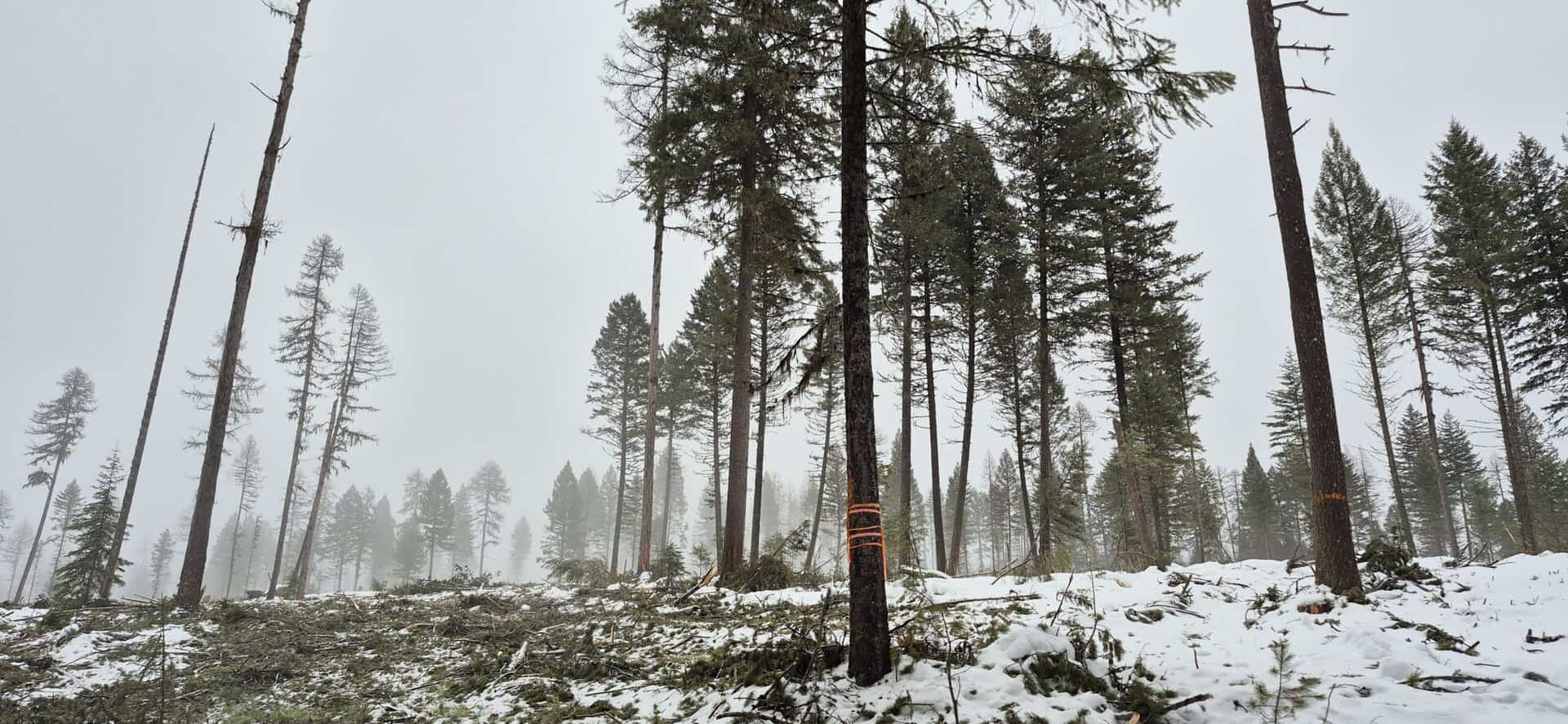
In other instances, forest managers use a “clearcut with reserves” that leaves individual trees or clumps of trees of western larch and doug fir scattered through the treatment area to meet objectives for both the future desired condition of the forest and for wildlife species that benefit from forest openings. These treatments usually leave 5-10 trees per acre.
************
I will only add, as a person involved with the western white pine resistance program in the earlier days, that restoring WWP seems like a good idea, for ecological value, for Native Americans, for wildlife, because it is fire-adapted, and for biodiversity.