History of logging in Montana

The Missoulian is running a series of articles on this subject.  The one in Sunday’s paper asks these questions about the future:

“Banishment from the national forests would doom many Montana timber towns to welfare status, according to advocates in the wood-products industry. But if they’re dependent on access to public timber, isn’t that another form of welfare? Does my family’s tradition of working in the woods entitle it to public subsidy, especially if the commercial market finds Montana’s wood products uncompetitive? Does rescuing Montana’s timber industry justify rewriting some of the nation’s bedrock environmental protections, changing access to its court system, and spending millions of its tax dollars?”

Federal lands support diverse economies

Recent research by Headwaters Economics asked whether federal lands are an economic liability or an asset to rural communities (summarized in this opinion piece).

On average, we find that from 1970-2014, rural counties with the most federal land grew much faster than similar counties with the least federal land: population grew four times faster, employment grew three times faster and personal income grew twice as fast. Per capita income grew slightly more in places with more federal lands.

This analysis suggests that, in general, federal lands do not inhibit a community’s economic growth. On the contrary, the research suggests these lands have the potential to contribute to a prosperous rural economy.

You can always pick on the details of economic analysis, but here is what this tells me about the big picture.  While there will always be winners and losers, it’s hard to argue that the presence of federal lands is a big reason for the losers.

Howdy, Folks

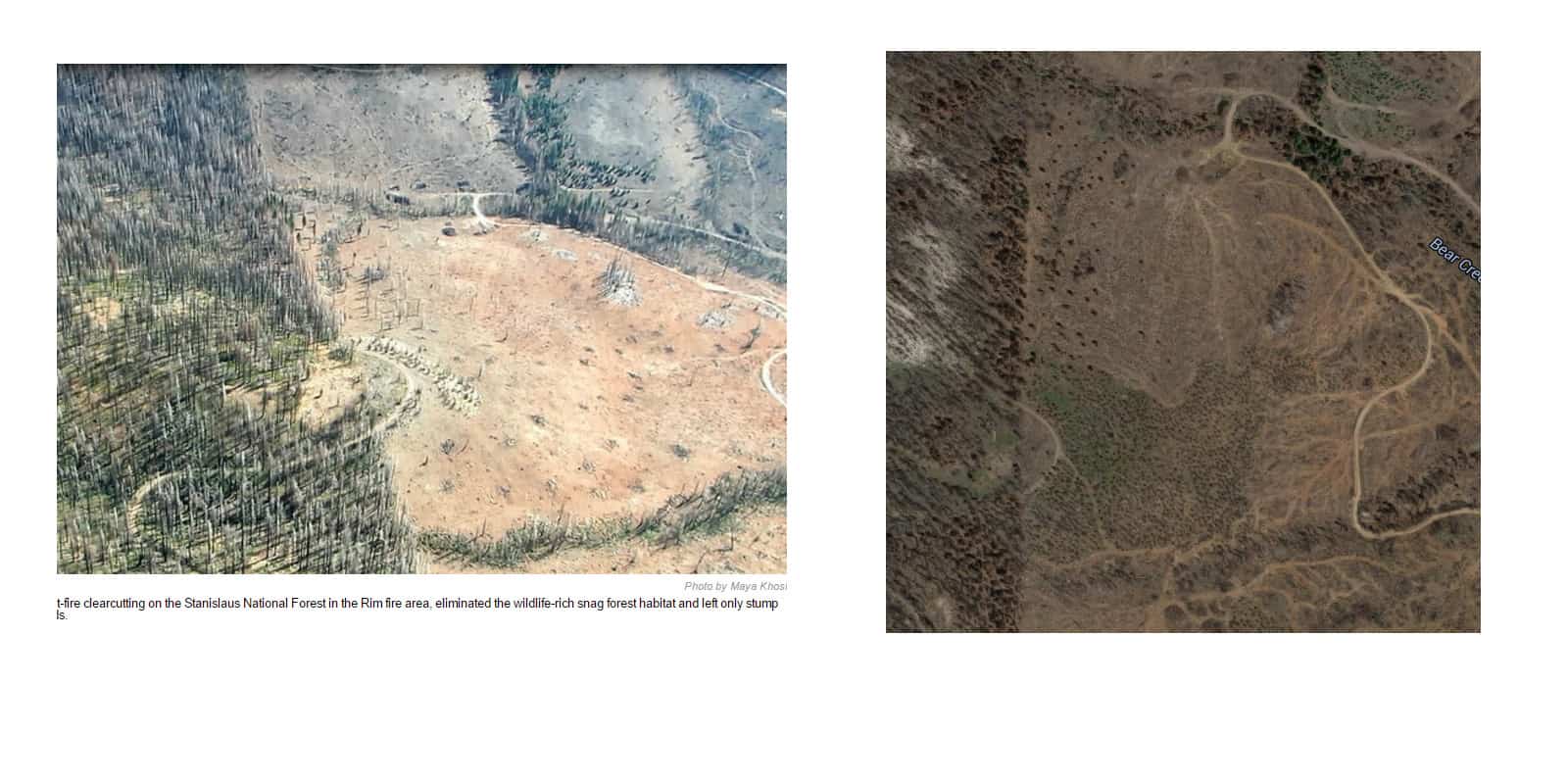
I’m just going to drop this here. A side by side comparison of the land that some serial litigators insist is clear evidence of Forest Service salvage clearcutting in the Rim Fire. The caption reads, “Post-fire clearcutting on the Stanislaus National Forest in the Rim fire area, eliminated the wildlife-rich snag habitat and left only stump fields.” Where is the “wildlife-rich snag habitat” in that burned-over plantation on private land? The picture on the right is before logging started, from Google Maps.

Yes, the story is still up on their website, in all its slanderous glory.

Have a nice day!

Spi-comparison

Career Ladders for Temps?!?! Maybe Soon!

More interesting news for “disposable” employees!

campbell_fire1-webhttp://nffe.org/ht/display/ArticleDetails/i/105694

NFFE-Backed Temporary Employment Reform Legislation Approved by Senate Committee

There may come a time when temporary employees actually have a career ladder!

“Thousands of wildland firefighters and other dedicated seasonal workers have been stuck for too long in dead-end jobs, not because of a lack of merit on their parts, but because of flawed regulations that do not recognize their years of service,” said Mark Davis, Vice President of the National Federation of Federal Employees (NFFE) and past President of the NFFE Forest Service Council.  “Many others leave and take their years of experience with them because of blocked career paths. After years of work, I’m optimistic that we are about to fix that.”

Of course, this is most directed towards firefighters, as so many timber temps have been jettisoned or have found “other employment”. Most temps would say that there is plenty of work to do, outside of their 1039 appointments but, that issue is not being addressed. The higher-ups choose to continue to embrace the 1039 appointments, thinking that policy is “good enough for Government work”. There really is nothing stopping the Forest Service from changing their policies on 1039 appointments. Truthfully, I’d like to see the temporary appointments scaled back to 800 hours, essentially forcing the Forest Service and other Agencies to hire more 13/13 permanent positions. Yep, make it too costly and “inconvenient” for them to continue using temps to do work that is needed, each and every year. It’s up to OPM to impose more rules, to stop the abuse of the temporary hiring authority.

Blue Mountains revision restart – FS stumbles out of the gate

The three forest supervisors for the national forests in the Blue Mountains published a guest column with an invitation to meet with any and all interested parties as part of a “re-engagement strategy for the communities in the Blue Mountains.”  Unfortunately they also chose to make an off-script policy statement:

We want Forest Plans that provide resiliency for our communities in Eastern Oregon and Washington; Plans that support the local economy and the social values of the people who use and depend on them. We also want resiliency in ecosystems that can withstand: drought, floods, wildfire, invasive species, human impacts and have the strength to return to healthy ecosystems in the long run.

These plans are being developed under the 1982 planning regulations, but that does not excuse them from the agency policy on “resilience” (which I’m fairly sure is not found in the 1982 regulations).  In the 2012 Planning Rule, the term resilient/resilience is used only in the definitions of “restoration” and “viable population,” and the concept of “resilient ecosystems” (or “healthy ecosystems”) was replaced by “ecological integrity.”

Most importantly, the Planning Rule never uses the term “resiliency” in connection with social or economic factors.  It recognizes that forest plans can NOT “provide resiliency” for communities, and that this should not be used as a justification to support any particular local business or values.  Under the 2012 Rule, forest plans must “guide the plan area’s contribution to social and economic sustainability.”  And this is not limited to local interests, but instead explicitly extends to “the area influenced by the plan” and regional and national economies.

When you start by over-promising, there is a good chance you’re going to under-deliver (again).

Service Contract Re-visited

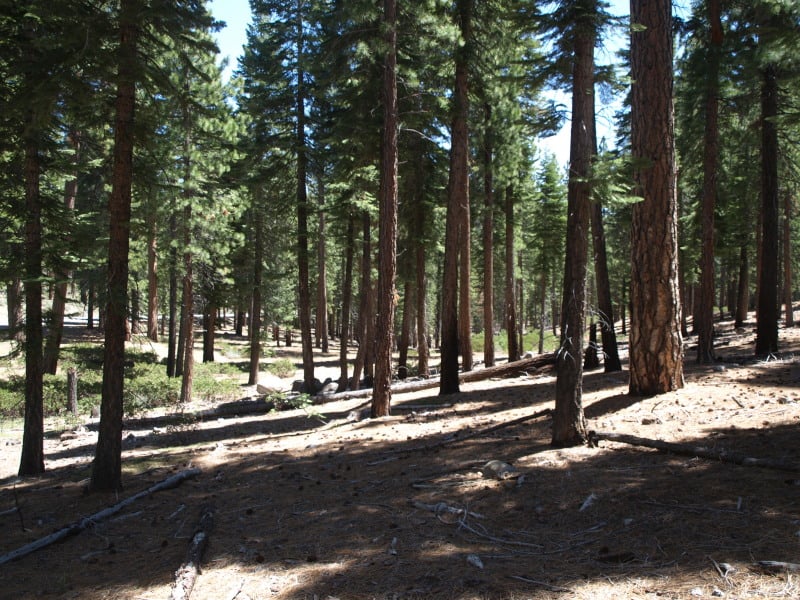
In my last adventure, I decided to pass through an area of the Tahoe National Forest, where I worked in 1996 and 1997. During that time, I worked on fire salvage, blowdown salvage, insect salvage and roadside hazard tree projects. There was also this Service Contract, which reduced fuels without cutting trees over 9.9″ dbh. The logger had three varied types of cutting machines, each of them with their strengths and limitations. He was a crusty old guy, who didn’t like the Federal “oversight” of his work.
P9306380-web

I usually liked to change these loggers’ perception of what inspectors do. He wasn’t used to getting “written up” for doing good work but, he was still quite wary of me. I once caught him damaging the bark of a leave tree with his machine, then getting off it, and applying some dirt to the wound (to hide it). As he was getting back to his seat, he saw me. I gave him the “naughty, naughty” hand signal, and walked over there. I waited to see how he would react to getting caught. Surprisingly, he kind of hung his head, and was quiet, for once. So, I told him that there is an acceptable level of “damage” in this kind of work and he wasn’t anywhere near close to it, yet. I think our relationship changed, a little, after that agreement.
P9306391-web

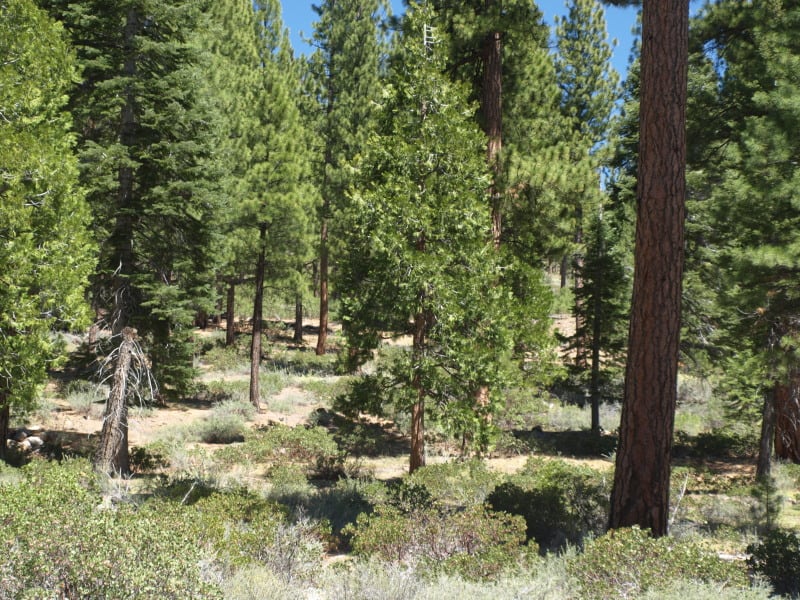
One of the keys to success was the ability to do a cool prescribed burn. All too often, fuels are still too thick and the burn is a bit hotter than the residual trees can stand. In this case, the firefighters did well in achieving a nice, cool and effective burn. On the west-facing slopes, the brush has grown back, somewhat. That is to be expected, and will continue, until it is shaded out.
P9306396-web

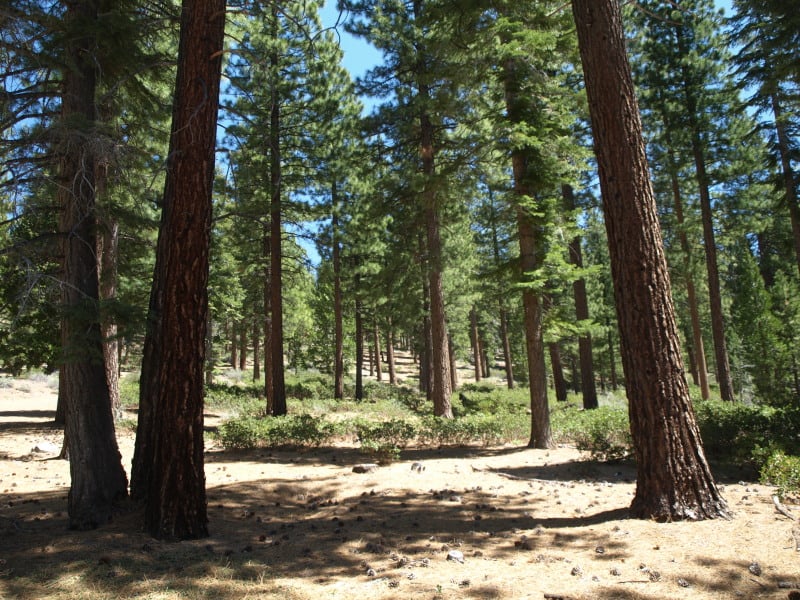
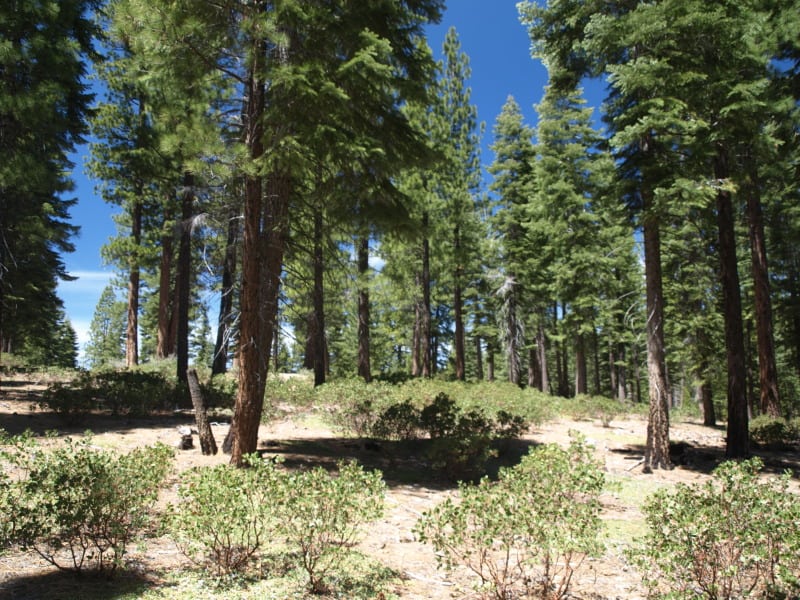
As far as resilience to fire and drought, it is pretty clear that the spacing is very good. The brush looks like it can be burned safely, on a regular basis. The pines also seem to be quite healthy and vigorous. Keep in mind, this area along Highway 89, in the eastside pine zone, is in a rainshadow east of the Sierra Nevada Crest. There are some western junipers up on the ridgetop, and the Nevada desert is 15 miles away.
P9306381-web

Rim Fire Update

Apparently, enough of the hazard trees within the Rim Fire on the Stanislaus NF have been cut so that the travel ban has finally been lifted, after more than a year. I heard one report that says that the litigation has failed at the District Court level, losing their pleas to stop the logging three times. The article below includes the Appeals Court but, I doubt that an appeal has been seen in court yet. It seems too soon after the District Court decision for the appeal to be decided.

http://www.calforests.org/rim-fire-update-final-motion-halt-restoration-forestry-rim-fire-denied/

P9232907-web


Since the Rim Fire tore through the area and devoured over 250, 000 square miles of National, State and private forested land, the community has come together to put together a solution with positive environmental, economical and social sense. The whole effort to restore forests has been very successful due to cooperation of a diverse group of individuals, organizations and government agencies.

(Edit: Thanks to Matt for pointing out the acres/square miles error. That should be 250,000 acres.)

With a monster storm approaching California, we should be seeing some catastrophic erosion coming from the Rim and King Fire areas. Of course, very little can be done to prevent erosion on the steep slopes of the canyons with high burn intensity. Standing snags tend to channel water, while branches and twigs on the ground can hold back a surprising amount of soil. This flood event would have been great to document through repeat photography but, it appears that opportunity will be lost, too.

Bark beetle activity has also spiked where I live, northwest of the Rim Fire.

UC Berkeley Gets it Right, and Gets it Wrong

A Cal-Berkeley fire scientist shows his unawareness of current Forest Service policy but, his other ideas favor active management of our Sierra Nevada National Forests.

Canopy2-web

The situation is compounded by the gridlock between environmentalists and commercial foresters. The former favor thinning, but they want all logging plans to leave the larger trees, particularly those with trunks over 30 inches in diameter. But the timber companies maintain it is necessary to take a significant number of bigger trees to fund thinning and restoration programs.

Stephens generally favors the enviro position. Landscape-scale wildfire damage is driven by vast acreages of small-diameter, closely-packed trees, he says. By leaving the larger trees, the essential character of a natural forest can be maintained, even accelerated. And he thinks markets can be found for products produced from thinned, scrawny trees.

http://alumni.berkeley.edu/california-magazine/just-in/2014-09-26/brush-flame-king-fire-narrowly-misses-proving-fire-prevention

Of course, there has been a ban on the cutting of trees larger than 30″ dbh, since 1993. Ditto for clearcutting! These are two big hot-button issues for most “conservationists” but, there are still people out there who want timber sales banned, altogether. There are others who would love to go back to the Clinton rules of the Sierra Nevada Framework, which would shutdown much of Region 5’s timber management programs. A 22″ dbh tree, underneath a 36″ dbh tree cannot be considered “scrawny”.  Generally, most of the thinned trees are in the 10-18″ dbh size, averaging about 15″ dbh.

No TRO for the Rim Fire Salvage!

As I predicted, there will be no TRO for the Rim Fire, from District Court. Once the sales are sold, restoration work can begin. Let’s hope that SPI has an army of fallers, ready and waiting. I also hope that they will leave the plantation salvage for last. *smirk*

P9202316-web

Sonora, CA –A Federal Judge in Fresno has denied a temporary restraining order regarding the lawsuit filed against the Rim Fire Recovery Record of Decision.

Forest Service Spokesperson Wyn Hornbuckle says, “We are pleased with the court’s decision.” He would not comment further.

As reported earlier this month, three environmental groups including the Center for Biological Diversity were seeking an injunction to halt logging within the 37 occupied California spotted owl territories within the burned area. The Chair of the Yosemite Stanislaus Solutions (YSS) group and President of Sierra Resource Management, Mike Albrecht, worked with local environmental groups and the Forest Service to hammer out a compromise on the Rim Fire Record of Decision. He applauds the Judge’s decision.

http://www.mymotherlode.com/news/local/223061/logging-injunction-denied.html

Natural amenities, “the creative class” and economic success

This map got my attention because of the disproportionate amount of “green” in the rural intermountain west.  In this case it means counties have a disproportionately high number of employees in jobs like management, finance, technology, engineering, science, sales, entertainment and non-primary education (and of course lawyering).

“The creative-class thesis holds that communities that attract and retain more workers who are in creative occupations will fare better in today’s economy.” 

From the background paper linked to this article:

“Richard Florida’s Rise of the Creative Class makes a compelling argument that urban development now depends on novel combinations of knowledge and ideas, that certain occupations specialize in this task, that people in these occupations are drawn to areas providing a high quality of life, and that the essential development strategy is to create an environment that attracts and retains these workers. While developed with urban areas in mind, this thesis may be particularly relevant in rural areas, which lose much of their young talent as high school graduates leave for college, the armed forces, or “city lights.”  Our analysis of recent development in rural U.S. counties, which focuses on natural amenities (for which ERS has also computed county-level scores) as quality-of-life indicators, supports the creative class thesis.”

So, perceived natural amenities attract creative workers who improve local economies.  With a caveat that “growth and success among creative-class workers doesn’t necessarily extend economic benefits to other parts of the economy, such as blue-collar and service workers, at least in metro areas.”  (All wages go up, but housing costs go up more.)

So maybe all this is saying is to get the right kind of education so you can do well and live in a nice place, but it might also paint a promising picture for these rural “green” counties.