Largest “Dealbreaker” Ever?!?

This may shock some readers but, I am actually against HR 3188. I don’t support any logging in Yosemite National Park, or in the Emigrant Wilderness, other than hazard tree projects. What is also pretty amazing is that others in the House have signed on to this bill. It seems like political “suicide” to go on record, being in favor of this bill. However, I am in favor of exempting regular Forest Service lands, within the Rim Fire, from legal actions, as long as they display “due diligence” in addressing endangered species, and other environmental issues. Did McClintock not think that expedited Yosemite National Park logging would be, maybe, the largest “dealbreaker” in history?

Here is McClintock’s presentation:

 HR 3188 – Timber Fire Salvage

October 3, 2013
Mr. Chairman:
I want to thank you for holding this hearing today and for the speedy consideration of HR 3188.
It is estimated that up to one billion board feet of fire-killed timber can still be salvaged out of the forests devastated by the Yosemite Rim fire, but it requires immediate action.  As time passes, the value of this dead timber declines until after a year or so it becomes unsalvageable.
The Reading Fire in Lassen occurred more than one year ago.  The Forest Service has just gotten around to selling salvage rights last month.  In the year the Forest Service has taken to plow through endless environmental reviews, all of the trees under 18” in diameter – which is most of them – have become worthless.
After a year’s delay for bureaucratic paperwork, extreme environmental groups will often file suits to run out the clock, and the 9th Circuit Court of appeals has become infamous for blocking salvage operations.
We have no time to waste in the aftermath of the Yosemite Rim Fire, which destroyed more than 400 square miles of forest in the Stanislaus National Forest and the Yosemite National Park — the largest fire ever recorded in the Sierra Nevada Mountains.
The situation is particularly urgent because of the early infestation of bark beetles which have already been observed attacking the dead trees.  As they do so, the commercial value of those trees drops by half.
Four hundred miles of roads are now in jeopardy.  If nearby trees are not removed before winter, we can expect dead trees to begin toppling, risking lives and closing access.  Although the Forest Service has expedited a salvage sale on road and utility rights of way as part of the immediate emergency measures, current law otherwise only allows a categorical exemption for just 250 acres – enough to protect just 10 miles of road.
By the time the normal environmental review of salvage operations has been completed in a year, what was once forest land will have already begun converting to brush land, and by the following year reforestation will become infinitely more difficult and expensive – especially if access has been lost due to impassibility of roads.  By that time, only trees over 30 inches in diameter will be salvageable.
Within two years, five to eight feet of brush will have built up and the big trees will begin toppling on this tinder.  You could not possibly build a more perfect fire than that.
If we want to stop the conversion of this forestland to brush land, the dead timber has to come out.  If we take it out now, we can actually sell salvage rights, providing revenue to the treasury that could then be used for reforestation.  If we go through the normal environmental reviews and litigation, the timber will be worthless, and instead of someone paying US to remove the timber, WE will have to pay someone else to do so.  The price tag for that will be breathtaking.   We will then have to remove the accumulated brush to give seedlings a chance to survive – another very expensive proposition.
This legislation simply waives the environmental review process for salvage operations on land where the environment has already been incinerated, and allows the government to be paid for the removal of already dead timber, rather than having the government pay someone else.
There is a radical body of opinion that says, just leave it alone and the forest will grow back.
Indeed, it will, but not in our lifetimes.  Nature gives brush first claim to the land – and it will be decades before the forest is able to fight its way back to reclaim that land.
This measure has bi-partisan precedent.  It is the same approach as offered by Democratic Senator Tom Daschle a few years ago to allow salvage of beetle-killed timber in the Black Hills National Forest.
Finally, salvaging this timber would also throw an economic lifeline to communities already devastated by this fire as local mills can be brought to full employment for the first time in many years.
Time is not our friend.  We can act now and restore the forest, or we can dawdle until restoration will become cost prohibitive.
Supreme Court Affirms Programmatic EIS for Sierra Nevada Framework

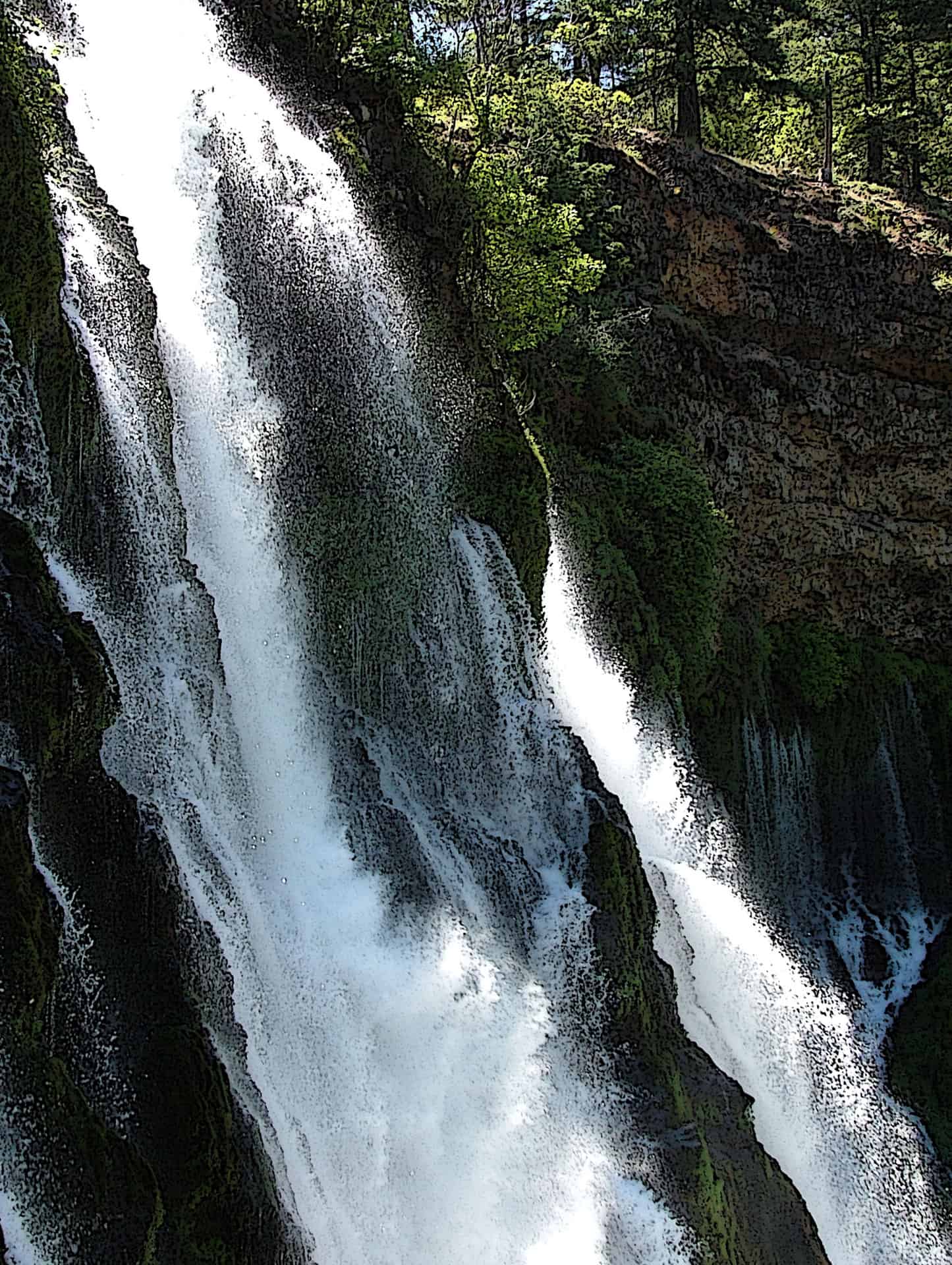
Burney-Falls-poster-web

Jun 20: In the U.S. Court of Appeals, Ninth Circuit, Case No. 08-17565.Appeal from the United States District Court for the Eastern District of California. The Appeals Court indicates that, “This court’s opinion filed on February 3, 2012, and reported at 668 F.3d 609 (9th Cir. 2012), is withdrawn, and is replaced by the attached Opinion and Dissent. . . The full court has been advised of the petition for rehearing en banc and no judge of the court has requested a vote onwhether to rehear the matter en banc. . . The petition for rehearing and the petition for rehearing en banc, filed on April 18, 2012, are denied.”

According to the Appeals Court, Plaintiff-Appellant Pacific Rivers Council (Pacific Rivers) brought suit in Federal district court challenging the 2004 Framework for the Sierra Nevada Mountains (the Sierras) as inconsistent with the National Environmental Protection Act (NEPA) and the Administrative Procedure Act (APA). The Appeals Court said, “The gravamen of Pacific Rivers’ complaint is that the 2004 EIS does not sufficiently analyze the environmental consequences of the 2004 Framework for fish and amphibians.” On cross-motions for summary judgment, the district court granted summary judgment to the Forest Service.

The Appeals Court rules, “Pacific Rivers timely appealed the grant of summary judgment. For the reasons that follow, we conclude that the Forest Service’s analysis of fish in the 2004 EIS does not comply with NEPA. However, we conclude that the Forest Service’s analysis of amphibians does comply with NEPA. We therefore reverse in part, affirm in part, and remand to the district court.”
In a lengthy dissenting opinion, one Justice concludes, “. . .the majority makes two fundamental errors: First, it reinvents the arbitrary and capricious standard of review, transforming it from an appropriately deferential standard to one freely allowing courts to substitute their judgments for that of the agency. . . Second, the majority ignores the tiering framework created by NEPA. Because the majority ignores such framework, it fails to differentiate between a site-specific environmental impact statement (EIS) and a programmatic EIS that focuses on high-level policy decisions. . .”
It appears that an impossibly comprehensive study of the entire Sierra Nevada “watershed” will not be required for the amended Sierra Nevada Framework plan. If the Forest Service loses this case, it would have to limit the harvest of trees within thinning projects to 12″ dbh in some areas, and to 20″ dbh in the rest of the Sierra Nevada. This decision means that the Forest Service has followed NEPA law since the amendment has been in force. If the Pacific Rivers Council had prevailed, we would be seeing a complete failure of the Forest Service’s timber management program throughout the Sierra Nevada. Sierra Pacific Industries has plenty of their own lands, stocked with plenty of trees in the 12″-20″ dbh size. There would be no need for SPI to bid on the thinning projects that would be offered by the Forest Service under the old diameter limits. The small amount of harvested trees between 20″ and 29.9″ dbh are what pays for the biomass removal needed for true restoration. When thinning projects reduce wildfire threats, and actual wildfire impacts, water quality and fish habitats are improved.

California’s Dense Forests Present New Opportunities

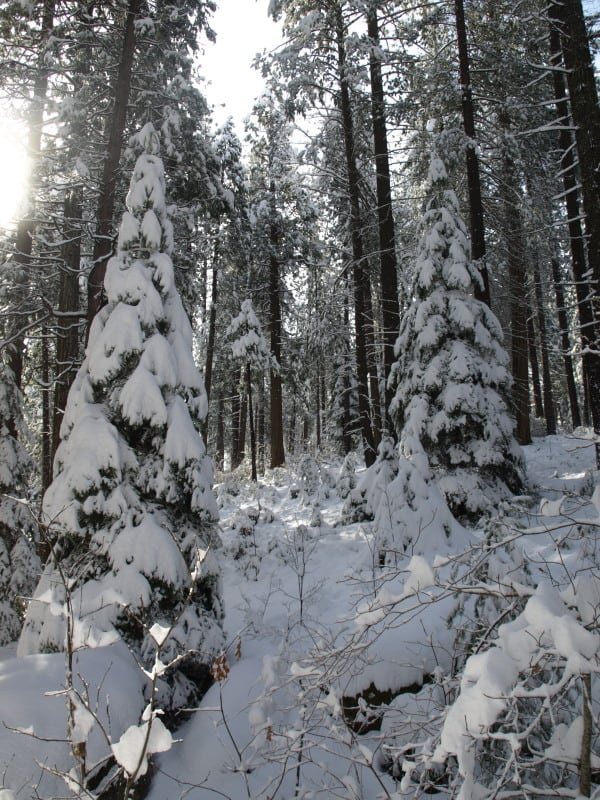
P9195237-web

Forestry operations and bioenergy have been part of the economic and social fabric in Northern California for decades. A five-year study produced in 2009 by the USDA Forest Service modeled forest management under different scenarios across 2.7 million acres encompassing the Feather River watershed. The model’s time horizon spanned four decades, examining wildfire behavior, forest thinning operations and a range of environmental and economic impacts. It concluded that in virtually every aspect analyzed, managing forest resources and utilizing biomass for energy production provides significant advantages over the status quo.

With acres per wildfire going WAY up, thinning projects seem to be the way to go to reduce both wildfire sizes and wildfire intensities. Again, we have strict diameter limits in the Sierra Nevada, and clearcutting has been banned since 1993.

The link is here

California Collaboratin’

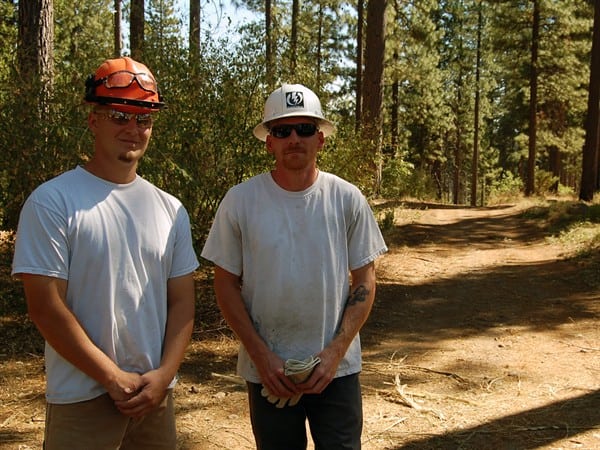
Smith and DeStephano, mentioned in the article

Thanks to Terry Seyden for this story about apparently successful collaboration in California. I excerpted parts that deal with our interest in local jobs and who is doing the work. Here is the link and below are the excerpts. Italics are mine.

After hours of meetings, listening, and grant-writing, now the group is doing just that.

On a recent fall afternoon, Robert Smith drives a faded green masticator that chews up small trees and brush. He’s clearing fire fuel in a part of the Stanislaus National Forest that abuts several subdivisions.

Smith owns and operates Smith Grinding, but when the recession hit, he couldn’t find work. He almost lost his home.

“This area, at one time, had like 23 mills in it, so it was a booming industry,” says Smith. “It slowly has died out all through the ’80s and ’90s. And even what was going on in here came to a screeching halt, what, probably 3 years ago. On a personal level, going out and looking for work, there was none.”

As a part of the consensus group, the forest service is now hiring local contractors like Smith to do much-needed clean-up in the forests. And the consensus group also helped to form a contractors coop, so the group can bid on projects as one unit.

Smith says it’s given him work — and he likes the idea of helping the Amador and Calaveras county communities get those jobs.

“We have a lot of people come in and take this work form us, when we have it right here and should be making money ourselves.”

Bring Back Jobs

Putting people back to work isn’t as simple as just creating jobs. So the consensus group also includes community organizations that teach job readiness; and it works with probation officers to help former prisoners make the transition back to work.

That’s how Anthony Destefano got a job with the crew.

“I’m an electrician by trade, but with the building and the economy dropping, I got laid off, and it was impossible it seemed like to get a job,” Destefano says.

Destefano says he was unemployed for two and half years, and he got himself into trouble with drugs and landed in jail. When he got out on probation, his supervisor referred him to this work crew .

“I’ve just been moving forward, doing positive things. This job has helped me to achieve some goals,” he says.

The section Smith and Destefano just finished clearing looks like the forest floor got a buzz cut underneath the tall oaks, pines and firs they’ve left standing.

The section Smith and Destefano just finished clearing looks like the forest floor got a buzz cut underneath the tall oaks, pines and firs they’ve left standing.

Environmentalist is No Longer the ‘Devil Incarnate’

The crew isn’t just brute labor hacking down trees and brush. Part of the training involves scientists teaching them how to recognize species, what to take out and what to leave, says Katherine Evatt, an environmentalist with the Foothill Conservancy.

“We’re is reducing the risk of catastrophic fire in our communities, which is also a big threat to critical habitat for spotted owls and other wildlife,” says Evatt.

“And it’s going to allow us to start to reintroduce fire as a tool in the Sierra,” she says, adding that because fire has been suppressed for over 100 years, some parts of the forest are too dense to safely use fire as a natural tool.