Paul Gosar on Forests, Fire and Litigation

Congressman Paul Gosar, a member of the House Natural Resources Committee, represents Arizona’s First Congressional District.

Column: Forest policy must be proactive, sustainable
By U.S. REP PAUL GOSAR
Special to the Courier

This year, our communities have been victims of the largest forest fires in recorded history. The Wallow fire on the Apache-Sitgreaves Forest grew to over half a million acres, charring in its wake some of the most treasured parts of ponderosa pine country. In total, over a million acres of Forest Service lands, as well as another 600,000 acres of federal, state, and private lands have burned across the American Southwest.

The frequency of fires, and the magnitude of the acreage burned, has exponentially increased since 1990. It is time for us to be honest about the problem as well as the solution. We must re-evaluate our forest management policies at all levels of government because the status quo is detrimental to our safety, Arizona’s ecological health, and the local and national economy.

The current federal system continues to give funding priority to suppression. Although the need to suppress fires is never going to go away, it is clear we must shift priority toward pro-active forest restoration management. It is estimated that long-term restoration and rehabilitation generally amount to two to 30 times the reported suppression costs.

There is roughly 80 million acres of forests across the West that are overgrown and ripe for catastrophic wildfire, according to the Landfire multiagency database. We simply cannot afford to use taxpayer dollars for 100 percent of the large-scale restoration work necessary to prevent unnatural fires like Wallow, Rodeo-Chediski, or Schultz. Empowering private industry is going to be the key to the future of forest management.

The Four Forest Restoration Initiative (4-FRI) is a proposal that will restore 2.5 million acres of ponderosa pine forests on the Apache-Sitgreaves, Coconino, Kaibab, and Tonto national forests and revitalizes the Arizona logging industry. Instead of relying on the Forest Service to pay all of the costs for restoration thinning, 4-FRI recognizes the fiscal reality and puts forth a proposal that calls for the Forest Service to partner with private industry to restore proper forest health.

This first of its kind large-scale treatment will reduce damaging wildfire impacts, as well as provide forest jobs, markets for wood products, and ecological restoration. It has garnered my support, as well as colleagues in the Arizona Congressional Delegation, Gov. Jan Brewer, leaders in the state Legislature, the affected counties and cities, and an unprecedented range of environmental groups and industry partners.

When the federal government partners with local government, stakeholder groups, and private industry, together we can create much needed jobs and a safer environment for our citizens. Landscape-scale, fiscally responsible forest restoration treatments are the only way our state and the country is going to make real progress toward proper forest health.

I am also looking at a wide variety of legislative initiatives that will improve federal law affecting natural resources management. I am reviewing environmental laws in need of reform to make the process more streamlined, efficient and fair. Compliance has become muddled and overly bureaucratic, leading to project-killing delays. The goal is not to dismantle important environmental protections, but to ensure they are working with us, not against us.

I am also looking at reforming the Equal Access to Justice Act, a law that is frequently misused to obstruct important conservation and economic development initiatives. While some lawsuits are important to ensuring our environmental laws are upheld, some groups sue federal agencies excessively, tie up the process for years, and then submit a bill to the taxpayers via EAJA.

I am a cosponsor of HR1996 the Government Litigation Savings Act, which will put a halt to these abuses by reinstating tracking and reporting requirements and instituting reforms that will reduce the taxpayer’s burden to pay for the attorney’s fees. These reforms will return the law to its original intent – to help individuals and small businesses during a once-in-a-lifetime need to battle the federal government in court.

Our forest and natural resources are a way of life in Arizona. I remain saddened by what has happened to my constituents who have been adversely affected by this fire. I think if we look forward and work collaboratively in stewardship, we can address the desperate forest maintenance crisis and other natural resources-related issues facing our state.

Here is the link to HR 1996
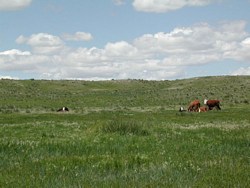
FS Win on Grazing: Pike San Isabel

Photo is from Cimarron National Grassland, couldn't find photo of grazing on PSI
From Agjournal.com here:

The Colorado Cattlemen’s Association (CCA) announced June 17 that the U.S. Forest Service, the Chaffee County Board of Commissioners, CCA, and most importantly – 13 livestock producing families – prevailed against a lawsuit filed by Western Watershed’s Project (WWP). In 2009, CCA and Chaffee County joined ranchers in protecting their right to multiple-use grazing of public lands by intervening in a lawsuit filed by the anti-livestock grazing WWP, which sought to deny renewal of grazing in the Pike and San Isabel National Forests.

“This is a huge win for our family and cattlemen in this part of the state,” stated Ken McMurry, grazing permittee. “Through the support of ChaffeeCounty, other local cattlemen’s associations and the Colorado Cattlemen’s Association, we’ve come to realize how significant this ruling is statewide to all cattlemen, whether grazing on private or public lands.”

The appeal by WWP objected to the renewal of the grazing permits, which had been approved after a thorough environmental review. The Forest Service grazing decision also incorporated adaptive management principles to improve environmental conditions in the forests. The ranchers and the Forest Service worked together to develop management steps that would address resource issues and still be cost-effective. Upon reviewing the briefs and the administrative record, the court affirmed the decision of the Forest Service and allows continued livestock grazing under the adaptive management that everyone committed to do.

As CCA counsel Connie Brooks explained, “This decision is especially significant because Western Watersheds had objected to the fact that the Forest Service had worked closely with the grazing permittees to develop management plans that made sense and would achieve the Forest Service’s objectives. While federal law calls for these grazing plans to be written in coordination with ranchers, this litigation would have undone the cooperation and consultation that has characterized the grazing program on the Salida Leadville Ranger District of the Pike San Isabel National Forest.”

Tim Canterbury and his family are also thrilled with the courts decision. “We are happy to see that the court ruled this way. It shows that the courts recognize all of the hard work the permittees and agencies put into the Environmental Assessment.”

The WWP argued that the decision made by the Forest Service was inconsistent with the Forest Plan; more specifically, it violated the Forest Plan in various ways including wildlife protection, protecting soil productivity, protecting water quality, and protecting archaeological resources. The court found that the Forest Service properly addressed each of these issues. Some of the measures included in the Proposed Plan were changing the stocking rate, limiting grazing to certain seasons, rest rotation, and active herding – all of which permittees will conduct to protect the public’s natural resources. After further review, the court strongly disagreed with WWP, stating the court may not assume that the Forest Service will fail to implement these actions in their Proposed Plan.

“The good guys won!,” exclaimed Chaffee County Commissioner Frank Holman. “The Western Watersheds Project is ignorant of the positive impact ranchers have on the land, and that these same ranchers leave the forest in an improved state. This verdict by the government keeps WWP from running over the little guy. This finally proves that cattlemen do not have to put up with invasions to our Western way of life.”

It’s also interesting that this story from the local newspaper, the Pueblo Chieftain mentions that WWP is from Idaho in the headline..

Grazing can continue in forests
Federal judge ruled against Idaho environmental group.

More on Psychological Warfare, Litigation, and Morale

Check out this op-ed by Ray Ring in last month’s High Country News. It sounds like something I would have written, were I a better writer. I italicized the quote below- that quote pretty much creeps me out. If it is accurate, I need some kind of ritual to dissipate the negative energies (perhaps a burning of the quote in a bonfire at Solstice?).

Op-Ed – From the May 30, 2011 issue by Ray Ring

I have a friend named Gina who is a great marriage counselor. Gina is roly-poly and effervescent — her mere presence disarms uptight people. With a Ph.D., an M.D. and decades of experience, she’s an empathetic listener, expressing just enough of her own opinions to create a genuine conversation and strive for breakthroughs. She’s very effective in advising people on how to get along.

Contrast Gina’s interpersonal strategy with that of Kierán Suckling, the director of the Tucson-based Center for Biological Diversity, which endlessly cranks out lawsuits to enforce the Endangered Species Act:

“(Lawsuits) are one tool in a larger campaign, but we use lawsuits to help shift the balance of power from industry and government agencies, toward protecting endangered species,” Suckling told HCN in 2009. “By obtaining an injunction to shut down logging or prevent the filling of a dam … we are in the position of being able to powerfully negotiate the terms. …”

Suckling’s group often wins in court. But instead of helping various parties come to an agreement, as Gina does, Suckling wants to steamroll opponents: “New species listings and new bad press take a terrible toll on agency morale. When we stop the same timber sale three or four times running, the timber planners … feel like their careers are being mocked and destroyed — and they are. So they become much more willing to play by our rules. … Psychological warfare is a very underappreciated aspect of environmental campaigning.”

Suckling’s warlike strategy doesn’t characterize the environmental movement as a whole, but it’s shared by enough groups to shape the general public misperception that all environmentalists are determined to get their way regardless of the costs to other people’s livelihoods and lifestyles.

Our cover story by seasoned wildlife writer Hal Herring explores the drawbacks of the lawsuit strategy, through the example of wolves in the Northern Rockies. Many groups pushed lawsuits for two decades to help wolves get re-established in Montana, Idaho and Wyoming, but they caused a new surge in anti-wolf — and anti-environmentalist — anger. So politicians of both parties united to strip Endangered Species Act protections from most Northern Rockies wolves, effective May 5.

Meanwhile, one Western group that has filed lawsuits on behalf of hundreds of species — WildEarth Guardians — reached an agreement with the U.S. Fish and Wildlife Service on May 10: That group offered to limit further ESA legal actions for six years, to allow the agency time to decide the fate of 251 wait-listed species. Predictably, Suckling’s group has challenged the compromise.

Does the future of wolves seem iffier than ever? Hunters in Montana and Idaho will probably reduce the wolf population initially. I’m betting that, as the locals feel they have more control, the anger will recede and more people will accept wolves as natural wonders, creating a community spirit that can preserve them. Gina would approve.

UPDATE: further research shows that the quote was from an interview with HCN here. Don’t know how I missed this originally, must have been observing Winter Festival. More on other aspects of the interview later.

Also I ran across this interesting piece by Ted Williams.

And here’s a letter in response to the HCN interview.

Letter – From the January 11, 2010 issue by Mike Ford

After reading the recent interview with Kieran Suckling, it occurs to me the one reason we’re having so much trouble advancing meaningful conservation opportunities is we’re spending too much time, energy and money fighting each other (HCN, 12/21/09 & 1/4/10).

The litigation and lawsuits advanced by the Center for Biological Diversity are having the exact opposite effect from that suggested by Mr. Suckling. They have cost taxpayers countless millions and not a single dime of that money is making its way to the ground where it is needed most to protect forests, wetlands and other wildlife habitat. The CBD may think it is forcing agencies to be responsive while achieving results not possible in the absence of litigation, but the vast majority of concerned conservationists may disagree. Many of us feel the money would be better spent on the ground rather than responding to multiple lawsuits and countless petitions.

Agency personnel are paralyzed by the lawsuit frenzy and they are no longer willing or able to exercise any level of risk or innovation, even when it will serve important environmental and conservation objectives. Agency personnel have traditionally seen themselves as entrepreneurial but the vast majority have grown so wary of potential litigation they are unable to take risks. Sadly, balancing reasonable economic and environmental objectives has become virtually impossible without threat of litigation.

Not that long ago we tried to work out our differences face-to-face instead of through lawyers. Our continued desire to protect land, plants and animals should be driven by the desire to cooperate — not because we might get sued.

Mike Ford
Las Vegas, Nevada

More on the Green Mountain Lookout

Here’s an opinion piece in the Everett Herald Net.

Now I will be the first to confess that I don’t know what side if any is “right” in this debate. However, there are a couple of themes that are found more widely in various discussions around the West.

First,

Defending against petty lawsuits will likely divert most of the Forest Service’s dwindling wilderness budget from the mountains to the courtroom.

and second,

We encourage Wilderness Watch to drop the lawsuit. We also encourage people to make your voices heard. Congressional representatives need to hear from the public why this lookout needs specific legislative protection from humorless people who would tear it down.

The themes that I hear are:
(1)Why this battle?: Local person to group- “Out of all the environmental issues in the world, especially given that you are not from our area, it’s not clear why you would pick this particular battle. What’s this really about? Can we talk? ”

(2) Why this tactic (litigation)?

a) If you choose litigation as a tactic, others can choose to try to get legislation (a la wolf, see Baucus quotes here). I would think that this is a necessary constitutional co-evolutionary trend, but how optimal for everyone concerned?

(b) Forest Service budgets are not going up- is its possible that other uses of FS funds (like wilderness rangers) may lead to more environmental protection than copying documents or other litigation activities? What are the environmental “opportunity costs” of choosing litigation as a tactic?

Below is the opinion piece in full.

Lookout belongs right where it is
By Leah Tyson

In response to a pending lawsuit by Wilderness Watch to force the U.S. Forest Service to take down the Green Mountain fire lookout, the Darrington Historical Society would like to explain why the lookout does, in truth, belong there.

Contrary to an opinion expressed in these pages several weeks ago by George Nickas, the executive director of the Montana-based Wilderness Watch, the fire lookout on Green Mountain is not a “new” lookout. It is not a “replica.”

It not only looks like the old lookout — it is the old lookout. We know this because the Darrington Historical Society, and many other local volunteers, participated in the restoration project, which started in the 1990s.

The lookout was carefully restored with at least 70 percent of its original materials from 1950 (when the 1933 lookout was fixed because of snow damage), and the project was originally completed onsite. The only substantially new aspect to the lookout is the foundation and catwalk, which were redesigned to meet modern safety codes. This is a standard legal requirement in historical restorations.

Unfortunately, the new foundation design failed, and engineers determined that the lookout might not survive the heavy snows of the coming winter. Faced with a difficult decision, Forest Service officials decided to save it by removing the lookout with a helicopter. With a better design for the foundation, the old lookout was hauled back up and secured to the peak.

Despite the overblown rhetoric of critics, this was not an “egregious” act. The Forest Service was caught between the dictates of the Wilderness Act on one side and, simultaneously, the National Historic Preservation Act, which required the agency to do its best to preserve the lookout because it was placed on the National Register of Historic Places in 1987.

The Wilderness Act is not as cut and dried as Wilderness Watch would have folks believe. It includes some administrative discretion for managing agencies. While Wilderness Watch certainly has the right to file suit, we question their judgment. The lawsuit is entirely out of proportion to the infraction of procedure they allege and to the aesthetic value that is supposedly harmed. Defending against petty lawsuits will likely divert most of the Forest Service’s dwindling wilderness budget from the mountains to the courtroom.

Very few fire lookouts remain. The Glacier Peak Wilderness is an area almost the size of Rhode Island. The 14-by-14-foot cabin on top of Green Mountain is dwarfed by the landscape, a blip on the radar, really. Staffing lookouts with volunteers has, in fact, helped preserve some fragile alpine areas.

If this lawsuit succeeds, it could create an interpretation of the rules so narrow as to force the loss of a few remaining historic lookouts across the Northwest. It could also be interpreted to prevent the repair of washed-out trails and bridges. This may seem extreme, but it is the stated intent on the Wilderness Watch website.

It is not necessarily the stated intent of the Wilderness Act, which recognizes that preserving the wilderness character of a place can include “recreational, scenic, scientific, educational, conservation and historical use.”

The aesthetic Puritanism expressed by people who would tear down the Green Mountain lookout leads to spiritual satisfaction for a few at the exclusion of the many. We should acknowledge the reality of U.S. Navy jets running almost daily, low-altitude training sorties over the Glacier Peak Wilderness. In contrast, obsessing over tiny aesthetic complaints makes no sense.

We are not arguing for a return to the past, when fire lookouts dotted the backcountry and roads cut deep into the headwaters. We are simply calling for the maintenance of a historical icon that still has some life and lessons to pass on. For many of us, the rarity of such structures enhances appreciation of the enduring nature of wilderness.

We encourage Wilderness Watch to drop the lawsuit. We also encourage people to make your voices heard. Defending against petty lawsuits will likely divert most of the Forest Service’s dwindling wilderness budget from the mountains to the courtroom.

Defending against petty lawsuits will likely divert most of the Forest Service’s dwindling wilderness budget from the mountains to the courtroom.

Angora Restoration- Much Ado About Relatively Little

Watershed Tour of Angora Fire (photo by Steven McQuinn)

Today this story was in the AP “Burned forest value central to Tahoe logging fight.”

So far, I have seen it in a Bellingham Washington paper and the San Jose Mercury News. I wonder about the timing, as the lawsuit was filed in February (11th?) as per this press release.

As with all vegetation management lawsuits, I hunted around to get the acreage of the project. It was a bit hard to tell from the article since it seemed to be focused on “why fire is good” but not so much on “why whatever the project is proposing is bad.”

I found the EA and DN here, and the appeals here.
I decided to take a look at the John Muir Project appeal decision since those folks were interviewed in the AP story. Here is what that appeal decision says about the project (my apologies for the quality of Adobe to blog conversion):

Alternative 2 includes activities on approximately 1,416 acres of the approximately 2,700 acres on National Forest System lands. The modification included:

Hand thinning and piling/burning will be used instead of aerial logging approximately
447 acres where slopes are over 30%.

The prescription will change in Units 1, 3, 6, 8 and 11 to remove 16 inches and less live
trees and 20 inches and less dead standing and downed trees (See final EA Figure 2-2).
Piles would primarily include woody material 14 inches and less. The portion of tree
boles over 14 inches would be left on the ground.

Alternative 2, as modified, includes the following activities:
Fuel removal of standing dead and downed wood and thinning of live trees on
approximately 1,411 acres.
Within the 1,411 acres:
o 6 acres of conifer removal for aspen stand enhancement;
o approximately 77 acres of treatment proposed in wildlife snag zones (39 acres in
SEZ; 38 ac Subdivision);
o 13 acres of conifer removal for meadow restoration/aspen enhancement in the
Gardner Mountain meadow.

A ground-based logging system on up to 964 acres (including 13 acres of Cut-to-Length
mechanical thinning in Gardner Mountain Meadow) located in areas with slopes under
30%.
New construction of new roads (up to 7.7 miles) and landings to facilitate fuel removal.
Reconstruction or opening of existing roads, trails, and landings to facilitate fuel removal.
Decommissioning/restoring 1.9 miles of road and 16.7 miles of trail.
Existing and new landings and staging areas would be utilized to facilitate removal of
fuels for ground-based operations.
Reconstruction of 1,200 feet of Angora Creek.
Treatment of the following noxious weeds: bull thistle, field bindweed, St. John‘s wort,
tall whitetop, and oxeye daisy.

But here’s my favorite appeal point..(I couldn’t easily find the appeal itself, so I am assuming that the appeal point was accurately summarized; if anyone can point me to a copy of the appeal, I will post it here.)

Contention A: The CO2 emissions from the Angora project will have a significant impact on climate change. (Appeal #10-05-00-0102-A215, pp. 12-13)

I’m hoping that something got lost in translation between the appeal and the appeal decision.

Forest Wars: From Multiple Use to Sustained Conflict

When we sometimes tire of our “word wars” here, we need to remember that they are just one manifestation of broader holy wars being waged in and around our public lands.

Long Road to War

Utilitarian ideology has been a mainstay in forest policy development since the early 1900s when Gifford Pinchot and Bernhard Fernow introduced forestry into American government. Samuel Hays’ Conservation and the Gospel of Efficiency, alongside David Clary’s Timber and the Forest Service both build on self-righteousness to the point of religious fervor among many who chose to work on the land, notably foresters and engineers, and their evangelists (pundits, professors, etc). Similar books could be written — likely have been — talking about the religious-like fervor of the environmental community. [See, e.g. Environmentalism as Religion, Wall Street Journal, 4/22/2010.]

For many years, what later emerged as forest wars were never more than disagreements between mainstream forestry practitioners and malcontents like John Muir, Aldo Leopold and Bob Marshall. Such “disagreements” were deep-seated ideological splits, but contrarians of that era didn’t have the political/legal muscle to make for war. Later, however, the very same disagreements intensified into ideological war with the dawn of the environmental movement.

Environmentalists gained traction in forest debates, appeals, litigation, etc. after people began to wake up to environmental concerns in the late 1960s. The first of a series of Wilderness Acts became law in 1964. The Endangered Species Preservation Act of 1966 predated and set a stage for the Endangered Species Act of 1973. Earth Day began in 1970. In 1969 the National Environmental Policy Act (NEPA) became law. In 1976 The National Forest Management Act (NFMA) and the Federal Lands Policy Management Act added to the mix. The environmental battles gained legal footing. But it is not clear that the legal footing was ever recognized, or at least accepted by the US Forest Service. At least if actions speak louder than words, we must question whether the Forest Service and its USDA overlords ever accepted these legislative mandates.

Disdain for legislative mandates runs deep, but there is an alternative path — a road not taken. Sally Fairfax set a stage for continued disgust for NEPA among forest practitioners with her 1978 Science article titled A Disaster in the Environmental Movement. Countrast Fairfax’s view with that from Jim Kennedy’s NEPA note: Legislative Confrontation of Groupthink.

Environmental Wars

Beginning in the 1970s, environmentalists waged war on timbering, grazing, road building, mining and oil & gas development, developed recreation, and more. Warriors on the “enviro” side typically vilify corporations, else government “lackeys” for the corporations. Warriors on the practitioner side vilify the enviros. In war there is little room for thoughtful discussion or dialogue. The rift between the two camps will likely remain very deep for a long time.

It is not clear that the Forest Service ever gave much heed to the “legislative confrontation of groupthink” ideas in NEPA. It seems that the Forest Service has been evading/avoiding NEPA responsibilities from the get-go. They continued “go-go timbering” up to the point of shutdown following the Monongahela and Bitterroot controversies. After things were sort-of opened up again via NFMA, the Forest Service wanted “once and for all NEPA”, i.e. the forest plan would be a catch-all NEPA container, allowing all projects to flow without any further NEPA review. When that didn’t work, the Forest Service played various shell-games pointing either upward (e.g. forest plans, regional plans) for NEPA compliance, else downward toward projects depending on what was being challenged. Finally, during the Bush/Cheney period, they sought to “categorically exclude” as much as possible from NEPA review.

In 1999 I wrote up a little thing titled Use of the National Forests. I noted four distinct periods of Forest Service history: Conservation and “Wise Use” — 1900-1950, Multiple Use — 1950-1970, Sustained Conflict — 1970-2000, and Collaborative Stewardship — 2000+. Although we might quibble over the dates as well as the categories, I now realize that I was over-optimistic as to the dawn of the Collaborative Stewardship era. At minimum there was a dramatic backlash — not necessarly against collabortion but clearly against environmetalism — commencing with Bush/Cheney Administration and their ABC (“anything but Clinton”) campaigns. The Bush/Cheney war on the environment was a reenactment of an earlier war waged by the Ronald Reagan Administration.

Bob Keiter (Univ. of Utah Law School) chronicled the emergence of both ecological awareness and collaborative stewardship in Keeping Faith with Nature. Keiter later chronicled the Bush/Cheney reactionary footnote in a 2007 article, Breaking Faith with Nature. Taken together, the two trace certain aspects of emergent gospels that were part of the ideological wars. The former traces what I’ll call the “ecosystem awareness” movement in the Clinton era of government, and the second the Healthy Forests Initiative and the Healthy Forests Restoration Act reactions during the Bush/Cheney era.

An era of “collaborative stewardship” may yet be emerging, albeit slowly and as already seen, with pushbacks. Enviros are still quite leery of “collaborations” and high-sounding agency rhetoric. They are warriors, after all. So the wars are not yet over, and may not be for a very long time. Timbering continues, albeit a a much lower volume than in the go-go days, and reframed as “ecological restoration” or “forest restoration”. New forest evangelists appear on the stage. Now we have both Wally Covington and Jerry Franklin preaching the gospel of forest restoration. I’ll leave it for further discussion as to how the two brands compare, and as to who buys into one, the other, both, or neither.

Other Wars

Even if wars between environmentalists and industrial and government practitioners were to ever end, these are just the tip of an iceberg of forest wars. We must add in the budget and staffing wars (hereafter budget wars) that have been ongoing in the Forest Service for a long time. Timber and Engineering reigned supreme in budget wars for many years, particularly after World War Two and the housing boom that fed rapid increases in timbering and associated road-building after WWII. Recreation, Wildlife, Soil and Water, even Fire, Personnel (later, “Human Resources”), Planning, Budget, Fiscal, State and Private Forestry, etc. were always struggling for funds. After go-go timbering days were a thing of the past — i.e. Environmentalists effectively shut down “go-go timbering”, Recreation and Fire gained an upper hand in budget wars. Somehow Engineering always seemed to keep its share of the money. [Note: Someday, maybe I’ll get these budget categories approximately right. For now, they are “good enough for government work”]

Finally — not trivially — Public Lands Wars have raged more of less continuously for many years. Remember the “Sagebrush Rebellion” and the so-called “County Supremacy Movement”? Now those have transformed into more of a “States’ Rights” movement. In all cases, part of the action has been an assault on federal lands.

I’ve probably missed some of the “wars” here. But if I’ve captured any of this even partially correctly, the landscapes, biophysical and political, have been transformed in the process. Some argue, as did Fairfax way back when, that the legal-administrative gridlock that has been a reality in federal lands management during the last 30-40 years, has done significant harm to the environment, and only resulted in wasted paper (EISs and dollars/time spent on forest planning, project planning, related NEPA work, appeals and litigation). Others like me argue that sometimes it is necessary to grapple with vexing social issues, even wicked problems in a very public way. Such “civic discovery” is a necessary part of a working democracy. Would that we could move from “war talk” to “fierce conversations“.

Related:
NEPA is Not the Problem, Forest Policy – Forest Practice, Oct 2007
The Blame Game

Is A New Rule Worth It?

I went back and looked at the 2009 Notice of Intent today to refresh my memory regarding why implementing a new rule is so important to the Forest Service. From the NOI:

Developing a new rule will allow the Agency to integrate forest restoration, watershed protection, climate resilience, wildlife conservation, the need to support vibrant local economies, and collaboration into how the Agency manages national forests and grasslands, with the goals of protecting our water, climate, and wildlife while enhancing ecosystem services and creating economic opportunity.

I’m wondering, what is it about the existing rule that doesn’t allow the national forests to do this?  While the current language might not be very good at requiring some of these things, it certainly doesn’t prohibit them.  Any national forest is free to write a plan that attempts to do all of these things.

Sure, current requirements for things like designating and monitoring management indicator species (MIS) don’t work as originally envisioned and probably are largely as waste of time and money.  But most forests have figured out apporaches that can survive a legal challenge.

Some forests such as the National Forests in Mississippi are developing plans right now that meet the existing rule requirements while incorporating new approaches such as a framework for ecosystem diversity. The rule doesn’t require it, but it makes sense and has widespread support.

What challenges will a forest developing a plan under the new rule face?  How about legal challenges to the list of items in Martin’s post “We’ll Consider It” ?

Does the forest plan appropriately consider “various stressors or impacts?” How about “the physical (including air quality) and biological integration of the terrestrial and aquatic ecosystems within a landscape.” How well does the plan take into account “other forms of knowledge”, and so on down the list?

All of these points will be debated in the courts, just as MIS, viability, and monitoring have been since NFMA was signed into law. We won’t know what they really mean until the judges tell us.

Dave commented on Martin’s post  that:

In talking with two FS planning directors earlier this week, both seemed more intent on fixing “planning” via rule implementation than in fixing the “rule.” This is unfortunate in my estimation.

The “rule” ought to have framed things up for whatever follows re: national forest management. Instead, it appears that the rule development process is now largely viewed by many in the FS as a “throwaway,” so that they can get on with “God’s work” whatever the flavor of that might be this year.

I agree that it is unfortunate. It really is time for a new rule.  From where I sit, I would like to see a rule that goes  further in terms of establishing the kind of adaptive management approach that Dave talks about. I would like to see a rule that speeds up the process and eliminates some of the requirements that most of us agree don’t make sense anymore. I would like to see a rule that requires all of the considerations in Martin’s list and perhaps a few more.

But if I were a beleaguered forest planner, I might prefer to take my chances with the devil I know rather than one I don’t.

Jack Ward Thomas on the Role of DOJ and Settlements


This cartoon is from Stu’s Views and used with his permission.

This post is another on some of the advantages and disadvantages of use of litigation in resolving environmental conflicts, and so let me clearly reiterate my position. I am not anti environmental law. I am not against the use of courts to decide when the government breaks the law. I do think we could have better and cheaper quality control on government decisions and documents than appeals and litigation. I am for consideration of different ways to reach desirable policy outcomes, as well as the costs and benefits (as well as opportunity costs) of each approach. I would argue that the courtroom is not always the best place to resolve policy or environmental disputes, for a variety of reasons, and I will try to describe these reasons through a series of posts as time permits.

When people litigate the Forest Service, the case is defended by the Department of Justice. So the discussions tend to be between the Forest Service, the Office of General Counsel, the plaintiffs and the Department of Justice. You can see an opportunity for a conflict concerning a certain project in a certain geographic area, where the public has weighed in throughout the NEPA process, to be effectively decided (through settlement) by individuals, mostly attorneys, who see the project through the legal lens.

In my observation, people bring different lenses through which they see environmental disputes. Let’s take a grazing case. There are the local professional lenses of the range conservationist and the local wildlife biologists, there are the local community lenses, the lenses of different scientific disciplines, and the lenses of different lawyers. By restricting the ultimate decision to those who look at the world through the legal lenses, I would argue that you restrict the choices of dispute resolution by leaving out potential solutions only visible to those with other lenses than legal.

Now, I am not saying that anyone’s lens is individually “correct.” It is like the old story of the blind man and the elephant. The elephant both is, and is more than, the sum of all the people feeling the tusk, the foot, and the ear. But any effort to feed an elephant would not work unless someone were aware of its mouth.

But that is just my observation, and my data points are fairly restricted. Let’s look at what Jack Ward Thomas, the former Chief has to say about this.

These quotes are from the 2004 book “Jack Ward Thomas: the Journals of a Forest Service Chief. Thanks to Matt, I found it on Googlebooks here and at least part of the book can be searched.

Unfortunately, I couldn’t copy it, so had to retype. Any other ideas out there to obviate retyping would be appreciated, and any mistakes are solely mine.

P 132

One of the most stunning facts that I have learned over the past year is that, in its ability to independently determine whether or not to proceed with any legal activity, the Department of Justice wields the greatest capacity to set policy of any agency of the government. I naively assumed that the chief of the Forest Service made the decision as to whether to pursue a court action. Not even the undersecretary or the secretary makes those decisions. Such can merely request and suggest. The Department of Justice decides- the agency can proprose and the Department of Justice disposes. That power is not well understood even by students of the internal workings of government. If the policy-setting power of the lawyers in the Department of Justice were well understood, I don’t think anybody- Congress, the persons affected, or politically appointed agency administrators- would appreciate that fact.”

P 232

“In my opinion, and those of my legal advisers, the proposed agreement contained three real clunkers to which we strenuously objected. The Department of Justice is, in my opinion, almost always too eager to settle legal actions, particularly when plaintiffs are of the environmental persuasion. It was a shock to my system to find that the Department of Justice does not consider the Forest Service a client. They have little concerns as to the desires of the Forest Service or any other agency. They set their own course and in doing so are de facto setters of policy. Somehow that seems to be a serious flaw in the system. But for now, at least, it is the system.

So that was JWT’s view. For my smaller sample, I see that DOJ is willing to settle, at least in part, because that is how their work is incentivized. When we quantify performance (one of my pet peeves, albeit possibly a necessary evil) we sometimes look for what we can observe (cases settled) rather than what is a judgment call (excellence in policy outcomes). What we incentivize is ultimately what we get, for good or ill.

Most cases I see are brought by environmental groups, so we don’t have to go any farther than incentives and the proportion of cases to explain the behavior that Chief Thomas takes issue with.

In response to Martin’s previous point in a comment here :

“why does industry use of litigation not get nearly as much attention in the context of the ESA? I bet a majority of the active ESA cases right now, or in the recent past, are industry-based challenges trying to undo critical habitat designations.”

I think that this is a difference between looking at the overall issue of “ESA and the courts” compared to “FS cases that invoke ESA.”

In the family of cases that most Forest Service people see, most NEPA/NFMA/ESA cases are brought by environmental groups. Other litigation tends to be around round lands or water rights issues and also settles disputes, but they tend to be more overtly legal disputes, and not so much land use/allocation/practice disputes.

The latter kinds of disputes are the ones where one might argue that a broader range of public interests should play a role in the resolution of the conflict. To summarize, then, by determining the solution to land use conflicts through settlement, we may be missing certain points of view that could lead to better policy outcomes. There may also be a concern about the public being involved in decisions about the management of public land at these points, but I will leave that for the political scientists.

9th Circuit Appeal Decision Allows More Intervenors

See “Court Ruling Opens Door for Intervenors in Western NEPA Disputes” in NY Times here.

Previously “Under the San Francisco-based 9th U.S. Circuit Court of Appeals’ “federal defendant rule,” anyone other than the federal government was barred in most instances from defending claims under the National Environmental Policy Act (NEPA), the main legal mechanism for challenging government actions that affect the environment. ”

The rule, unique to the 9th Circuit, was frustrating for business and recreational interests in particular, which thought their voices were not always being heard in cases between environmental groups and the government.

Environmental groups had largely stayed neutral on the question of whether the rule should be kept and have downplayed the importance of the case. That is because, while the rule might help them in some cases, in others, it does not.

The ruling will have considerable consequences in the environmental context because the 9th Circuit’s jurisdiction includes the nine Western states, and its caseload therefore includes a substantial number of environmental cases in which the federal government is the defendant.

The rationale behind the rule was that parties seeking to intervene did not have a “significantly protectable” interest because NEPA is a law that only binds the federal government.

Writing for a unanimous court, Judge Barry Silverman said the rule “ignores our traditionally liberal policy in favor of intervention” and “fails to recognize” the fact that private parties can show a protectable right,” he added.

The dispute that led to the ruling focused on efforts by the Magic Valley Trail Machine Association to intervene when the Wilderness Society and Prairie Falcon Audubon Inc. sought to challenge a Forest Service decision concerning motorized travel in the Sawtooth National Forest in Idaho.

It seems mildly odd to me an idea unique to one circuit and one that seems ultimately to be questionable, lived as long as it did (since 1989?). I wonder if there should be time limits on courts responding to appeals, as there are for agency administrative appeals? Here is a link to the decision. I seem to remember a legal maxim along the lines of “justice delayed is justice denied.”

Beaverhead Deerlodge- Another “Who’s At the Table?”

Here’s a link to a newer lawsuit on the Beaverhead Deerlodge plan.

County Commissioner Mike McGinley said the Forest Service’s plan included wilderness areas that were never before considered and don’t meet the criteria for the highest level of land protection under federal law. And he said the plan, which guides management of the 3.3-million acre forest, was crafted after closed-door meetings between then Beaverhead Forest Supervisor Bruce Ramsey and the partnership members.

It seems like once again the issue is who was at the table. Is this an argument for formal advisory committees which include governments? Where should cooperating agencies and others fit? I hope that folks in Montana will share their insights.