Post-Election Thoughts About Our Forests?

With a new Republican President and a Republican-controlled Congress, how will this affect the Forest Service and the BLM?

crown-fire-panorama-web

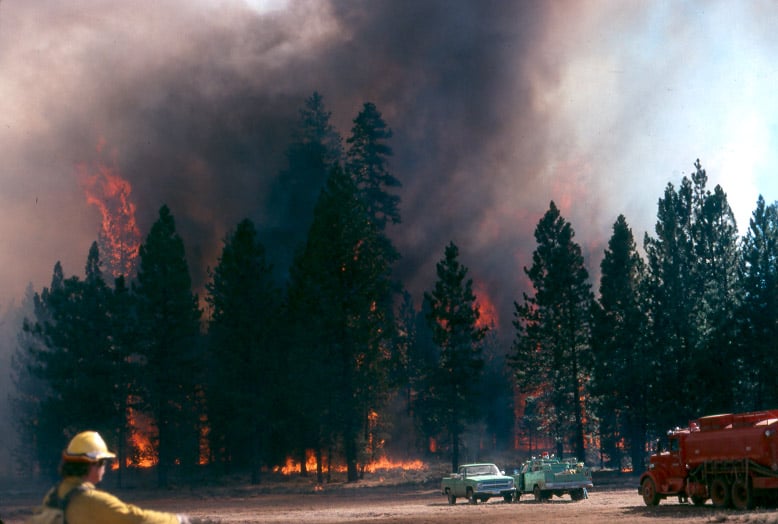
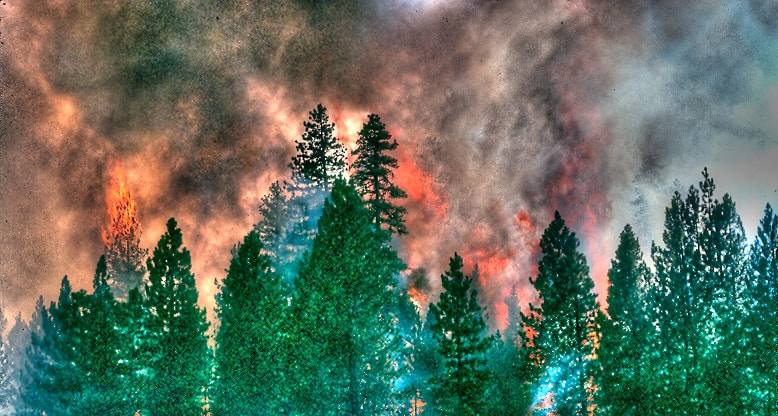
Regarding the picture: I did some processing with a High Dynamic Range (HDR) program to get this artsy view. It is interesting that it enhanced the flames better than in the original scan, from a Kodachrome slide. I shot this while filling in on an engine, on the Lassen NF, back in 1988.

National forests on the campaign trail (or Hillary on the stump)

“Hillary Clinton’s Plan for Conservation and Collaborative Stewardship of America’s Great Outdoors”

Hillary Clinton believes that restoring and protecting the health of America’s forests requires managing them for the full scope of benefits they provide. Clinton will work with the U.S. Forest Service and Bureau of Land Management to set clear management goals that not only recognize the value of forests and public lands for sustainable timber, but for the carbon they absorb, the wildlife habitat they furnish, and the recreation opportunities and clean drinking water they supply. Clinton will build on the success of the Roadless Rule by working to protect and restore old growth and large landscapes that are essential to the health of fish and wildlife. Recognizing that climate change is increasing the dangers and costs of large wildfires in many areas, Clinton will also work to reform the wildfire budget to ensure that firefighters, states, and communities have the resources they need to fight fires every year, and to end the damaging practice of transferring resources away from initiatives that help reduce fire risk and restore the health of forests.

In recent years, special interest groups have been supporting efforts to dispose of or sell off America’s public lands, which would privatize national forests, national monuments, and even national parks. Clinton strongly opposes these proposals to sell off America’s natural heritage. She will fight to protect the rights of our children and grandchildren to explore the lands and waters that define us as a nation.

Clinton will set a goal of unlocking access to at least 2 million acres of currently inaccessible public lands by the end of her first term – halving the amount of public land that is currently off-limits – by pursuing voluntary conservation partnerships with private landowners and state governments to establish new access points, trails, and easements to open public access to public lands.

Clinton will expand energy production on public lands and waters ten-fold within ten years of taking office, while reforming federal fossil fuel leasing.  Through smarter planning, public input, and careful decisions, the federal government should be directing developers – whether for renewable energy projects or mineral extraction – to areas with the fewest potential environmental costs, while clearly identifying those special places that should be safeguarded for future generations.

Clinton will advance a joint Department of Interior/Department of Agriculture program to commercialize biomass energy opportunities associated with sound forest management and agricultural practices

Clinton will ask the Small Business Administration (SBA) to dedicate a portion of SBA loans to entrepreneurs seeking to launch small businesses in the outdoor industry as well as existing business owners in gateway communities.

Trump’s alternative anyone?

Howdy, Folks

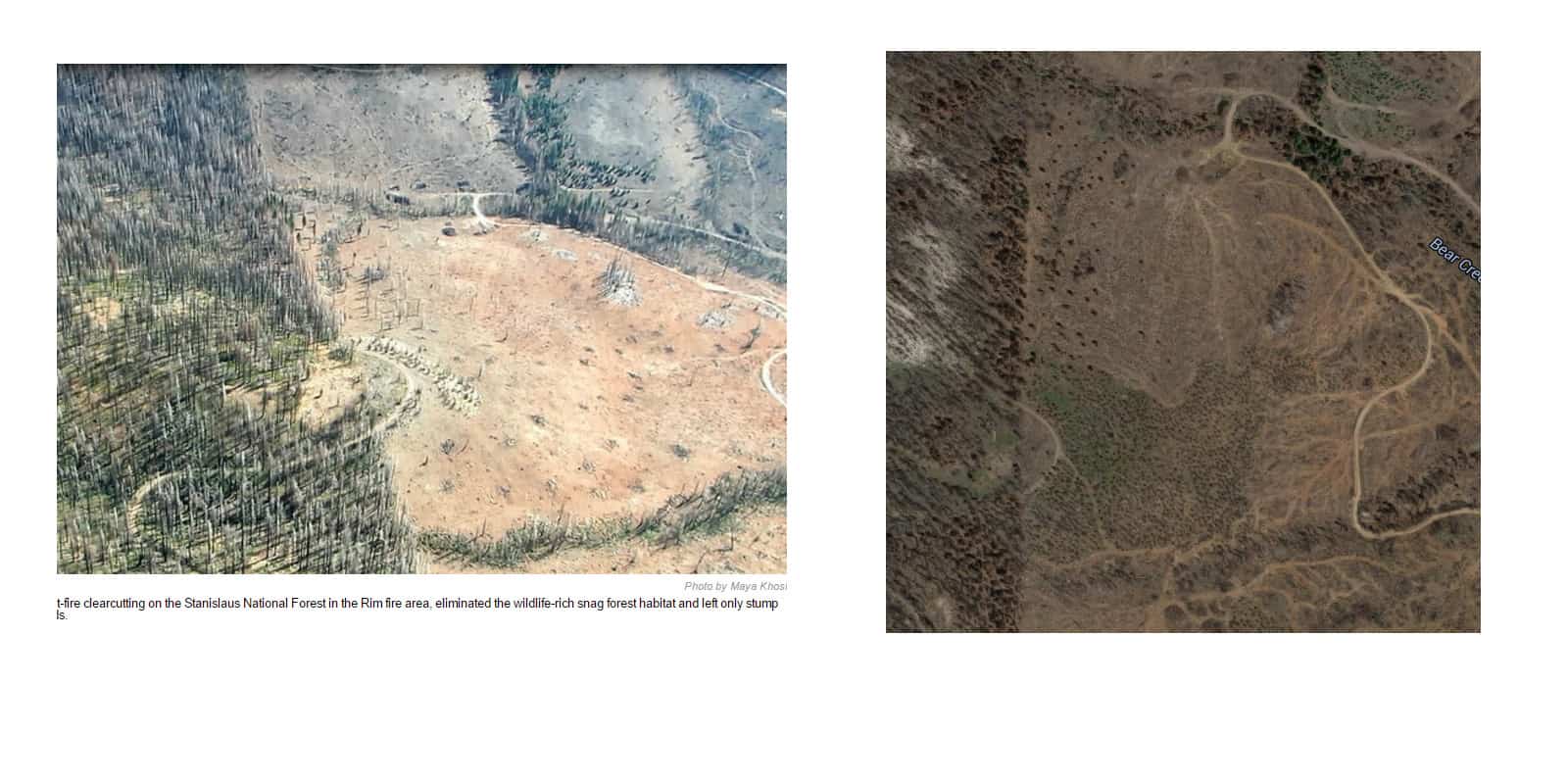
I’m just going to drop this here. A side by side comparison of the land that some serial litigators insist is clear evidence of Forest Service salvage clearcutting in the Rim Fire. The caption reads, “Post-fire clearcutting on the Stanislaus National Forest in the Rim fire area, eliminated the wildlife-rich snag habitat and left only stump fields.” Where is the “wildlife-rich snag habitat” in that burned-over plantation on private land? The picture on the right is before logging started, from Google Maps.

Yes, the story is still up on their website, in all its slanderous glory.

Have a nice day!

Spi-comparison

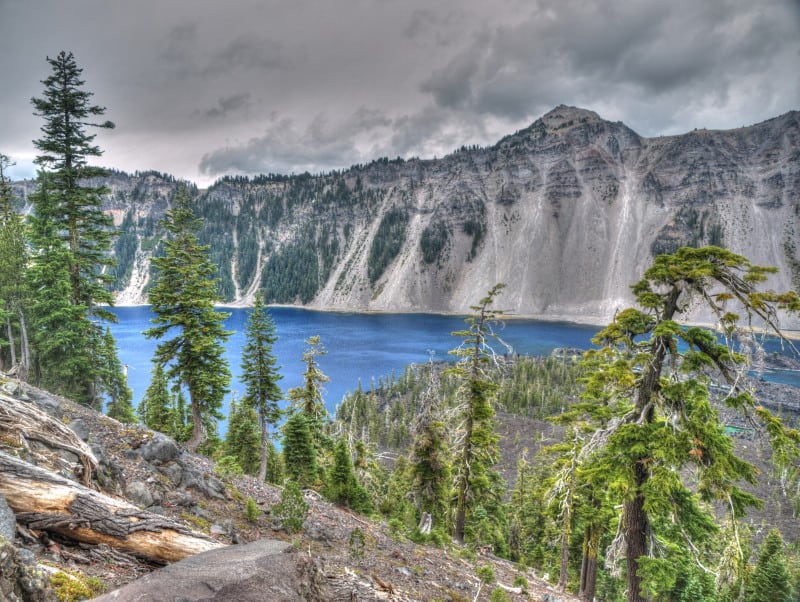
Massive Crater Lake Wilderness Area Fantasy

Oregon Wild has proposed a massive half million acre Wilderness Area, partly to “protect” Crater Lake. The Klamath County Commissioners are saying no, with fears that summer fires would affect public health, and that those unhealthy forests need active management.

P9159024_tonemapped-web

Here is a map of what Oregon Wild wants done.

Climate Change Update

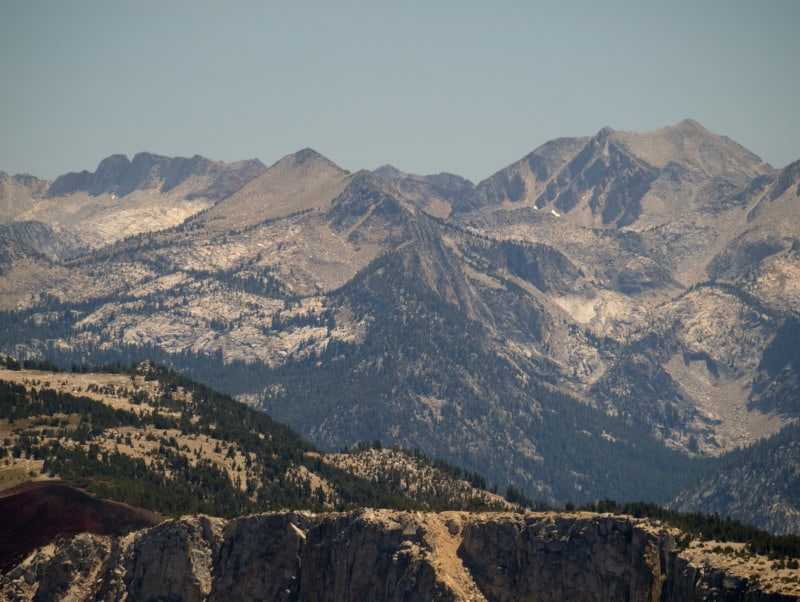
I shot this picture from the top of Mammoth Mountain Ski Area, along the Sierra Crest. At the end of July, there should be a lot more snow and ice (including small glaciers) in this view of north-facing slopes. The view behind me was obscured, for three afternoons, by a Fresno area wildfire, with smoke drifting up over the crest. I’m sure that the groundwater levels are extremely low, as well.

P9288472_tonemapped-web

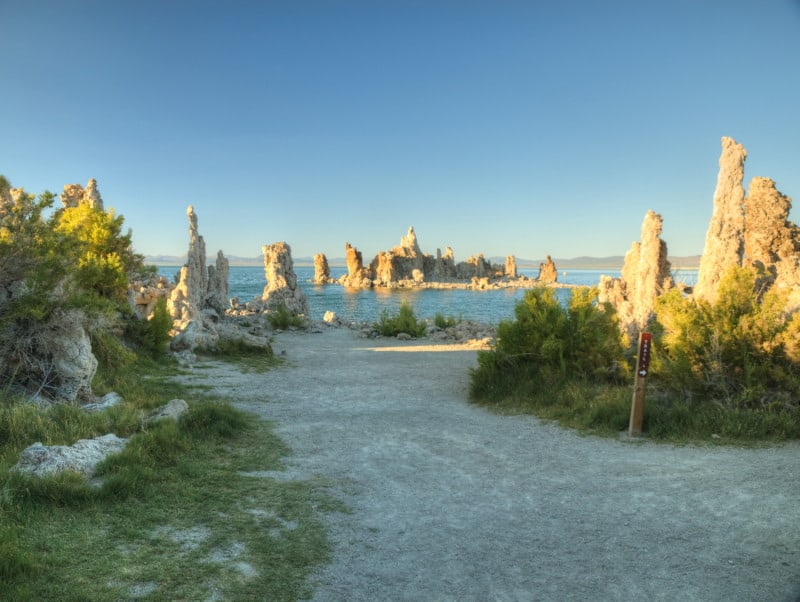
Water levels at Mono Lake also continue to drop, exposing more of the famous Tufa formations, created by the fluctuating lake levels, over tens of thousands of years.

P9288543_tonemapped-web

Career Ladders for Temps?!?! Maybe Soon!

More interesting news for “disposable” employees!

campbell_fire1-webhttp://nffe.org/ht/display/ArticleDetails/i/105694

NFFE-Backed Temporary Employment Reform Legislation Approved by Senate Committee

There may come a time when temporary employees actually have a career ladder!

“Thousands of wildland firefighters and other dedicated seasonal workers have been stuck for too long in dead-end jobs, not because of a lack of merit on their parts, but because of flawed regulations that do not recognize their years of service,” said Mark Davis, Vice President of the National Federation of Federal Employees (NFFE) and past President of the NFFE Forest Service Council.  “Many others leave and take their years of experience with them because of blocked career paths. After years of work, I’m optimistic that we are about to fix that.”

Of course, this is most directed towards firefighters, as so many timber temps have been jettisoned or have found “other employment”. Most temps would say that there is plenty of work to do, outside of their 1039 appointments but, that issue is not being addressed. The higher-ups choose to continue to embrace the 1039 appointments, thinking that policy is “good enough for Government work”. There really is nothing stopping the Forest Service from changing their policies on 1039 appointments. Truthfully, I’d like to see the temporary appointments scaled back to 800 hours, essentially forcing the Forest Service and other Agencies to hire more 13/13 permanent positions. Yep, make it too costly and “inconvenient” for them to continue using temps to do work that is needed, each and every year. It’s up to OPM to impose more rules, to stop the abuse of the temporary hiring authority.

Forest Service Must Re-initiate Consultation With USFWS on Lynx

This looks to have far-reaching effects on those National Forests within the “core habitats”. This looks like a forced settlement situation, where the Forest Service will probably pay dearly for their loss in court.

http://cdn.ca9.uscourts.gov/datastore/opinions/2015/06/17/13-35624.pdf

Interesting:

Although the court granted summary judgment to Cottonwood and ordered reinitiation of consultation, it declined to enjoin any specific project.

Urgent Action Needed to Save Sierra Forests

This viewpoint shows more of the reasons why the desire to have larger and more intense wildfires, in the Sierra Nevada, is the wrong way to go.

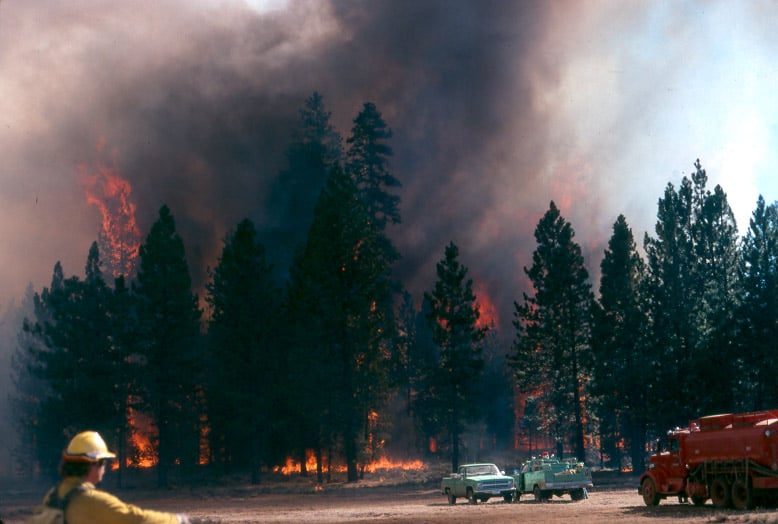
In this picture below, fire crews were run out of this stand, and back into the “safety zone”, on this fire I worked on, back in 1988.
campbell_fire1-web


http://www.sacbee.com/2014/09/28/6737076/viewpoints-urgent-action-needed.html

Air quality the past two weeks has been several times worse than some of the most polluted cities in the world due to smoke from the King fire. Last year’s Rim fire emitted greenhouse gases equivalent to 2.3 million vehicles for a year.

Also, the lost habitat and recreational opportunities from major fires like these are significant. It is not an exaggeration to say that virtually all Californians are affected when these “megafires” occur.

The report points out that wildfires are getting larger and burning at higher intensity than ever before. The Rim fire burned at nearly 40 percent high intensity – meaning virtually no living vegetation is left – covering almost 100,000 acres. More acres have burned in the first 4½ years of this decade than in seven decades of the last century.

What can we do about it?

The main bottleneck in treating more acres is in implementation. The Forest Service is unwilling to increase the size of its Region 5 timber management staffs. They use some of the usual excuses, some of which are beyond their control but, not all of those issues are really significant, looking at the big picture. Yes, it is pretty difficult to implement extremely-complex plans when you are constantly training new temporary employees, hired right off the street.
The Rim Fire: Landscape View

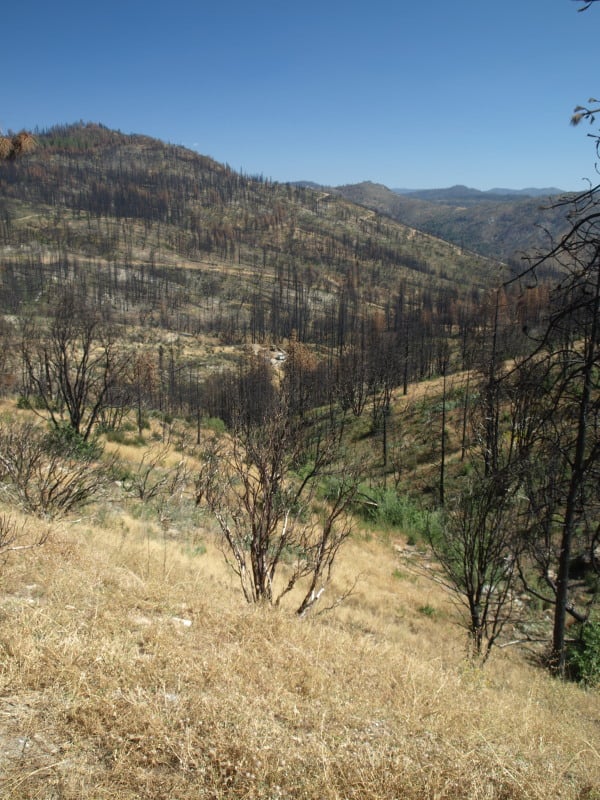
Here is a view of the Granite Creek watershed, and a peek at the Tuolumne River canyon, too. The Rim Fire burned all the way to those most-distant ridgetops. For scale, you can see a vehicle in the middle of the picture. That road is the Cherry Oil Road, which connects Cherry Lake with Highway 120. That greenish tint is the vast growth of bearclover, easily reclaiming their “territory”. Bearclover is one of the reasons why clearcutting has been banned in Sierra Nevada National Forests since 1993.

P9232905-web