Thanks to NAFSR for posting this weekly news roundup from the Forest Service . Here’s the link. If people on this blog are interested, I can highlight here when each week appears.
Forest Service: Culture, History, Morale, Organization, Future
“The Future of the National Forests – Who Will Answer an Uncertain Trumpet?” by Jack Ward Thomas

Here’s a link to the paper, well worth reading in its entirety from Jack Ward Thomas, wise elder, world-class scientist and former Chief of the Forest Service.
Here are some excerpts:
Courts ruled that the FS’s applications of “professional judgment” fell short of the required “hard look” in evaluating proposed management actions. As a result, NF administrators (and legal counselors) became increasingly risk averse and, too often, produced evermore voluminous assessments in an effort to demonstrate compliance with laws and regulations. Evidently, it was assumed that costs of court ordered “do overs” exceeded costs of “overkill” in the form of excessive documentation. For the most part, the strategy largely failed. Losers included citizens who felt inundated, confused, and turned-off by increasingly voluminous and “technically dense” documents. Costs in time and money increased. Post-mortem examination showed that such “over kill” was an ineffective defensive mechanism.
Does this remind anyone of say, Colt Summit, or the Little Belt hazard tree project? And I would add citizens who feel that they are excluded from legal processes that determine the outcomes on their public lands.
“Fierce in battle, many of the eco-warriors have been unable to come to grips with the consequences of victory and are now reduced to wandering about the old battlefields ‘bayoneting the wounded.’ Their counterparts from the resource extraction community, likewise, cannot come to terms with defeat and hold ‘ghost dances’ to bring back the good old days when they were the undisputed Kings of the West.”
Most hard core “environmentalists” demonstrated little concern with the social/economic consequences of their victories. Some, figuratively, continued to wander the old battlefields “bayoneting the wounded” via challenges to even minor forest management activities. Victories have consequences. To the victors belong the spoils – and some responsibility to ameliorate consequences of their victories – “you break it – you own it” (Thomas 2001a and 2001b). There was applicable wisdom in President Lincoln’s admonition to General Grant near the end of the Civil War – “Let ‘em up easy.”
On EAJA:
The Equal Access to Justice Act (EAJA) (1980)
The EAJA allows citizens to sue federal agencies for non-compliance with law(s) and/or regulation(s). Winning plaintiffs are compensated for costs. Conversely, plaintiffs with low net worth (or have non-profit status) have no liability when they lose – no matter what havoc the suit may have inflected in terms of management delays and legal costs. An ongoing drumbeat of judicial decisions (i.e., “case law”) defines and redefines the “playing field” for political/legal games surrounding NF management.
What do you think of these ideas for the future?
Of “Gordian Knots” and “Certain Trumpets”
Today, the NFs are increasingly viewed by some as a liability – economic, political, social, and ecological – rather than an asset. NFs should be increasing in value as populations increase and forest and range lands in private ownership are increasingly fragmented and “no trespassing” signs blossom like flowers in the spring.
One of two approaches to that problem seems possible – perhaps likely. The first is to continue to “pick around the edges” with clarifying adjustments in applicable laws. That approach, if past is prologue, will entail long drawn out processes of adjusting myriad laws – and making new laws – piece meal. Such is likely to have predictable consequences – after all, we have been down that road before.
Or, it can be realized that picking, prodding, poking at, and adding to the Gordian knot could/should be replaced by a bold stroke that cleaves the knot. Past efforts to address management of public lands provide insights into reform – and why previous efforts failed. There are only two options – learn to love and appreciate the Gordian knot as having essentially brought active management to an end or to, once again, “break new ground.” The second will, sooner or later, become mandatory as we struggle with reducing public debt (which will, in the end, involve reducing federal expenditures while increasing revenues). A revised approach to NF management could contribute to solution – but only if the Gordian knot is severed, the mission clarified, and achievement of management objectives facilitated.
That task is too complex to be effectively addressed by Congress or the Administration with out some help. Preliminary efforts by a carefully selected group of knowledgeable individuals experienced in the management of natural resources arena, public land law, and administration of land management agencies, should be charged with developing potential solutions with associated benefits and costs. Those assigned should complete the task in a year or less given the information and experience already at hand.
Recommendations should focus on revisions of present laws (including repeal of those that are not current with extant situations, redundant, or are not in synch with other applicable laws) and new law(s) that clearly define the mission and the expectations for the FS. The best of the spectrum of “old laws” should be incorporated into new law(s) so as to clarify intent. Ideally, the result would be the “certain trumpet” to guide the management of the NFs and the FS.
Land use planning should be a meaningful – a guide to management action and funding – achieved within a year at much less costs. Before embarking on new efforts in planning it is critical to determine why such planning has failed so miserably and short comings rectified. Flexibility should be a component so as to deal sudden alteration in conditions – fires, markets, economics, and, insect and disease outbreaks.
New sources of revenues should be explored and instituted. As examples, grazing fees should be adjusted at regular intervals to reflect market conditions on similar private lands. User fees for recreational activities should be explored – say fees for access for hunting (Thomas 1984, Sedjo 2000b). Methods of dispute resolution, short of resort to the courts, should be developed. Perhaps those that challenge the agency in court should, when they lose, be held liable for damages – which can be significant in terms of legal costs and delays in executing scheduled operations (Peterson 2000).
The new instructions should prioritize the importance of factors bearing on the FS’s decisions – environmental questions, jobs, welfare of local communities, monetary returns to the treasury and counties, balance of trade, water flows, clearly defined tradeoffs, etc. Thomas (2009:198-199) put forth suggestions to overcome the shortcomings of previous commissions that addressed public land management. FS Chief Emeritus R. Max Peterson has made similar suggestions (2000).
1.) There will be a limited time for execution – say six months to one year. The report will be delivered to Congress and the President at the beginning of a new Congress so as to be sheltered from the every second-year fascination with elections.
2.) The key members will work full-time on the project.
3.) Commission members will be compensated at the rate of the highest level of the senior executive service.
4.) Support staff will be made available as requested by the Chairperson.
5.) The effort will begin with recognition that there are problems (the Gordian not) that demand adjustments in laws and regulations.
6.) Results will take the form of potential alternative courses of action packaged as legislation, or amendments to existing law(s), ready for introduction.
7.) Clarity of purpose, intent, and required process will be of paramount importance – i.e., there should be limited potential for court interpretation.
8. Efficiency of management (in both time and money) will be of paramount concern.
9.) An arbitrations process to handle disputes short of federal court will be determined.
10.) The right to appeal proposed agency actions should be preserved. However, processes will be instituted that prevent or discourage “game playing” to draw out decisions and impose costs that render pending management infeasible. Those who challenge and lose will be subject to economic penalties.
.
11.) It will be recognized that the existing panoply of laws, interpreted variously by the courts over the years, has created an effective, burdensome, cumbersome, and inefficient system of accountability that thwarts action by the FS and Congress. Such will be corrected.Posewitz (2008:11) opined:
“If we are to sustain the legacy that it has been our privilege to enjoy, it is essential that people of principle and idealism respond to the current iteration of the perpetual crisis in public land management. It is time to not only rise in defense on the National Forest System, but also in defense of the custodial agency planted in our culture by Theodore Roosevelt and Gifford Pinchot. “
Mitch Friedman (2008), self-identified as a leader of a “green group” supported FS Chief Dale Bosworth’s proposals for “collaborative restoration” of NF lands with “forest health” and “collaboration” as guiding principles. What seemed a rational and promising approach failed to yield much success. Funding such activities and keeping involved constituencies engaged in attaining support, the key to success – proved intractable.
“Muddling through” is wasteful and should not be tolerated (Nienaber and McCool 1996). As former Congressman Pat Williams (2008:8) of Montana plaintively asked: “FS – where did you come from, with what mission, and where, oh where are you headed?” That cogent, well-informed, plaintive question demands answers.
Miller (2008:17-18) believed that a successful future for the NFs lies in:
“…the creation of a cooperative conservation strategy in which local governments and organizations, in combination with federal land managers, develop forest plans. Proponents of collaboration have been inspired by the NFMA and the ESA that require public participation and interagency coordination: they have also been energized by community-based managerial initiatives promoted at the 1997 Seventh American Forest Congress…”
“…Moreover, although any change in the agency’s land management mission will require internal support from the FS’s leadership and staff, the real locus of any such transformation lies in Congress and the executive branch…”
Sedjo (2000b) recognized that the FS
“…no longer controls NF policy. Instead, mandatory provisions of the law and regulations…mean that the regional and local landscapes, watersheds, and their resources are now the focus of attention…the FS …now lacks the institutional capacity and authority to fully develop and implement ecosystem conservation agenda and resource management programs…due to lack of ability …to interpret and respond effectively to the public’s priorities…”
Enough already, it is time, way past time, to answer those old, up to now intractable questions. The future of the NFs and the FS rides on the answers. Obviously, the FS cannot, acting alone, provide such clarity. And, clearly, it is time, far past time, for clarity. Carpe Diem!
Martin Nie in the previous post suggested that we need a “land law review.” Framed that way, it places the locus of control, at least to some extent, with the legal profession. What I like about Thomas’s idea is that the group is determined more broadly.
Preliminary efforts by a carefully selected group of knowledgeable individuals experienced in the management of natural resources arena, public land law, and administration of land management agencies, should be charged with developing potential solutions with associated benefits and costs. Those assigned should complete the task in a year or less given the information and experience already at hand.
And perhaps not biting off all public lands and focusing only on the Forest Service would make the problem more tractable. What do you think?
Forest Service Helps Out With Sandy
Here’s an article about Montanans from Rob Chaney of the Missoulian.
Forest Service Understaffed: Another Solution

The 21,400-square-foot home sold this week for $43 million and it wasn’t even on the market. Brokers say it’s the most expensive home that has sold in the U.S. so far this year.
The 10-bedroom contemporary mountain home on 4.5 acres sits at the base of Aspen’s exclusive Red Mountain.
Here’s the link and below is the letter.
Dear Editor:
The Aspen-Sopris Ranger District’s budget is out for next summer, and they get four summer employees for the entire district. One of those will be trail crew to clear more than 500 miles of trail. This past summer, the district had four on-trail crew members, and they still didn’t quite get all the trails cleared. Be prepared for some tough hiking next summer.
The Roaring Fork Valley makes a lot of money from national forest use. Perhaps those who make the money would be willing to help the district maintain the facilities. A trail-crew person cost the Forest Service $20,000 for the season, including all benefits. The Forest Service cannot solicit donations but can accept donations for a specific purpose.
An organization needs to step forward to act as a clearinghouse for money donated if we want our visitors to have a quality experience next summer.
Ron Thompson
Aspen
Brinda Sarathy’s Pinero Presentation

Thanks to Brinda Sarathy for this presentation, and also to Char Miller for sending. It is interesting and possibly serendipitous that we are discussing our future workforce- what happens when the FS either doesn’t have enough money to, or is forced into the ideological trap of, contracting.
If “the problem” is “federal employees take too long to get and cost too much (to paraphrase critiquest of planning), we have different solutions. Solutions include contracting, volunteers, concessionaires, and just reducing management (say dispersed recreation).
Even within contracting, though, there are contractors who follow federal laws (labor and immigration) and those who don’t. And it appears that the law-abiding are disadvantaged.. not IMHO a particularly desirable public policy.
I watched Brinda’s entire lecture and reflected on the time period I remember, when we were gradually changing from force account work to contracted work, for tree planting and cone collecting. I know many of the blog readers were also involved in this work in the same time period. I’m hoping that you will add your own views and historic perspectives.
There are so many interesting questions that her work raises; here are some of mine, feel free to add yours in the comments:
1) What agency’s responsibility is it to ensure that immigration and labor laws are being followed? Why or why not are those agencies doing their job?
2)Which laws that the FS must follow do contractors have to follow? For example, do they have to do diverse hiring? Is anyone checking on that? Presumably contractors are more “efficient”; how exactly do they get to be more “efficient”, by paying their workers below minimum wage, not having the same requirements as federal employees or ? (this is really the same question as about concessionaires, isn’t it?)
3) The spatial scale of benefits and 8A set-asides: if, as Brinda’s graph seems to show MOST contractors in southern Oregon in the ecosystem services business are Hispanic..so should they still qualify for a set-aside? Should set asides be more flexible based on the specific kind of contract and the spatial scale?
Brinda mentions as a recommendation using “best value” contracting. Previously on the blog here, we cited this FS letter (Ron Hooper, 2007) on best value contracting that used the language from the 2006 Approps Bill on local workers:
n evaluating bids and proposals, give consideration to
local contractors who are from, and who provide employment and training for, dislocated and displaced workers in an economically disadvantaged rural community, including those historically timber-dependent areas that have been affected by reduced timber harvesting on Federal lands and other forest-dependent rural communities isolated from significant alternative employment opportunities:
4) Has this letter made a difference? Why or why not?
One thing I wanted to mention about her point on Paul Bunyan (apologies for my X treme-pedantic observation)- actually some people (based on this note from Wikipedia) think the character originated as a French-Canadian, I guess which would make him a “white” male but not a US citizen.
Here’s the link to Brinda’s presentation.
Note: I started a new category called “Workforce” for this multifaceted topic of “how the work is to be done.”
Diversity: The Vision vs. The Tactics
Mike is always asking about the big picture. So I developed my own vision, before looking at the “official” ones. I’d like to hear what you think about it. Because I suspect we agree on the vision, but not the tactics.
My Vision:
What are we looking for in diversity?
I guess what I am looking for are experiences of a Forest Service that looks like America. If I go to a campground or a public meeting, or a meeting of Research executives, there should be faces that look like the variety of ethnic groups and genders, that live in the country. Within the agency, the culture should be welcoming of all kinds of diversity- in sexual orientation, religion or not-religion, food preferences. You might hear as much about the latest play in town in casual conversation, as say, football or elk-hunting.(OK, well that’s a bit over the top, perhaps). People would not make judgments about people based on their previous chairs (e.g., if you never worked on a ranger district you can never really understand the Forest Service). People would be very careful when determining that someone just “doesn’t fit” in a job, that the person doesn’t actually have a point of view that is different and important to hear. So my views are right-brain and holistic and difficult to understand and achieve numerically.
Here is what the OPM Director thinks:
When we draw on the wisdom of a workforce that reflects the population we serve, we are better able to understand and meet the needs of our customers-the American people. Government-wide, we have made important progress toward hiring a workforce that truly reflects America’s diversity, and we will continue to pursue that goal. But merely hiring a diverse workforce is not enough.
We must make our workplaces more inclusive as well.
America was founded on the ideal that from many, we are one, a whole that is greater than the sum of its parts. That is the rationale for inclusion. To gain the maximum benefit from our increasingly diverse workforce, we must make every employee feel welcome and motivated to work their hardest and rise through the ranks. We must affirm that we work better together because of our differences, not despite them.
And diversity and inclusion from this document (with the mind-numbing title of “Guidance for Agency-Specific Diversity and Inclusion Strategic Plans”).
Definitions of “Diversity” and “Inclusion”
Throughout this document, we define workforce diversity as a collection of individual attributes that together help agencies pursue organizational objectives efficiently and effectively. These include, but are not limited to, characteristics such as national origin, language, race, color, disability, ethnicity, gender, age, religion, sexual orientation, gender identity, socioeconomic status, veteran status, and family structures. The concept also encompasses differences among people concerning where they are from and where they have lived and their differences of thought and life experiences.1
We define inclusion as a culture that connects each employee to the organization; encourages collaboration, flexibility, and fairness; and leverages diversity throughout the organization so that all individuals are able to participate and contribute to their full potential.
It actually sounds pretty similar to my vision, doesn’t it (without the showtunes)? Like harmonies between nature and humans ( a la the NEPA statute), though, the devil seems to be either in the details or the tactics to get to the vision.
So let’s imagine that you’re a district ranger and you want to hire someone outside the FS. First of all, you can’t tell if they are in a diverse groups or not (except if they are women). There is a box, that people might check, but that part of the form doesn’t regularly get forwarded from Albuquerque (or that was the last I remember, I hope this part has been fixed). So if someone’s name is Villanueva, they could be Hispanic… or if they’re a woman, they could have had the maiden name of Mary Flanagan and married Jane Villanueva (in some states..) .. leading to a different impression of ethnicity. You could check what town they’re from, what high school they went to and make inferences.. you could see if they put belonging to the Asian American Club in their list of activities..but you really have no clue.
Now why would people not check the box? I have been told that the forms are not the easiest to figure out for anyone, including current employees. It wouldn’t surprise me if there were glitches of various kinds on the computer between them entering the check and it being produced in a report. Then some people don’t want to be thought of as a number on someone’s list of people to get. None of these possibilities help the District Ranger meet her boss’s expectations. Of course, there are numbers you are supposed to meet, but because it is not cool to talk about them, no one knows what they are (well, some people have told me that there are secret documents, but.. is this too weird or what?).
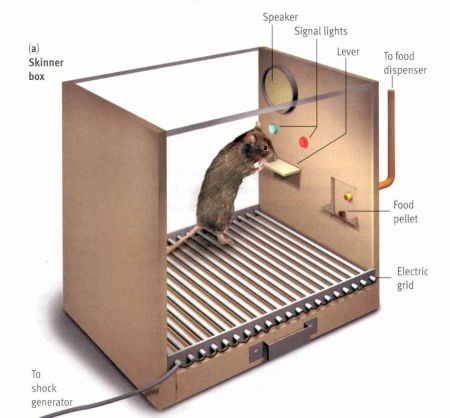
When I first understood this, it reminded me of the experiment where the rats pressed a lever and they randomly got a pellet or an electric shock. It can’t be good management.
It’s like you were assigned to breed cattle for milk production, but you weren’t allowed to see the milk production figures. I think we would all recognize that situation as pretty ridiculous, and you would turn down the job if offered.
One of the young leaders at the Retiree Rendezvous was asked why he stayed with the Forest Service- his answer was more or less that there was nowhere else to go with his degree. Let’s see, pellet, shock, can’t escape cage…(this fellow really had a positive attitude, thank heavens for young people!).
One of my associates pointed out the below ethnic delineations of OPM. Like so many variables that are essentially continuous, drawing lines at any spot can be difficult and somewhat meaningless.
Below are a couple of my “not-favorites” from USA Jobs.
Hispanic. A person of Mexican, Puerto Rican, Cuban, Central or South American, or other Spanish cultures or origins. Does not include people of Portuguese culture or origin.
So if you are from Portugal, you are not-diverse. If you are from Spain you are.
If you are from Brazil, you are not-diverse. If you are from Venezuela, you are.
And
White, not of Hispanic origin. A person having origins in any of the original people of Europe, North Africa, or the Middle East. Does not include people of Mexican, Puerto Rican, Cuban, Central or South American, or other Spanish cultures or origins (see Hispanic). Also includes people not included in other categories.
If we had other “whites” and no people who originated in the Middle East, Iraq or Iran, Morocco or Egypt, would we be “diverse? or not” It’s all very puzzling. Also, “people not included in other categories” are “white” so if you read the definition of American Indian or Alaska Native here literally:
A person having origins in any of the original people of North America, and who maintains cultural identification through community recognition or tribal affiliation. (This code must not be used for employees in Puerto Rico.)
You would think, then, that a South American with origins in the original people of South America must be “white” as they are “not included in other categories.” It’s all kind of bizarre.
And a further problem is that when you use these distinctions to give people preferential treatment, there might be a tendency to make claims that aren’t accurate, because (I hope I’m not shocking anyone here) not everyone is honest on this planet.
And even if the family history, of say, a black, Hispanic or Native American ancestor somewhere up the tree is “true”; if you did DNA tests, you might find out that somewhere along the lines the assumed grandfather is not the biological grandfather. And really if the goal is for people to “look” diverse, then even thinking about whether someone is 1/16 something or not, when they have no appearance or cultural ties, does not really meet that goal. So perhaps our incentives and our goals are not lined up.
We do have people who appear to be white, claim they are not, but we can’t actually check. Meanwhile people who appear to be in diverse groups, and have the cultural background that we might want in terms of diversity, if they don’t check the box, don’t “count.” And counting is important, in addition to the opportunities of an individual, because some poor schmuck and his boss and his boss’s boss (and so on for I guess about five levels or so) or are going to be rated or be “berated” on how they are doing.
Now, the story that I heard was that the Secretary made a serious mistake (we read about it in the paper) and is being punished for his sins until he “moves the dial”( actually I heard a related expression, but can’t remember it right now). The way this story goes, since the Department has mostly FS employees, then the FS must make drastic changes to show the Sec’s contrition.
Like I said, I don’t know if that story is correct, but colleagues at the Interior agencies have goals also, but not the intensity of the FS. Which is data which a) might support the hypothesis and b) makes me wonder whether there are actually any advantages for the FS in being the “main target” of USDA instead of “one of the crowd” in Interior.
I have gone on too long for a blog post, but I do have some ideas for how to align the vision and the incentive structure, which I will share in another post. The first idea, that we’ve already started, is to open this discussion to get others’ perspectives.
Jerri Marr, Forest Supervisor on the PSICC, on Public Service

I’m posting this because I am a big fan of Jerri’s and I think it’s a good interview. While we are organizing our campaign about involving people in recreation management strategies, it’s nice to take some time to focus on good public service and servants.
Here’s the link and below is an excerpt.
: Was there anything about the fires that surprised you?
A: The fire itself didn’t surprise me. We were in severe drought conditions. We have only gotten 19 percent of our precipitation in the last two years — 19 percent a year. The surprise for me, the pleasant surprise, was the way the communities just all came together and all of the agencies, all of the leaders, there were just no egos. We were focused on one thing — making a difference in our community.
Q: What historical figure do you most identify with?
A: I always identify with the underdog. Because that was my life, people who didn’t believe in me. If there is an underdog out there, you will find me rooting for him.
Q: What living person do you most admire?
A: I have the most respect for my parents. The sacrifices they made so I can have the life I have today. That resonates with me, and I want to live my life like that.
Q: Who is your favorite fictional character?
A: Mabel Simmons, who is called Madea. It’s a character played by Tyler Perry. Madea is the matriarch of the family. She is no-nonsense. Let’s just tell the truth; don’t be afraid of who you are. She makes me smile, to be fearless in my life.
Q: Who are your real-life heroes?
A: The men and women who dedicate their lives to public service, in the military, firefighters, policemen, foresters. People who spend their lives on behalf of serving others, those are my heroes. The sacrifices they make, that is huge. People who say, I’m not in it for the money, I’m not in it for the fame. I’m in it for the service. It’s a privilege to be a public servant; it’s not a last resort. When you are thinking about the first job, think about public service. There is such honor that comes from that.
Q: What is your most treasured possession?
A: My Nikon D800. I love photography. If I’m on vacation I have my camera, if I am working I have my camera. There is so much beauty in my world, with what I do. I minored in photojournalism in college and I have loved photography since I was a kid. Now I have a job so I can afford better cameras.
Q: When were you happiest?
A: I think if I wake up breathing this morning , I’m happy. Happiness is a choice. People will let you down, things will disappoint you. It’s about being happy today, in this situation. I choose every day to find the good in others, the good in myself. How can you not be happy if you think about all of the things you have in your life?
Q: If you could come back to life as an object, what would it be?
A: I’d come back as a camera. They get to capture life. You experience the good, the bad and the ugly. Cameras have seen so much. That makes cameras pretty special. They capture the moment.
We Need to Talk- About the “Other Kind” of Diversity

Our blog has profited from discussions of many hot topics regarding the Forest Service and public land management. Some folks, some internal and some external, have said “we need to talk about diversity in the FS.” I wondered about how the followers of this blog would feel, as it may be a bit FS-centric for our readers, but we’ll see.
I think that there are some reasons that it might be worth talking about:
1) who works at the FS is important to the future of the FS and our public lands
2) as with so many things, if not handled well, it can be demoralizing to employees
3) there aren’t many other avenues for people to discuss it
4) the whole enterprise of figuring out what “we” want, and bringing diversity, is, I’m afraid, rife with fuzzy thinking.
We have a proven track record here of mostly respectful dialogue on topics that people feel passionately about, so I am optimistic we can say things on this topic that express our experiences and remain civilized.
Right now I see a series, with this as the first installment. There are things happening right now in the Forest Service (or at least right before I retired) that are worth talking about and will be, but let’s start with the history, at least as perceived by one person. Check out this book and the reviews.. there are still a great many hard feelings and passion, as you will see. It seems like a fire-o-centric view, but then there are many fire-o-centric folks in the Forest Service (and among retirees, if the Rendezvous was a random sample).
The title of the book is: The Tinder Box: How Politically Correct Ideology Destroyed the U.S. Forest Service.
Of course, as one might expect, I see things differently, including that fact that I don’t think the FS, nor Region 5, are “destroyed”. But I think it’s interesting that in the comments, many of the current woes of the FS in California (and elsewhere!) seem to be attributed to the Consent Decree.
I ran across this piece about how “feminism” had destroyed the Forest Service; yet I have found it generally found the Forest Service to be a remarkably “un-feminist” kind of place:
Most of the women did not stay long in the most grueling jobs, but they were invariably replaced by others overwhelmed by the tasks. Shaw was eventually denied a position as fire management officer. He said a much less qualified woman was chosen instead. He told Burchfield:
No one had any respect for her; no one had any respect for fire management; no one had any respect for the Forest, and no respect for the agency. It all drained away.
Ironically, affirmative action made for a level of hostility toward female employees that did not exist before. Sensitivity training became standard.
Before the Bernardi decree, men who retired from heavy labor in the field often went into office work for the Service, where their knowledge of the lands contributed to their work. Afterward, these jobs went to those who had little experience on the ground, leaving a void where institutional knowledge was once preserved.
While quite a few men have won individual discrimination complaints against the Service – and have been denied promotion ever since – two major class action suits by male plaintiffs were never fully aired in court. The Supreme Court refused to review them.
The Forest Service, which once turned a profit, now loses millions. Undergrowth flourishes, causing many more fires. According to Burchfield, “eight of the eleven worst fire seasons since the 1950’s have occurred over the past twelve years:”
True enough, urban interfacing, changing climate patterns, and the ever-rising numbers of youths brought up without supervision (today’s arsonists, meth dealers, etc.) are contributors to these disasters. But, the primary cause of these losses is the agency’s madcap obsession with gender equity, which by 1987 had resulted in a tremendous drop in prescribed burns, clearing of fire lines and slash cutting. In many instances, the Forests are so badly overgrown, that they possess 10 to 100 times as many saplings per acre as those managed by the Indians of 180 years ago.
Mexican marijuana cartels commandeer acreage in the West for farming. Crime has increased and service patrols are inadequate to respond to it, with women forest officers particularly disinclined to restrain those violating rules. Recreational trails and mapping have deteriorated so much that the only hope in many places is that these duties will be someday turned over to local conservancies. The tremendous increase in the use of off-highway vehicles has exacerbated this neglect.
Last I looked, there were no female Station Directors, and in Region 2, last I looked 2/11 forest supervisors were women, and one deputy forest supervisor out of seven. So out of 18 line officers of the forest supervisor persuasion, there were 3 women. If women are 50 percent of the population, and after 40 years of trying, we are still less than 20%, then perhaps draconian efforts like the Consent Decree are needed (just a “straw person,” really!). But I think it’s hard to blame a more generic agency-wide torpor on too many women. Not impossible, just hard, especially if you look at the numbers.
This is definitely a situation in which we all need to “listen with the ears of the heart.” I think that if we listen carefully, with an open mind and heart, to everyone’s stories, perhaps we can find a better and more inclusive path forward.
Forest Service Future: Mike’s Big-Picture Questions
We diverged from Mike’s original question in the post here:
It could very well be that we are seeing the end of FS employees actually implementing management plans and, instead, moving into a time where the agency puts together management plans in conjunction with public and then contracts out all implementation (we’re practically there in most cases anyhow). These wold be longer-term contracts with multiple-year objectives. The benefit in doing business this way is that if the FS is legally bound by contract, the funding to fulfill the contract is much more likely to be included within future FS budgets. Another place where this kind of thing might fit well would be in fulfilling the FS mandate to perform adequate monitoring, following project implementation (e.g. forest thinning projects). In this scenario, the FS would still need funding for enforcement of contract terms for whatever the concessionaire (or contractor) is doing, but it could still pencil out as a costs savings to the public. personally think this is a really interesting topic and would enjoy exploring this further… I’m interested in a couple of things… first, do you agree with “we’re practically there?” Second, the idea of legally binding contracts – how could we make them flexible enough to respond to changing needs and also yet solid enough to be meaningful? Other’s thoughts and comments would be appreciated.
into the world of contracting for ecosystem services.. related and worthy of its own discussion, which I hope will continue.
I am posting this to bring us back to Mike’s questions; I am thinking that stewardship contracts may be a preview of this new world, and I wonder what people with experience in stewardship contracting have to say. It seems like it could be easy to build monitoring into a stewardship contract and I assume that it has been done? Here are Mike’s later questions:
That is, whether moving further toward contracted implementation of FS management plans would allow for longer-term management plan implementation on NF, something most everyone agrees is desperately needed instead of the often piece-meal approach that happens today. Sharon raised an interesting question that pertains to whether contracting would/could allow for adaptive management (i.e How would contract terms be written to allow for adaptation but still hold the contractor and FS accountable?). This seems like a really interesting topic for discussion. Personally, I’m just not sure, but would be really interested in hearing of examples where this has been tried before, especially pertaining to National Forest management. As I think about this, though, one example may be found in the recently let 4-FRI contract in the southwest, which is a multiple-year contract to thin tens of thousands of acres of P-pine forest in just the first phase of the project. It seems like there would have to be clauses that account for adaptive management in the there. I’ll check and see.
My other thought on this topic pertained to post-project monitoring required by law on NFs. Here, I think most people agree that the FS has a dismal track record when it comes to longer-term monitoring, and the reason often cited for this is that long-term monitoring requires consistent federal funding, long after a project is completed, and the reality is that the money often just doesn’t come through. I may be wrong here, but my sense is that if post-project monitoring funding was legally obligated through a multi-year contracts tied directly to on-the-ground projects, this could be an effective way of ensuring the motoring actually happens, which would then inform the adaptive management. I’m sure my take is overly simplistic and I welcome other responses. I would guess this has been done already at least on an ad hoc basis, but would like learn more about where and what kind of things resulted. What am I missing?
Future of the Forest Service: Management Plans and Implementation Contracts?
Mike articulated the below thoughts on a thread on privatization of campgrounds… I think this is worthy of discussing more broadly, both in the context of Char’s piece on land management needs and budget realities here and as a piece of the whole “privatization” question (discussed here and previously).
so here is what Mike said in this comment:
It could very well be that we are seeing the end of FS employees actually implementing management plans and, instead, moving into a time where the agency puts together management plans in conjunction with public and then contracts out all implementation (we’re practically there in most cases anyhow). These wold be longer-term contracts with multiple-year objectives. The benefit in doing business this way is that if the FS is legally bound by contract, the funding to fulfill the contract is much more likely to be included within future FS budgets.
Another place where this kind of thing might fit well would be in fulfilling the FS mandate to perform adequate monitoring, following project implementation (e.g. forest thinning projects). In this scenario, the FS would still need funding for enforcement of contract terms for whatever the concessionaire (or contractor) is doing, but it could still pencil out as a costs savings to the public. personally think this is a really interesting topic and would enjoy exploring this further…
I’m interested in a couple of things… first, do you agree with “we’re practically there?”
Second, the idea of legally binding contracts – how could we make them flexible enough to respond to changing needs and also yet solid enough to be meaningful?
Other’s thoughts and comments would be appreciated.