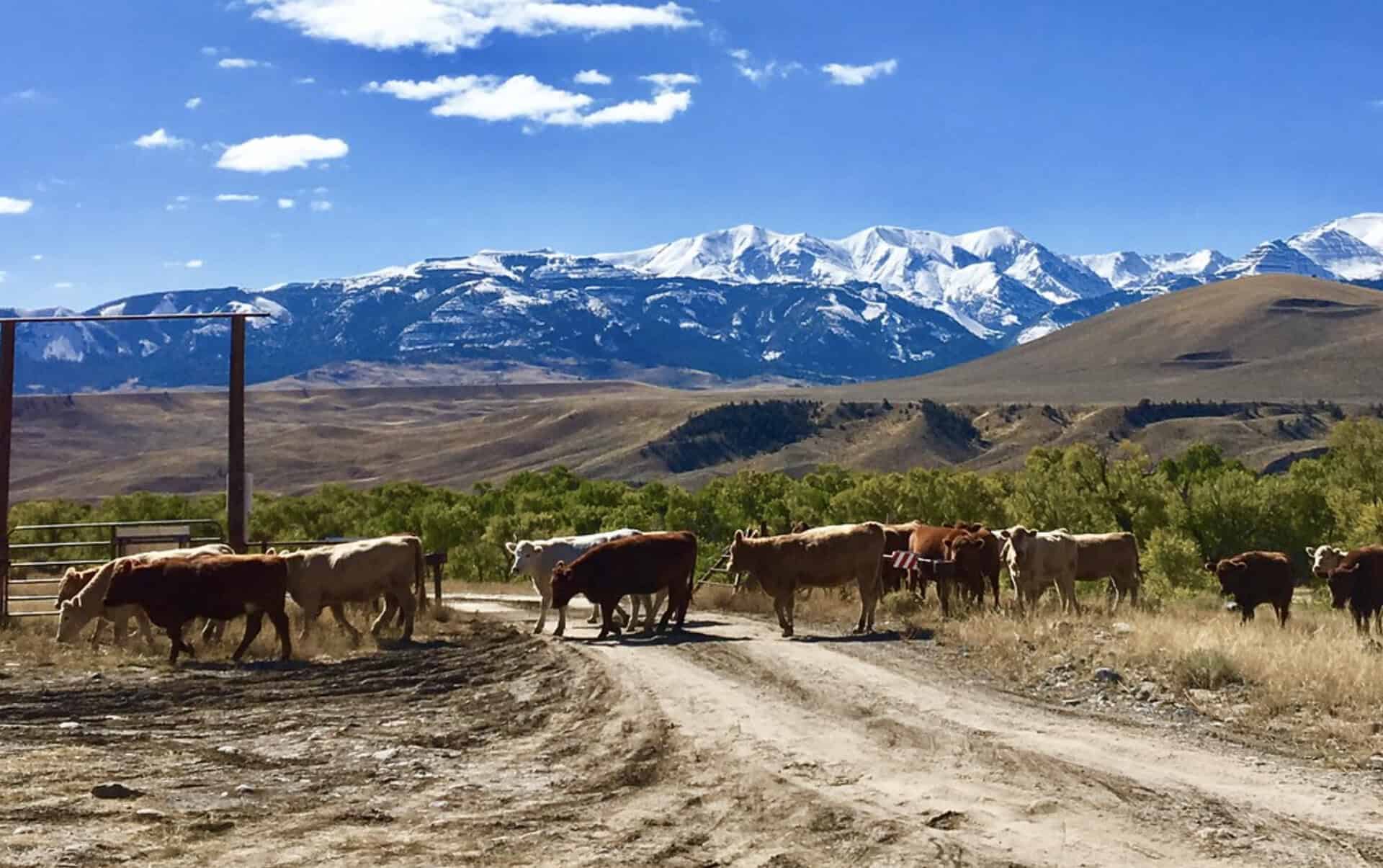
I belong to the Society of Environmental Journalists.. now there are many interesting things that could be reported on. Like the use of cattle for reducing fine fuels that David Marston wrote about in the Denver Post. Or the recent incursion of 25 cattle that wandered into Yellowstone Park, which provided an opportunity for the Cowboy State Daily to write about some interesting history of cattle in the Park.
But I think you can tell from this “Reporter’s Toolbox” what they are looking for and what they will write about.
Reporter’s Toolbox: Grazing Data Unlocks Public Land Stories
Just about anyone can access data on federal grazing permits. But as an environmental journalist, your job may be finding the favoritism behind them.
Almost all federal permits for grazing cattle, sheep and horses on the open range are administered by the Interior Department’s Bureau of Land Management. It keeps records, even though it wants you to keep your nose out of “their” business. Don’t.
The database can be found at what it calls the Rangeland Administration System. The whole grazing system is pretty complicated. But BLM explains it here.
The data is online, searchable and downloadable in both flat file and geospatial forms. You can browse anonymously, but they try to make you sign in.
<h3>Grazing as journalistic goldThis stuff can be actual news. BLM this year revised its grazing regulations, making it illegal for environmentalists to lease land purely to conserve it. Ranchers liked that; conservationists didn’t.
This year, it also kicked bison off some leases. Ranchers liked that; conservationists didn’t. A judge stopped it, at least temporarily.
And the independent news desk Public Domain has been reporting that controversial Interior official Karen Budd-Falen has been skirting conflict of interest rules (her family holds interests in the grazing system).
How to use the data smartly
Toolbox thinks the BLM data probably has considerable integrity — if only because it gets a lot of it. But it’s hard to tell. We do expect this of government data these days.
The best use of this data is probably as a tool in investigations. You can start with a leaseholder name or ranching company — and then follow that leaseholder through other connections in various ways.
What you are looking for, typically, is favoritism. You may remember that grazing rules and fees were at the heart of the armed Bundy standoff between armed ranchers and feds in 2014.
As always, groundtruth everything. Literally, go there. Interview everybody but the cattle.
I looked up the “independent news desk” “Public Domain” – from Google AI.
As an independent, non-profit environmental news desk that relies on public records and litigation to conduct adversarial journalism, its key institutional backers include:
• The Wilderness Society
• The Campion Foundation
While I believe that the foundations don’t edit specific stories (hence “independent”), they don’t really need to, based on whom they give grants to and the people those groups hire.
Some reporters are simply curious and interested in what’s going on. Others are out there looking for bad things that fit their narrative (incipient Bundys). No wonder people are depressed by the news.
Not sure of the point in this rambling narrative – I got lost in the vitriol. BLM keeps grazing records, they are open to the public: end of story.