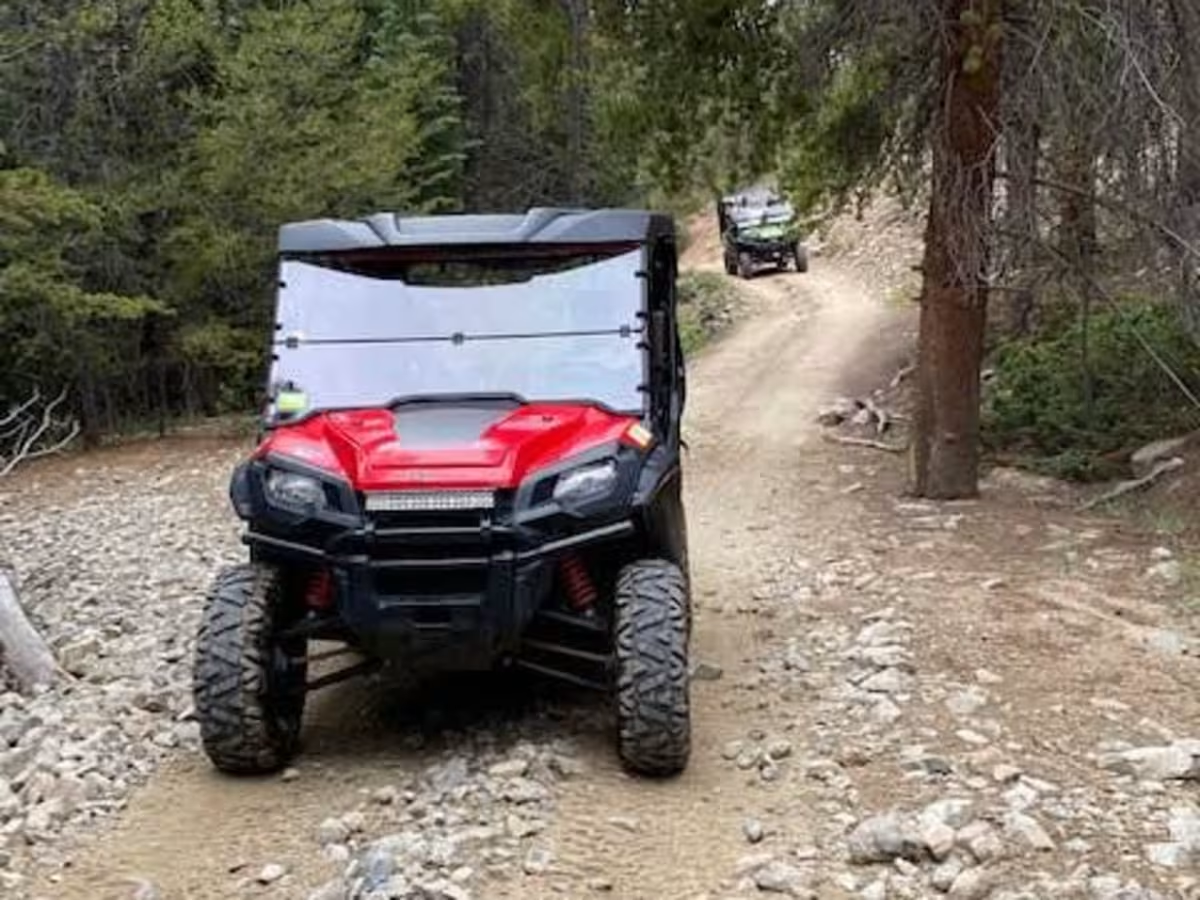
One of the things I learned through my seven years or so of Roadlessness is that people who want to put roads in roadless areas are few and far between. Because it costs money to do so. But what many people don’t see from their national discourse on Roadlesssness is the granular detail of “what is a road?”. And in Colorado, we even had a court case about whether a linear travelway associated with building a pipeline was a “road.”
Hopefully others who know more about the technicalities will help with this.
First are “system roads” which are supposed to be managed by the FS to certain standards. Those are probably the ones folks say “the FS already can’t keep up with maintenance.” But many other roads don’t need maintenance.. they are temporary or funded by someone else who does the maintenance. So that seems like a compelling argument on the surface, but does not take into account the reality of what kinds of roads are likely to be developed without a roadless management designation.
Second are temporary roads- in my experience, those were most commonly desired to take out large fuels from fuel treatment projects, generally those near the WUI. That’s why the Colorado Rule ended up with (Google AI)
Then there are 4WD trails, which kind of look like extremely poorly maintained roads, but apparently “car-sized” vehicles can move over them.
***************
But a new road, say for a mine, or oil and gas, or maintenance of powerlines (which go through roadless areas) or even for wildfire could be gated for administrative use only. Which would seem to have a major impact on issues like wildlife disturbance or wildfire ignitions.
Unless- people can drive around the gates. Which is fairly location-specific. Due to my own poor communication with the District, I once got blocked in by road closures on the Chiloquin District and simply drove around the barrier. In other steep places, though, that would simply not work.
And it does make me wonder a bit about AI, sensing, and law enforcement. Conceivably nowadays we would have ways of enforcing “using closed roads” in an era in which drones can detect and put out wildfires.
*******
The litigation on the Bull Mountain Pipeline, for those of you who don’t remember, was about building a gas pipeline. The idea was that if the soil was scraped off for something to be buried, that that, for that moment in time until the pipeline was reburied, was a road and shouldn’t be in a roadless area.
*******
So if we were to look at environmental effects, we might consider:
1. What are the road standards and maintenance.. do they adequately protect soil?
2. How long will the road be open before it is “put to bed”? How effective is “putting to bed” in a specific location?
3. How many and what kinds of vehicles will drive on the road? How often? During what seasons?
4. If a given roadless area contains wide motorized trails (4WD trails), is it really “road” less?
The last is a bit philosophical, but you see my point. One site I looked at about the Slaughterhouse Gulch trail said it was very busy during certain seasons. So conceivably if people are the problem- a motorized trail (or biking.. or hiking) trail that is busy, could have more deleterious environmental impacts than a seldom-used road.
I’ve always thought the distinction between at least an ML2 “road” and a “full size motorized trail” is rather silly and a distinction without a difference. But it does have practical effects, most notably that a full size motorized trail can be built in a roadless area but a “road” cannot. Motorized trails also have no/less required maintenance under FS standards, and can more easily qualify for motorized trail grants funded by the Colorado OHV fund.
The Pike San Isabel travel management process recently re-classified a ton of ML2 roads to motorized trails for these reasons. And at least as that forest applied the travel management rule, motorized trails are exempt from the “minimum road system” requirement and thus also not included in the travel analysis process, so in future travel management processes they would not have to meet the same minimum TAP score in order to justify their existence and stay open.
For me, what you say opens up some interesting possibilities… if someone wanted to use a “motorized trail” for say, wildfire access, they could conceivably do any needed maintenance (above what’s required for a motorized trail) and go on about their wildfire access business in a “roadless” area?
They could even design a new “motorized trail” right where it’s handy for wildfire reasons.
I’m thinking there would be litigation, though.
Yeah I suppose they could. It’s quite interesting that at least the Colorado Roadless Rule places no limits on the width of a motorized trail. Whether something is called a trail or a road is solely a legal distinction and has nothing to do with the physical condition of the route. It’s one of the few “cheat codes” in Forest Service policy that actually favors motorized users.