Are Forest Products on the Way Out in Montana? And How Does the Wood Innovations Program Intersect With Struggling Producers?

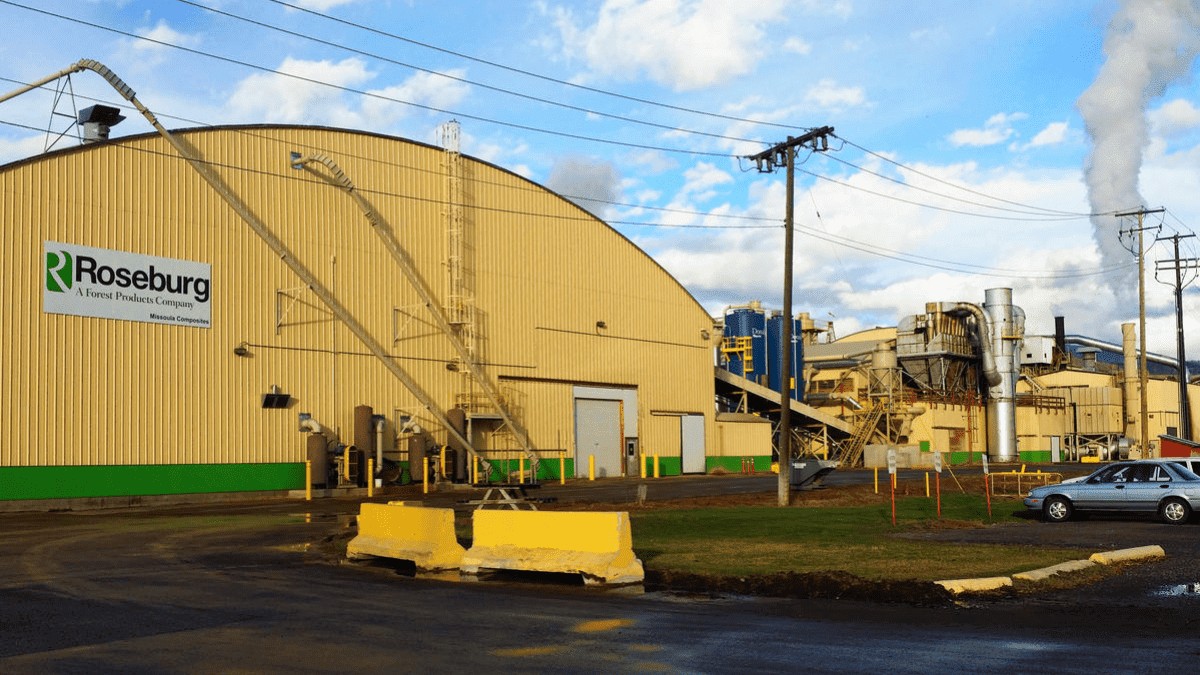
Roseburg Forest Products’ Missoula particleboard plant will close on May 22, the company announced Wednesday, March 20, 2024. Credit: Credit: Roseburg Forest Products

Before we dig into the timber details I talked about last week, and some examples of what I like to call “Post Timber War Convergence” (like my agreeing with Andy Kerr on something), I’d like take a look at the situation from the 30,000 foot level (as my former boss, Richard Stem, would say).

There have been many stories in the past few weeks about mills closing in Montana. Here’s an excellent one, thanks to a TSW reader.

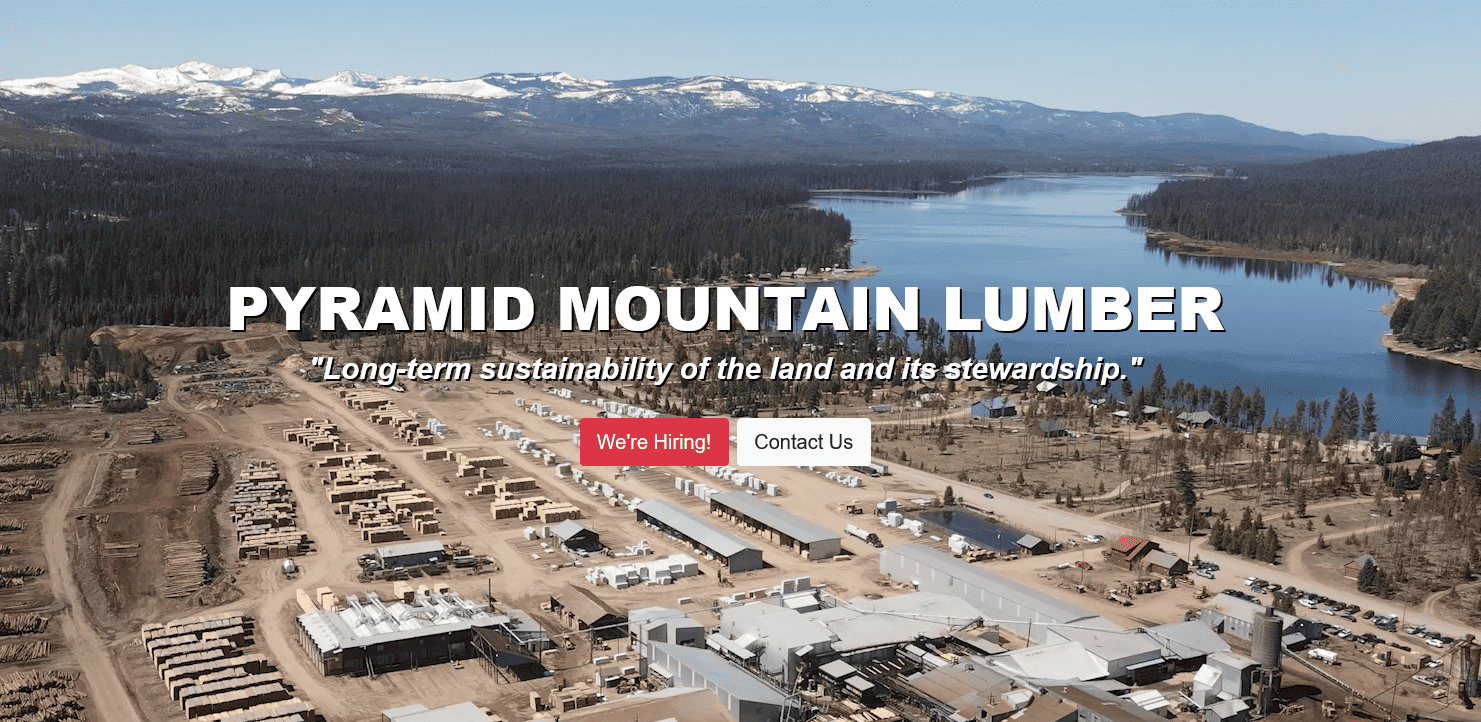
Within the span of six days, both Pyramid Mountain Lumber in Seeley Lake and Roseburg Forest Products’ Missoula particleboard plant had announced they were shutting down permanently and eliminating a combined 250 jobs. The closures mark the final knockout punch locally to an industry that helped build Missoula and put food on tables here for over 150 years.

To put it another way: Sawmills were once as ubiquitous in Missoula as marijuana dispensaries are now.

There are smaller businesses in the area that still make wood products, there are still lumber mills operating in Montana, logging will still continue in the region and Pyramid Mountain Lumber’s facility could still be purchased and operated again in the future. But to many industry watchers, last week’s news was the final nail in the wooden coffin of the sector that’s paid the wages of tens of thousands of workers over the last century and a half.
“I mean, it’s huge, what’s happened to the wood products industry in Montana in the last five years,” said Zach Bashoor, the chair of the Missoula Area Chamber of Commerce, when asked how big of a deal last week’s news was. “Pyramid was the last sawmill in Missoula County and Roseburg was the last wood products manufacturing facility here.”
Bashoor has actually worked for both Roseburg and Pyramid in the past.

“When a mill closes there’s a whole contractor base built around those mills that’s going to be affected, too,” he explained. “There’s a contractor out of Seeley that told me he thinks he’s going to hang up his hat.”

By contractors, Bashoor is referring to loggers who have a contract to sell logs to Pyramid. Oftentimes, they’re doing forest thinning for wildfire risk management or forest ecology restoration projects that require thinning.  “They make a living out of selling timber to the mill, that’s how the system was built,” he said. “The demand of land management has changed to much more of a restoration aspect.” Bashoor owns a company called Montana Forest Consultants that services landowners and agencies doing forest management work.
“Without those (loggers), there’s no way to get our work done,” he said. “If they’re not around we can’t do things like watershed restoration projects or thinning small trees for hazardous fuels
reduction.”

In places in the West, say with Blue Mountains Forest Partners, or the Yosemite Stanislaus Solutions folks, sawmills and their downstream ilk are thought to be useful partners. In my own neck of the woods, an entirely private fuelbreak project is being supported by landowner donations, state grants and .. selling logs.

Without forest products industry around, we can expect fewer fuel projects to be done on federal land, they will cost more to the taxpayer, and less private mitigation is likely to be done. That’s just the cost element. What else will be done with the material removed? Will it be burned in piles, giving off smoke and carbon? And perhaps the old “fuel treatments and creating openings for species diversity are just an excuse for logging” argument will be at rest (as it currently is in places without mills). How would that change the litigation environment?

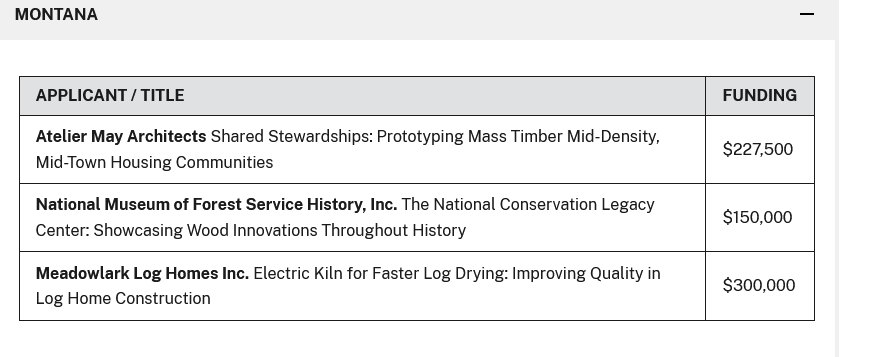
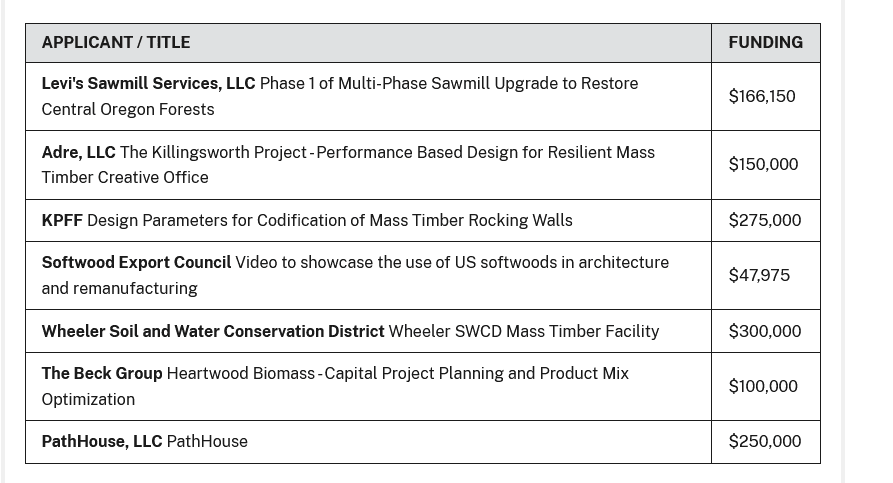
Meanwhile, the Congress/USDA/Biden Admin (wherever bucks come from) is giving out funding to help:

Today, the Biden-Harris Administration announced the U.S. Department of Agriculture’s Forest Service is making nearly $50 million in grant funding available for proposals that support crucial links between resilient, healthy forests, strong rural economies and jobs in the forestry sector. Made possible by President Biden’s Investing in America agenda, a key pillar of Bidenomics, this funding will spark innovation, create new markets for wood products and renewable wood energy, expand processing capacity, and help tackle the climate crisis.

“A strong forest products economy contributes to healthier forests, vibrant communities and jobs in rural areas,” said Agriculture Secretary Tom Vilsack. “Thanks to President Biden’s Investing in America agenda, we are investing in rural economies by growing markets for forest products through sustainable forest management while reducing wildfire risk, fighting climate change, and accelerating economic development.”

This announcement is part of President Biden’s Investing in America agenda to generate economic opportunity and build a clean energy economy nationwide. The grants are made possible by President Biden’s Inflation Reduction Act, the largest climate investment in history and a core pillar of Bidenomics, as well as President Biden’s Bipartisan Infrastructure Law, an historic investment to rebuild America’s aging infrastructure.

The above paragraph may take the prize for number of mentions of President Biden per word.

The open funding opportunity comes through the Forest Service’s three key grant programs to support the forest products economy: Wood Innovations Grant, Community Wood Grant, and Wood Products Infrastructure Assistance Grant Programs. The agency is seeking proposals that support innovative uses of wood in the construction of low carbon buildings, as a renewable energy source, and in manufacturing and processing products. These programs also provide direct support to expand and retrofit wood energy systems and wood products manufacturing facilities nationwide.

(Note that 2023 funded proposals are listed here.

Let’s compare Colorado, Montana, and Oregon.
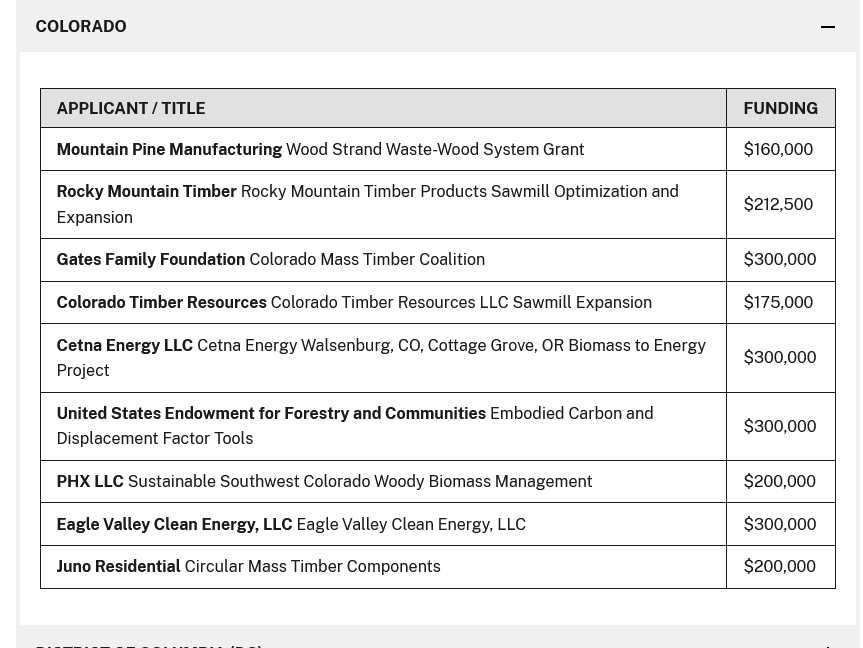
I just looked at these three states and noticed grants to the Endowment and the Gates Family Foundation in Colorado.  It seems like the USG is giving grants to.. traditionally grant-making groups. I also wonder if there is a bias toward “starting new things” vs. “helping keep existing things going” perhaps something like a “forest products facility rescue” as in reality TV.

Maybe our economist friends can help me here, if there isn’t a way for the USG to help keep sawmills open rather than letting them close and starting over with something new in the future. I think of nurseries.. we wanted them, we got really good at them (and reforestation), then we assumed natural regen would take care of everything, so we lost the capacity and the know-how and basically have to start over, now that the people have retired and the infrastructure has been sold off. Resilience, it seems to me, requires some redundancy and keeping skills and some infrastructure on board. Though that’s not actually redundancy in the engineering sense. Maybe it’s more like making sure that useful skills. knowledge and workforce are maintained at some level.
The ‘Mother Tree’ idea is everywhere — but how much of it is real? And Variable Tree Retention as a Current Practice, But Maybe Not in BC

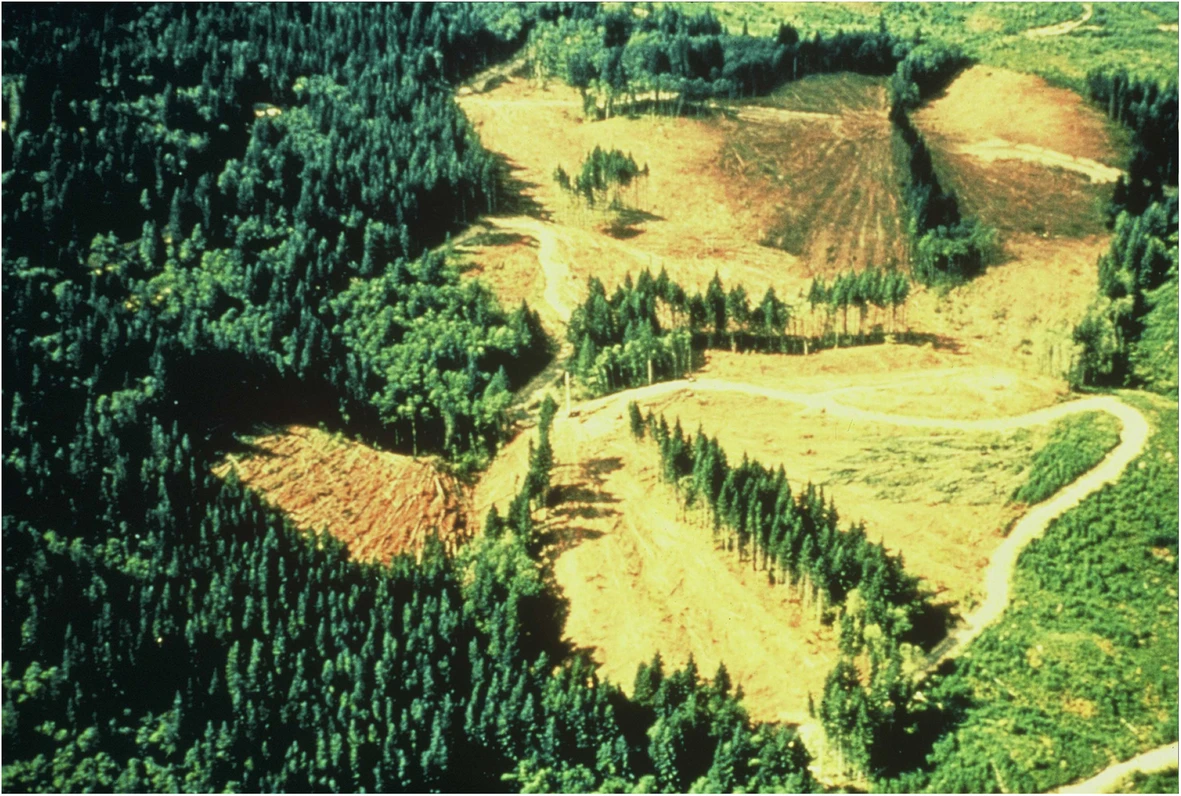
After experimenting with different approaches to retention, the Plum Creek Timber Company found aggregated retention, as seen here on the Cougar Ramp Unit, was an effective approach to integrating environmental and timber management objectives. This cutting opened the senior author’s mind to the potential of aggregated retention, which today is generally viewed as the most important approach for conserving a broad array of biota (according to Franklin and Donato (2020)

It’s always fun to look at another scientific controversy around trees and forests.  TSW had posts on various facets of this issue, here, here and here. Thanks to Nature for making this article open source!

A brief recap:

Their concerns lay predominantly with a depiction of the forest put forward by Suzanne Simard, a forest ecologist at the University of British Columbia in Vancouver, in her popular work. Her book Finding the Mother Tree, for example, was published in 2021 and swiftly became a bestseller. In it she drew on decades of her own and others’ research to portray forests as cooperating communities. She said that trees help each other out by dispatching resources and warning signals through fungal networks in the soil — and that more mature individuals, which she calls mother trees, sometimes prioritize related trees over others.

The idea has enchanted the public, appearing in bestselling books, films and television series. It has inspired environmental campaigners, ecology students and researchers in fields including philosophy, urban planning and electronic music. Simard’s ideas have also led to recommendations on forest management in North America.

What’s the role of scientists in presenting their and others’ work?

Then, a third academic, mycorrhizal ecologist Justine Karst, took the lead. She thought speaking out about the lack of evidence for the wood wide web had become an ethical obligation: “Our job as scientists is to present the truth, as close as we can get to it”.

…………….

Simard says of her critics.. “They’re reductionist scientists,” she says when asked about criticism of her work. “They’ve missed the forest for the trees.” She is concerned that the debate over the details of the theory diminishes her larger goal of forest protection and renewal. “The criticisms are a distraction, to be honest, from what’s happening in our ecosystems.”

It seems to me that there are robust and fun scientific discussions to be had.  As depicted by this journalist (Simard might not have been quoted accurately), Simard thinks having discussions about science distracts us from what seems like advocacy. 

Roger Pielke Jr. has written (much, here’s one example) about what he calls “stealth issue advocacy” in the scientific community.  This doesn’t seem stealthy at all. It seems like sometimes you have to pick a lane between science and advocacy; and I’d prefer if scientists picked science.
************
There’s a description of the differing scientific views. There are technical differences, and even apparently emphasis or focus differences.

Johnson’s view is that it “makes complete sense” that there are CMNs linking multiple forest trees and that substances might travel from one to another through them. Crucially, he says, this is not due to the trees supporting one another. A simple explanation, compatible with evolutionary theory, is that the fungi are acting to protect the trees that are their source of energy. It is beneficial for fungi to activate a tree’s defence signals, or to top up food for temporarily ailing trees. Pickles, who spent six years working with Simard before moving to the University of Reading, UK, says Simard’s ideas are not incompatible with competition, but give more weight to well-known phenomena in ecology, such as mutualism, in which organisms cooperate for mutual benefit. “It’s not altruism. It’s not some outrageous idea,” he says. “She certainly focuses more on facilitation and mutualism than is traditional in these fields, and that’s probably why there’s a lot of pushback.”

**************

Simard maintains that her critics attack her in the academic literature for imagery she has used only in public communication: “I talked about the mother tree as a way of communicating the science and then these other people say it’s a scientific hypothesis. They misuse my words.”

She argues that changing our understanding of how forests work from ‘winner takes all’ to ‘collaborative, integrated network system’ is essential for fixing the rampant destruction of old-growth forest, especially in British Columbia, where her research has focused. Indigenous cultures that have a more sustainable relationship with forests have mother and father trees, she says — “but the European male society hates the mother tree … somebody needs to write a paper on that”. “I’m putting forward a paradigm shift. And the critics are saying ‘we don’t want a paradigm shift, we’re fine, just the way we are’. We’re not fine.”

But does a “network system” “Indigenous culture-based” worldview lead us anywhere different in practice than the “ecological forestry” of the lower 48? Can the same kinds of practices be invoked, or even carried out, without a what we might call a “myco-centric” worldview? And if everyone used VRH, what would the scientific controversy be about.. would it be more theoretical (how important is mutualism vs. competition generally?) or more specific (more mycological experiments in the field?).

But what about variable retention harvesting as espoused by Jerry Franklin? In this open-source paper by Franklin and Donato (2020) (from the abstract):

Variable retention harvesting evolved in the Douglas-fir region of the Pacific Northwest gradually in response to increasing dissatisfaction with the ecological consequences of clear-cutting, from the standpoint of wildlife habitat and other important forest functions. It is a harvesting technique that can provide for retention (continuity) of such structures as large and old live trees, snags, and logs. Variable retention is based on the natural model of the biological legacies that are typically left behind following natural disturbances, such as wildfire, wind, and flood

This approach actually sounds more holistic (plants, animals, viruses) than one solely focused on CMNs, while providing opportunities for CMNs. Franklin seems to be in the camp of aggregated variable retention rather than dispersed. Conceivably the Mother Tree approach would be dispersed, which might be good for CMNs and possibly not so good for other ecosystem values.

According to Franklin and Donato’s historical narrative, aggregated retention was seen to be effective at conserving a broad array of biota around 1987 with experiments by the Plum Creek Timber Company. Perhaps these ideas did not migrate north to BC? But later in the history there is mention of the Clayoquot Sound Science Panel.

. This was part of a governmental response to major social disorders over the logging of old-growth forests in this region led by Native Americans (known in Canada as First Nations) and participated in by other Canadian citizens. The science panel conducted its activities and completed its report over the next year (Scientific Panel for Sustainable Forest Practices in Clayoquot Sound 1994). The Clayoquot Sound Science Panel recommended adoption of the “variable-retention silvicultural system” for all timber harvesting on Crown Lands in the region. The panel actually created the term “variable retention” to reflect the reality that the amount and other details of retention should vary depending upon management objectives and the nature of the stand being harvested. The panel recommended that harvests should “retain a minimum of 15% of the original stand on all cutting units … [excepting] very small cutting units” and that the retention should “retain a representative cross-section of species and structures of the original stand.” In areas with very high values for resources other than timber (such as wildlife habitat, slope stability), the panel recommended retention levels of at least 70%. Hence, the Clayoquot Sound Science Panel contributed significantly to the concept as well as the name “variable retention.” The panel’s recommendations also helped set the stage for MacMillan-Bloedel Corporation’s decision to replace clear-cutting with variable retention a few years later (Beese et al. 2019).

Anyway, this post started out by being about mycological networks and the scientific controversies therein, and that article is certainly interesting. But I also thought the Franklin/Donato paper, being historical in perspective, also deserves a look by those among us involved during those time periods. And am I the only person who remembers “big messy clearcuts”? Was that the same as “variable retention” or different?

Some Timber-y Followups to Last Week

We had some interesting discussions last week. I am going to do more research on some topics, so I will list the ones I’m working on here.  Please see if I missed any that would be worthy of more discussion or digging for more info, and please add in the comments.

1. Why did BLM volume numbers go down in Oregon?

2. Diameter limit on East Side

a. what does the EA say about alternatives?

b. the mechanics of the “dripline” idea

3. What diameter and length of logs can mills use nowadays?

4. Paper submitted  by TSW commenter on no-bid timber sales.

5.  More background on Amicus briefs; what are they generally used for and why.

(for this one it would be helpful if someone could find what they think is a good explanation and send me some links).

Others?

Further Information on Oregon Mills and Region 6 Timber Production

Digging deeper on the topics of yesterday, I reached out to AFRC, who generously supplied further information, plus some FS contacts.

***********

The primary source for Forest Service timber accomplishments are the PTSAR reports.  You can find those here: Periodic Timber Sale Accomplishment Reports (PTSAR) (usda.gov)


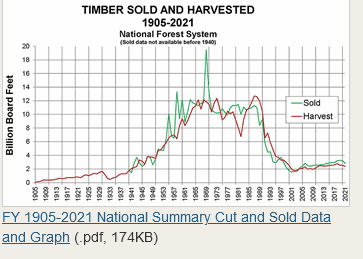
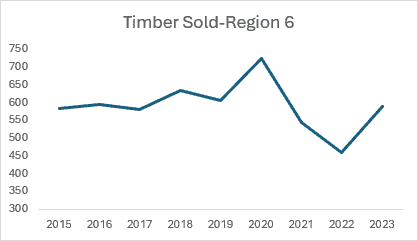
The chart below for Region 6 is based on this PTSAR data.  You’ll see that the Region saw an uptick from 2022 to 2023; however, our assertions of flat/declining outputs are based on comparisons of 2023 to 2019/2020.  The raw data that populated this chart is also copied below.  We saw a decline by over a third from 2020 to 2022.  The program remains about 18% below its 2020 levels.


Region 6 2015 2016 2017 2018 2019 2020 2021 2022 2023
Timber Sold 585 595 581 635 607 724 545 460 589
                   

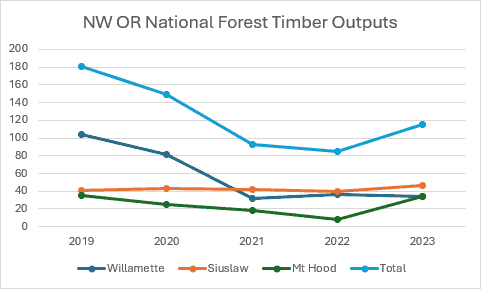
You’re correct in that timber trends are not the same across every National Forest in Region 6.  In fact, local trends are more relevant to the recent mill closures that we cite in our letter than total Region 6 trends.  The mills that closed over the past few months are all located in northwest Oregon.  So, the trends in western (specifically northwestern) Oregon are important to highlight.  The Regional uptick in 2023 shown in the graph above has mainly been a function of growth on eastside Forests, which don’t support westside mills, which are the ones that have closed over the past few months. The graph below shows timber trends for the Mt Hood, Willamette, and Siuslaw National Forests (and totals), which were all within the purchasing circle of the closed mills.  We saw nearly a 100 Million board foot drop from 2019 to 2022.  Even with a slight bump in 2023, these programs are still down by over a third from 2019 levels.

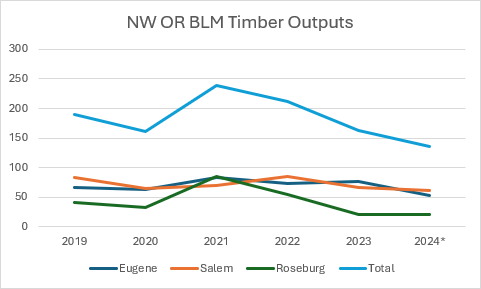
Finally, the BLM program in western Oregon cannot be ignored.  The three Districts below are in the purchasing circle of the closed mills.  Collectively, we’re seeing a 43% reduction from 2021 to 2024.  Note that the 2024 numbers reflect the assigned targets, not actual sold volume.

BLM timber data is not as formally organized as the Forest Service.  This site summarizes sold volume: Oregon Timber Sales Oregon/Washington BLM.  However, the BLM has additional volume every year not accounted for in these reports.  AFRC  acquires that “add-on” volume directly from the Oregon State office every year.

*****************

So, we might ask, what explains these patterns?  Here is what I heard from my FS sources, currently checking with BLM ones.  The Siuslaw is “steady Eddy.”

The Mt. Hood and Williamette notably suffered from the 2020 wildfires. In the second chart, it looks like the Mt. Hood worked its way back to 2019 levels but the Williamette not.  You might think “all those hazard trees” but that was held up by litigation, covered here at TSW, to the extent that the logs deteriorated and now the hazard trees that industry would have paid to remove, are being removed at taxpayer expense via service contracts.

There are two other issues I heard.. that timber attention ($, targets, people (not clear)) has been focused on the East Side in terms of moving things along in the Ten-Year Strategy.  And a generalized inability to fill positions.  I’d appreciate hearing from anyone, either via email or in the comments, who has additional ideas or experiences to add.

**************

What to make of all this?  I was thinking about Seral on the Stanislaus and how they proactively did NEPA for future hazard trees.  I also vaguely remember potential zones of agreement about hazard trees, even in Oregon.  Perhaps the Region is doing a hazard tree NEPA decision for all forests that they could use when wildfire come along? If we believe that climate change will lead to more wildfires then wouldn’t this be proactive? Maybe the group assembled for the NWFP revision could work out the bare bones of an NWFP area hazard tree agreement in a couple of days?

E&E News Roundup of Hearing; AFRC Letter; Imports and Exports

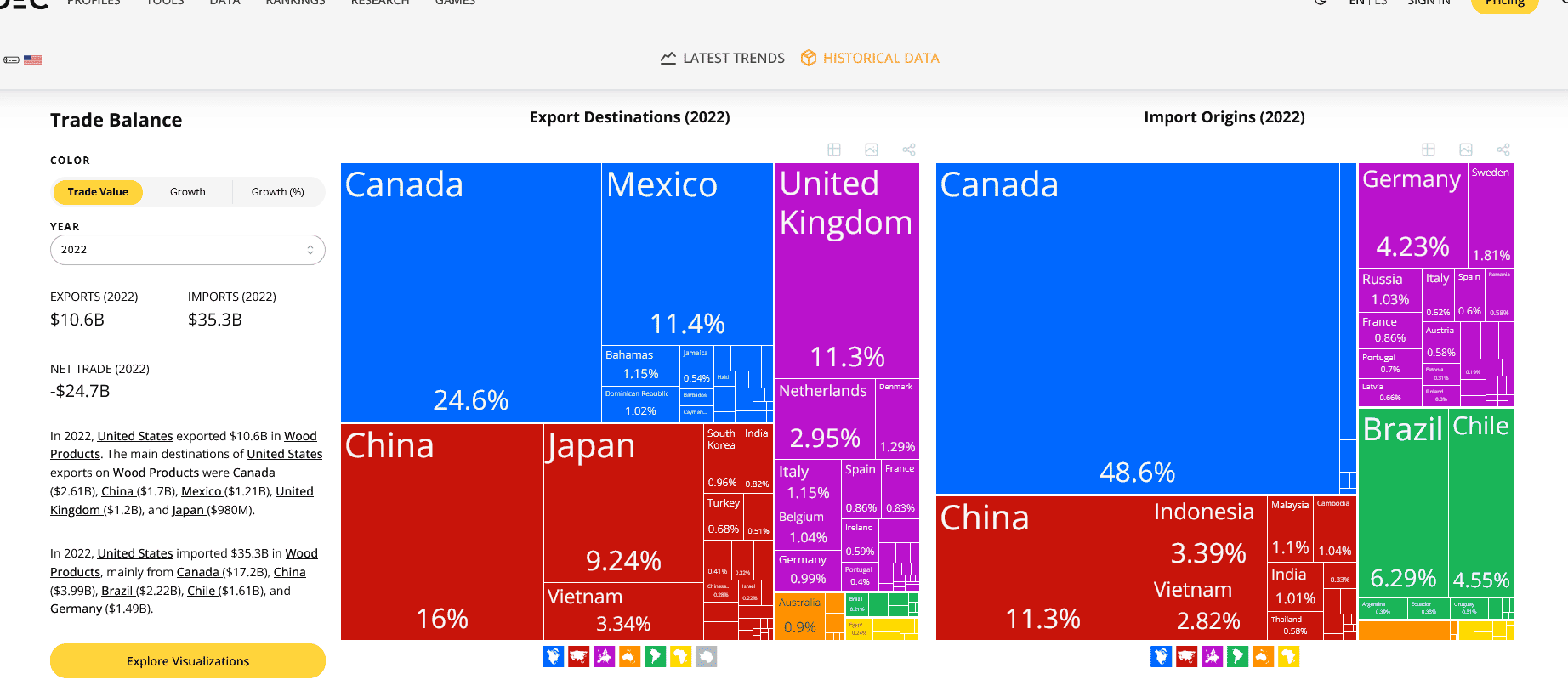
The above is from this OEC website. You can click on it to see the numbers better.  I can’t attest to the accuracy of these numbers.  They are relevant to the story at the end.

Interesting E&E News article, and  I was curious about some things mentioned, perhaps readers can help out with more information?

First of all, there’s an AFRC letter that says in western Oregon:

The trouble is largely due to state-level policies that restrict access to timber on privately owned land, as well as to past damage from wildfires, the group said, citing the recent closure of three mills in western Oregon. But the federal government could help fill the gap by boosting timber harvests in national forests, the AFRC said, and make healthier forests in the process. “A logical outcome of historic Congressional investments to accelerate forest health treatments on millions of acres of at-risk Federal forests would be additional log supply to support the local infrastructure and workforces required to do the work,” said the AFRC, based in Portland, Oregon, citing the bump in federal spending through the bipartisan infrastructure law and the Inflation Reduction Act that included funding for hazardous fuels reduction, fire breaks and similar forest work. “This has not occurred in the West,” the organization said. In some cases, according to the group, supplies available from federal lands have declined or flat-lined since the enactment of the two laws.

Although most logs headed to mills in the Pacific Northwest come from privately owned land, the group said, mills that closed recently in Oregon relied on timber from public lands and cited a supply shortage in their decisions to shut down.

Perhaps some Oregon readers could see if there are other reasons as well for the closures, perhaps like Pyramid Lumber?

And is that true, that supplies from federal land declined after the infusions of $ from BIL and IRA? Here’s what AFRC said in their letter.

In fact, log supply from Forest Service and BLM lands in the Pacific Northwest has remained flat or decreased since the passage of the BIL and IRA. In Western Oregon, for example, the BLM timber program for Fiscal Year 2024 has been arbitrarily reduced by more than 25% from the previous year. These cuts also represent a 25% shortfall from the timber levels directed in the BLM’s current Resource Management Plan.

I’m not inclined to study the Cut and Sold report (although I’d volunteer with the FS to give advice on, and test a more user-friendly version), so I wonder what the FS did or didn’t do? And why did the BLM reduce their timber program? I also wonder about variability and if some forests did reduce and others didn’t.

**********

Environmental groups, for instance, are pushing for a ban on most logging in old-growth forests, but the AFRC specifically cited those areas as needing a more active management approach that includes timber harvesting to make them less vulnerable to wildfire.

“No one is asking the Federal Government to ‘clearcut old growth’ to generate more timber supply,” the AFRC said, asking lawmakers to advocate for timber production with top officials at the Forest Service and Bureau of Land Management. “We are asking the Federal Government to responsibly manage and steward public lands.”

I didn’t actually see that (my) bolded section in the letter.  Maybe others spotted that? It doesn’t make much sense to me as there is plenty of non-old-growth out there. Could be an editing faux pas.

***********************

The ongoing debate played out in Senate committee hearings last week, as Republican lawmakers pressed for increased timber production and streamlined environmental reviews that would allow Forest Service projects to move faster.

I wonder what the proposals were in detail, if there were any?

*************************

 Senate Energy and Natural Resources Committee hearing last week, Sen. Catherine Cortez Masto (D-Nev.) mentioned the opening of a new mill in Carson City, Nevada. That project, a collaboration between industry and the Forest Service, will greatly help the region find a market for wood salvaged from wildfire areas, among other uses, she said.

*************

In addition, Sen. Angus King (I-Maine) and Rep. John Garamendi (D-Calif.) reintroduced legislation — S. 3899 and H.R. 7609 — last week to let facilities generating electricity from forest biomass — such as forest thinnings — participate in the federal renewable fuel standard program. Their legislation, called the “Biomass for Transportation Fuel Act,” would also expand the program by allowing RFS credits for biomass taken off federal, as well as privately owned, lands. “Finding creative new incentives to keep this biomass off our forests’ floors is integral to the success of our state’s forest products industry and economy,” King said in a news release.

***************

I wouldn’t have thought that that would be as much of an issue in Maine. I checked on Garamendi’s district and it is in the SF bay area, so not a place as worried about excess biomass, as say, the Sierra.  Anyone who knows more about this, please link more info in the comments.

***************

King and other lawmakers also warned last week about the potential effects of anti-deforestation policy by the European Union, telling U.S. Trade Representative Katherine Tai that the regulations as written could hurt U.S. wood product companies. The policy, due to be enforced beginning in 2025 and requiring traceability to plots of land where trees were cut, could limit market access for U.S. producers, they said.

***************

I was curious about where US exports wood products, so found the graphic above.  It’s interesting to me that Enviva, who actually did have tracing to specific plots of land,  just went bankrupt. 

Any forest economists out there who could explain more about this?


Pyramid Mill Closure- Seeley Lake Montana and Rural Gentrification

Thanks to a TSW reader for this story. This fits into our ongoing theme of housing difficulties and the exodus of the working class in some Western communities. And if the economy is based on tourism, which doesn’t have high-paying jobs in general, it seems like these communities may be moving to a two-tier society. Perhaps with lower-end retirees and work-from-homers in the middle.  Also there is the idea that at some point, with these kinds of pressures, the timber industry could go belly-up just when people are coming around to it being helpful in keeping fuel treatment material from being burned into the atmosphere.  Meanwhile we have a housing crisis in many areas, more people are moving to these places (both migrants from other states and other countries), and wood is needed as a building material.  And we don’t want new communities to “sprawl,” (get larger), so densification is cool,  and yet ideas like Accessory Development Units don’t allow people to build equity via ownership.  And many increases in density come with decreases in urban trees.  Reminds me that old Thomas Sowell quote “there are no solutions, only trade-offs.” But is anyone looking at the big picture here?

It seems like a tangled ball of policy yarn, with no clear loose end to begin to unravel it.

Over the last five years, a “Now Hiring” sign has been posted along U.S. Highway 83, and the starting wage at Pyramid has been creeping up, Browder said.

He said other workers will be affected as well, such as loggers who are independent contractors and brought raw mateerial to Pyramid.

But he said getting mill employees and finding them places to live is difficult.

Housing creates costly employee attrition, because the company might train a worker who only stays six or eight months, Browder said: “That person leaves because they’re living in some crappy little trailer.”

He said it’s a problem for smaller merchants and retailers, too.

“We just have a serious housing problem in Seeley Lake, and it doesn’t just affect them,” Browder said of Pyramid.

The “blue collar demographic” will take a hit as a result, and Browder said he isn’t sure what young mill workers or couples will do instead because there’s little else in western Montana for them.

“All the working class people are being squeezed out,” he said.

Tourism has become a larger part of the economy, and more retirees who don’t rely on a local job for their income are part of the change in Seeley Lake, Browder said. But he volunteers at the food bank, and he said he anticipates a spike in demand there.

Generally, he said, attendance at community council meetings is low, and he hopes the news will at least bring more people with new ideas to the discussions.

**********

Kier, with the Missoula Economic Partnership, said if the mill closes, it will have ripple effects on the wood products and forest industry. He said he believes the Seeley Lake mill is one of the few that takes Ponderosa logs, which are plentiful in the region.

A couple of other businesses in Montana depend on byproducts from the mill, he said, including Roseburg in Missoula, which produces particleboard, and Weyerhaeuser in Kalispell, which offers plywood panels, among other products.

“Having adequate supply is important for those large manufacturers in terms of a regional system,” Kier said. “So it’s a really fragile system right now.”

He said it’s clear Pyramid intends to shut down, but a lot of people are emerging “by the hour” and talking about whether options exist for others to keep the facility open given it’s an important part of managing healthy forests. But Kier said it’s “premature to suggest there’s any real solution.”

“I hope that the folks who are in Seeley and the folks who are working at the mill know a lot of people care about what is happening to them,” Kier said.

In their closure announcement, Pyramid said “there’s no better solution” for the owners than to shut down the mill permanently. They were advised to close it in 2007 and didn’t, but this time, they said, the financial crisis is worse.

“The owners would like to thank our employees, both past and present, for their hard work and professionalism over the years,” Pyramid said.

“Their dedication has truly been the difference between Pyramid and its competitors. The owners would also like to thank Seeley Lake and the surrounding communities for their support over the years.”

We know what the timber industry needs, but what can the Black Hills provide? Commentary by Dave Mertz

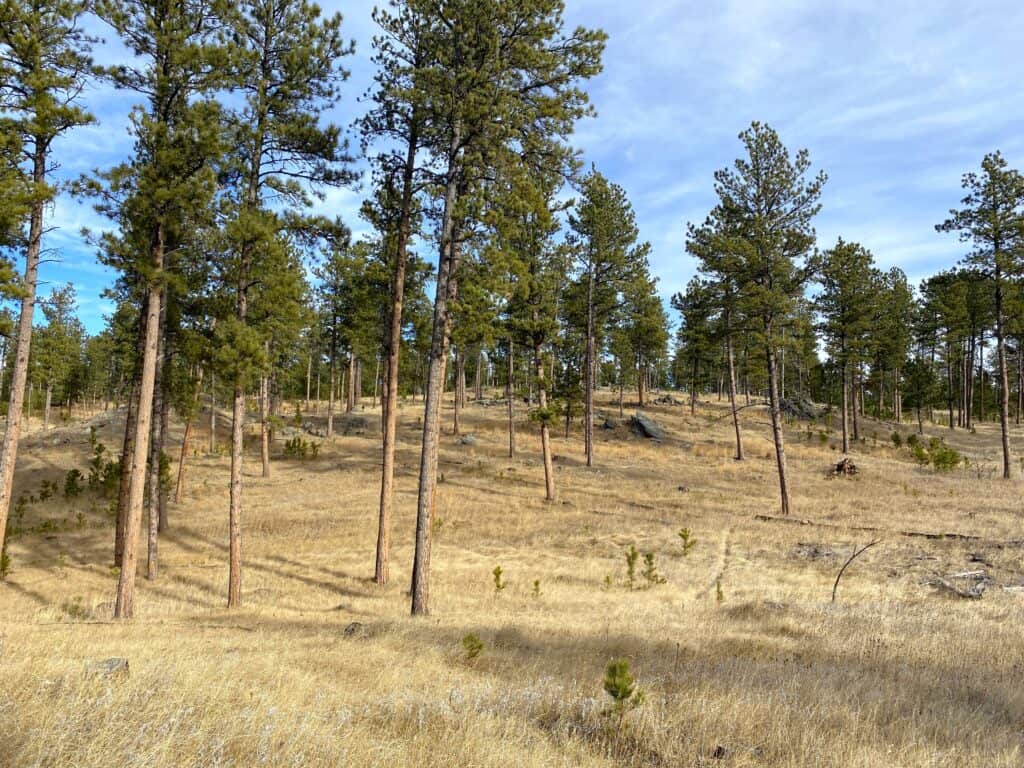
An area of the Black Hills National Forest east of Custer in 2023, where the forest was previously thinned by logging. (Courtesy of Dave Mertz)

Here’s the link. I posted it below.

The traditional way logging happens in the Black Hills National Forest is through timber sales. The U.S. Forest Service designates areas available for logging, and companies bid for the right to purchase and harvest the timber.

On Saturday in Spearfish, there was a forestry roundtable discussion about the reduced levels of timber sales in recent years.

U.S. Rep. Dusty Johnson, R-South Dakota, invited two of his fellow congressmen, Doug LaMalfa, R-California, and Austin Scott, R-Georgia. Johnson also invited two Forest Service officials, Regional Forester Frank Beum and Black Hills National Forest Forest Supervisor Shawn Cochran. The panel was rounded out with timber industry representatives and the South Dakota state forester.

After introductions, the panel quickly turned to grilling the two Forest Service officials. I am familiar with LaMalfa from watching him in congressional hearings. He can come across as combative, and he was all of that. Scott was also aggressive. It is not clear to me why these two were on this panel. They have absolutely no familiarity with the Black Hills. It appeared that they were there to browbeat the Forest Service. Johnson participated in these tactics as well.

An audience listens to a roundtable forestry discussion March 2, 2024, in Spearfish. (Courtesy of the Office of U.S. Rep. Dusty Johnson)
 An audience listens to a roundtable forestry discussion March 2, 2024, in Spearfish. (Courtesy of the Office of U.S. Rep. Dusty Johnson)

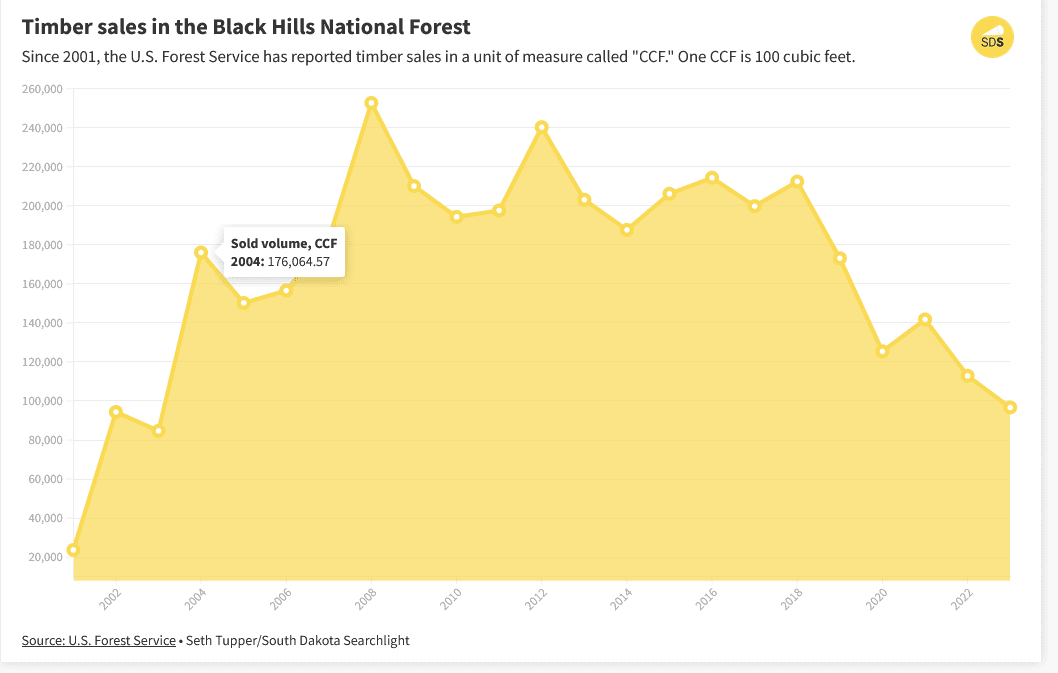
At issue was why the Black Hills National Forest plans to sell only 63,000 CCF (1 CCF equals 100 cubic feet) of timber this fiscal year. The timber industry representatives said they need 120,000 CCF to survive as they exist today. Beum said that with budget limitations and 76 employee vacancies, 63,000 CCF is all the Forest Service can do. He also stated that to get to 120,000 CCF, the forest would need an additional $20 million of funding.

Much of the hour and a half revolved around blaming the Forest Service for not selling more timber and for being ineffective. This came from three members of Congress, which doesn’t exactly have a stellar record of getting things done. When will they pass a budget?

Repeatedly, panelists stated what the timber industry needs. Never was there any concern for what level of timber harvesting the forest needs. Only toward the end did the elephant in the room finally get discussed — that there are no longer enough sawtimber-size trees left on the forest to support the capacity of the timber industry as it exists today. (A tree big enough to qualify as sawtimber is one that’s at least 9 inches in diameter when measured at a point 4.5 feet above the ground.)

Large wildfires in the early 2000s, the mountain pine beetle epidemic and the associated aggressive timber harvesting to address it all led to a major reduction in sawtimber-sized trees across the forest. This has impacted how many trees can now be sustainably logged on an annual basis, and this will continue for a good while into the future. Acceptance of that is the key to finding solutions.

Beum explained that the Forest Service is conducting an inventory of the forest at a cost of $2 million with LiDAR, an aerial survey method that uses pulses of laser light to determine the presence, shape and distance of objects in great detail. Never before has this been done on an entire national forest. This will provide a 3D map of the forest down to individual trees, and give a very clear picture on how many sawtimber-size trees remain on the forest. This issue has been in dispute, because the timber industry discounts the numerous studies that show there is a problem.

At one point, Johnson thought the timber sustainability issue could be resolved with simple math. He asked Ben Wudtke, of the Black Hills Forest Resource Association, a timber industry group, about the growth rate of the forest. Wudtke said it’s 2.5%. Johnson did some rough math and declared that there is no problem with the timber inventory or sustainability. He failed to take into account the long-term average mortality (rate of tree death) of 1%, and also that the whole forest is not available for timber harvesting for a variety of reasons — including the presence of non-forested areas such as meadows, terrain that’s too steep and rugged, restrictive land designations such as wilderness and recreation areas, access problems, etc. He should actually read the Forest Service’s General Technical Report, which goes into great detail on these issues.

Beum said the Forest Service is subsidizing the rail transport of logs from California and Oregon to the Spearfish and Hulett, Wyoming, mills. Something like this has never occurred before. There was no appreciation expressed.

Scott asked about the revenues generated by timber sales, and Cochran had to explain that since the Forest Service is now primarily using service stewardship contracts to help the timber industry find places to work, the Forest Service is not making any money. In fact, the Forest Service is paying private loggers to harvest timber in an area where the cost of logging exceeds the value of the timber. For example, the Topaz Timber Sale is costing the Forest Service $3.5 million to log 550 acres on steep ground that otherwise wouldn’t get logged south of Sturgis. The timber operator gets the logs at no cost, in return for some service work. Clearly, the Forest Service is doing some extraordinary things to assist the timber industry.

Instead of seeking solutions, it appeared that this roundtable was more of an ambush. The two Forest Service participants showed up in good faith only to be interrogated. What was the point of all this other than some people enjoying seeing the Forest Service get beat up? No solutions were found that I could tell.

************

Dave Mertz

Dave Mertz

Dave Mertz retired from the Black Hills National Forest in 2017 as the forest’s natural resource officer. Over the course of his career, he was a forester, silviculturist, forest fire management officer and a fire staff officer.

New Lawsuit on Timber Targets by SELC: Is More NEPA the Answer?


In this post, I’ll focus on the lawsuit itself. In the next post, we can talk about the more generic question of “are timber targets of utility, should they be replaced, and if so, by what?” The press release by SELC raised many questions, and hopefully others will know the answers.

A new lawsuit alleges the U.S. Forest Service’s practice of setting ‘timber targets’ puts the climate at risk, undermines the Biden administration’s important climate goals, and violates federal law.

Back in 2018, we had a post on TSW about timber targets and how they’re set. Mac McConnell described the process in this comment. Maybe someone else could flesh Mac’s comment out more, or write a post on it?

The case centers around the Forest Service’s failure to properly study the massive environmental and climate impacts of its timber targets and the logging projects it designs to fulfill them. Each year, the Forest Service and Department of Agriculture set timber targets, which the Forest Service is required to meet through logging on public lands. In recent years, the national target has been set as high as 4 billion board feet – or enough lumber to circle the globe more than 30 times. The already high target is expected to increase in the coming years.

I’m not sure why that would be. Perhaps more fuel treatments projected due to the 10-year action plan? But those are not really “about” timber.

Forests on public lands provide a key climate solution by capturing and storing billions of tons of carbon. But rising timber targets push the agency to clearcut forests and log carbon-dense mature and old-growth forests. Logging these forests releases most of their carbon back to the atmosphere, worsening the climate crisis and undermining the Biden administration’s important efforts to protect old growth and fight climate change.

I’ve got two problems with this.. first, the targets don’t seem to be rising,  and second, the only clearcuts I’ve seen recently have been in MPB-susceptible old lodgepole.  And I guess the carbon question there is… the trees are gonna die, is it better to turn them into longer-lived wood products, or what.. burn them? Leave them to decay slowly until burned?  This is one of those cases in which specifics, and specific alternatives to the maligned practice, would be helpful. It’s almost as if these  MOG-ish carbon assumptions assume.. wildfire is not a thing.  At the same time, we are told that wildfires are getting worse due to climate change (Sierra Club- catastrophic), and our insurance premiums need to be adjusted to reflect that. Also the puzzling idea that carbon offsets are bad because trees will die; leaving them alone for carbon is good because… trees won’t die? To be fair, these are not SELC positions as far as I know.  At the same time, the idea that trees will not die or get burned up does seem to be part of this press release.

Internal Forest Service documents show that achieving timber targets is the agency’s “#1 priority.” According to agency staff, the need to meet timber targets impacts the Forest Service’s ability to provide “basic customer service for health and safety,” “keep trails opened and maintained,” and “respond to needs resulting from catastrophic events…in a timely manner.” In some instances, agency staff have used money meant for wildlife habitat improvement to fund projects designed to achieve timber targets, even if those projects had “no benefit to wildlife.”

“The requirement to meet timber targets results in adverse impacts on water quality, recreation, and imperiled wildlife, while distracting the Forest Service from more pressing tasks that don’t produce high timber volumes like preventing wildfires, saving trees from invasive pests, and controlling invasive plant species. If the agency is going to prioritize timber targets above the other benefits of National Forests, it needs to forthrightly disclose the consequences of that decision, particularly on our climate,” said Josh Kelly, Public Lands Biologist at MountainTrue.

Perhaps Sam Evans can help here, but when I signed on to the link, there were many files, so I couldn’t find the one that said that meeting timber targets was the agency’s #1 priority.  And I’m fairly dubious about that claim, since fire suppression and the 10-year wildfire action plan, and remember this about Fire consuming the FS budget..  Also, if we take Chief Moore’s word for it last year, he said:

The FY24 budget request focuses on three primary areas that impact the Forest Service: modernizing the wildland fire management system, combating climate change and confronting the wildfire crisis, and ensuring equitable access to the benefits of the National Forest System.

I remember a quote along the lines of  “to find the real policy, don’t listen to what they say, look at the budget.” Maybe someone remembers the real quote on that, and who said it originally? But back to SELC:

The Forest Service’s refusal to take a hard look at the direct, indirect, and cumulative effects of its timber target decisions is a violation of the National Environmental Policy Act, our nation’s bedrock environmental law.

It almost sounds to me like a request for a national programmatic on the timber program as a whole.  Which is interesting, but could be asked of any program (recreation impacts on climate from people driving to national forests?); or how about a national programmatic on fire suppression or prescribed fire?  Then we could have litigation on (1) the programmatic, (2) the forest plan and (3) any timber project – all at the same time. I’m not sure who this benefits. I don’t think it’s taxpayers.

Also, I’m not sure that courts are the right places to have these discussions.  For example, we could FOIA discussions of the timber program at the Forest Service or USDA, but not settlement agreements, nor the discussions that arrived at them. I’m interested in transparency and accountability; and the need to build trust in our government institutions.  As a result, I consider  non-transparency to the public as suboptimal.  Also, I would say to SELC, we could ask questions of them equivalent to their points about the Forest Service “have you considered that lawsuits like this and the 15-acre one might equally distract your organization from more pressing tasks and environmental concerns, especially with regard to climate?

Cut and Sold Report: Waiting For Update

On 11/29 there was a news story in E&E news about the 2023 Forest Service cut and sold report.

The administration’s 10-year wildfire strategy rests in part on harvesting but also puts new emphasis on prescribed fire.
Altogether, the agency said it exceeded its goal of reducing hazardous wildfire fuel on 4 million acres in the fiscal year and used fire on a record 1.9 million acres. “I’m pleased to report that we have made significant progress in implementing this daring and critical strategy,” Forest Service Chief Randy Moore said on the agency’s website.
The American Forest Resource Council, representing the wood products industry, called the cut-and-sold annual report encouraging in that the agency reversed declines from the two previous years. Harvests were the greatest since 1999. “We hope that this trajectory of growth in new offerings continues in future years at a rate that can keep up with the growth of demand for wood products illustrated by the increase in last year’s harvest levels,” said the Portland, Oregon, group’s public affairs director, Nick Smith.
In the report, the Forest Service valued the cut timber at about $163 million. A total of 113,577 sales generated $155.4 million, according to the agency.
And while certain forests, such as the nearly 17-million-acre Tongass National Forest in Alaska, generate many of the headlines on timber versus forest preservation, other, smaller national forests are the engines of timber production.

While the Forest Service cut 18.1 million board feet on the Tongass, that pales in comparison to the 321 million board feet reported cut on the 708,000-acre Daniel Boone National Forest in Kentucky, 87 million board feet on the Colville National Forest in Washington state and 86 million board feet cut on the Mark Twain National Forest in Missouri, for instance. Oregon is a top state for timber harvesting, with 333.3 million board feet cut for the fiscal year, which ended Sept. 30. So is California, with 223.3 million board feet.

The annual report also shows disparities from one region to another.
Region 1, covering Montana, northern Idaho and part of Washington state, saw a decline of 16 percent in volume sold from fiscal 2022, which Smith attributed to ever-present litigation on proposed projects. Region 5, in California, had a 1 percent increase but has been held back by wildfires that reduce the value of timber that can be salvaged, Smith said. On the other hand, Region 6, covering Oregon and most of Washington state, reported a 17.3 percent increase in volume sold.

Personal Use Firewood?

The report came with a side note that’s important, said Bill Imbergamo, executive director of the Federal Forest Resource Coalition, representing companies that harvest from federal lands. The sales figures include wood cut for personal firewood, which the Forest Service allows through permits. Those permits aren’t reflected in the data for volume cut, however. Imbergamo said his organization supports permits for cutting of personal firewood but doesn’t believe they should be counted as timber achievements, since firewood-cutting projects aren’t subject to the National Environmental Policy Act and aren’t competitively bid in the way commercial timber is.

I wonder what the sales figures for personal use firewood are?

To environmental groups, the Forest Service striving to boost the numbers puts the Biden administration’s carbon-reducing goals at risk, as healthy forests are a major carbon sink. Many say the federal government should stop logging old growth and scale back cutting of mature forests on land it manages.

I can safely say, given my review of comments on the Climate-Smart Agriculture and Forestry request for comments by USDA, that not all environmental groups feel that way. Even large ENGO’s like TNC and EDF would not agree with that. For example EDF, here, and most people are aware that TNC has a ginormous contract to help the FS with fuel treatments of various kinds, including mechanical thinning.  It would be helpful if folks would mention which environmental groups they spoke with more specifically. Otherwise it seemingly gives some environmental groups’ views legitimacy at the expense of others. As far as I know there isn’t an organization of ENGO’s that determines the Official ENGO Party Line on issues.

**************

Anyway, eagle-eyed Andy Stahl pointed out that the Daniel Boone’s was certainly off as it was usually in the neighborhood of 2-10 mmbf, not 321.  Apparently the FS is correcting this, and we will post the update when we receive it.

DxP


Indianapolis Indiana Dead Tree Removal 317-783-2518

One of the threads of this discussion went off on a topic of how much discretion loggers should have in deciding what trees to cut down.  “Tricky Dick” offered that, “The USFS in its office attired lazyness doesn’t want to have to cruise the forest landscape piece by piece and thru honest Forestry discretion , uninhibited by profit motives, mark the bigger trees as ” leave or cut…”  Larry replied with regard to marked trees, but what if they are not marked?  I think there’s a name for that – “designation by prescription,” or DxP.  Here is how the Colville National Forest explains it (2020):

The Colville National Forest in Washington began using Designation by Prescription (DxP) in 2009 in order to become more efficient in timber sale preparation. Marking individual trees with paint in a sale area can be a time-consuming and costly process. DxP saves time preparing a timber sale and money spent on paint by allowing the logger to select which trees to harvest based on a timber stand prescription, which defines the desired condition after harvest.

With DxP, the operator may need to know tree species, how to measure tree diameters, forest health indicators, or how to achieve desired stocking level. This has the potential to initially slow operations. However, the flexibility that DxP provides (the contractor needs only to meet the prescription and that outcome can be accomplished in different ways) can create efficiencies for both the USDA Forest Service and the contractor

Is Tricky right?  But wouldn’t “allowing a logger to select which trees to harvest” allow them to do whatever they want within the broad confines of a “desired condition” in the “timber stand prescription?”  I have lots of questions about this.  How common is this?  Is the “timber stand prescription” part of the NEPA disclosure process in a way that all possible effects of the loggers’ decisions are accounted for?  If they only have to achieve the desired condition, could they do that in a way that is inconsistent with standards or guidelines in a forest plan?  Those aren’t included in the Colville’s “need to know” list above.

Asking for a friend.  Thanks.