Forest Service and Boone and Crockett Club sign memorandum advancing wildlife-based access

From the FS press office.

(Washington, D.C., ) –

The U.S. Forest Service and the Boone and Crockett Club signed a Memorandum of Understanding (MOU) underscoring the importance of sustaining outdoor recreation opportunities with a particular emphasis on public access for hunting, angling, wildlife conservation, habitat stewardship, and conservation education.

Fourteen other organizations participated in the signing and are recognized as collaborating partners to support the implementation of the MOU. Under the framework the Boone and Crockett Club will convene with these partners to identify, develop and implement opportunities to enhance the recreational access on public lands.

“The Forest Service welcomes nearly 164 million visitors each year to our national forests and grasslands, and approximately 14 percent – nearly 23 million people – participate in hunting, fishing or target shooting activities annually,” said Forest Service Chief Tom Schultz. “National forests offer stable, predictable, and affordable access to high quality wildlife habitat—an essential benefit for hunters and conservationists dedicated to fair chase and public land heritage. We are committed to strengthening this strong partnership with an historic institution, such as the Boone and Crockett Club.”

“We appreciate the attention of Chief Schultz and the Forest Service, along with our partner conservation organizations, on the challenge of recreational access on public lands for hunting,” commented Boone and Crockett Club chief executive officer Tony Schoonen. “Enhanced recreation and access opportunities can help increase awareness and engagement on forest health issues and build support for increased funding for access and conservation on national forests. We look forward to collaborating through this MOU to enhance recreational access to the National Forest System lands for hunters, anglers, and recreational shooters.”

The National Forest System and Forest Service came together through the vision of President Theodore Roosevelt, who founded the Boone and Crockett Club in 1887, and the agency’s first chief, Gifford Pinchot who was also a member of the Club.

The conservation and management of 193 million acres of forests and grasslands across the United States allows for significant recreational use by the public.

The Forest Service, Boone and Crockett Club, and associated stewardship partners will work together in the coming months to evaluate opportunities, resources, research, and other needs that will support efforts or projects to enhance recreational access.

*********

You might wonder who the other fourteen groups were, here on the Boone and Crockett website they are listed:.

The Forest Service, Boone and Crockett Club, and associated stewardship partners – including America Outdoors Association, Archery Trade Association, Association of Fish and Wildlife Agencies, Congressional Sportsmen’s Foundation, Mule Deer Foundation, National Shooting Sports Foundation, National Wild Turkey Federation, National Wildlife Federation, Pheasants Forever and Quail Forever, Professional Outfitter and Guide of America, Rocky Mountain Elk Foundation, Ruffed Grouse Society & American Woodcock Society, Theodore Roosevelt Conservation Partnership, and Wild Sheep Foundation – will work together in the coming months to evaluate opportunities, resources, research, and other needs that will support efforts or projects to enhance recreational access.

Adding Trails: Tahoe Basin-Wide Trails Analysis Project, Mad Rabbit, and Others?


Glenn commented yesterday:

The last 15 years or so has seen an explosion of demand for public lands recreation, to which the federal land management agencies have not appropriately responded – by creating new national parks and monuments, new campgrounds, new wilderness areas, new hiking and biking trails, etc.

It seems to me that there have been new monuments for sure in the last 15 years, but as with wilderness, those are decided either higher up in the Admin or in Congress. Also there is the question of some new monuments reducing recreation access (at least to some recreationers). So we are left with new trails and campgrounds that the FS could potentially influence. What are Forests doing, and why are some successful and others not?

I ran across this decision a while back, I think from a local news outlet, and here’s Google’s AI version:

The Tahoe trail network is undergoing massive expansion following the approved U.S. Forest Service Basin Wide Trails Analysis Project. This milestone authorizes 45 miles of new trails—including e-bike paths, motorized routes, and non-motorized segments—with construction crews scheduled to upgrade and expand regional trailheads. [1, 2]
Key Developments & Trail Analysis
  • Expansion Details: The multi-year USFS plan focuses on sustainable recreation. New e-bike trails (such as a branch of the Pope Baldwin Bike Path) and new trailheads at Pine Drop, Brockway Summit, and Elks Point are launching to ease basin traffic.
  • North Tahoe Trail Progress: Phase 1 of the Resort Triangle Trail network connects the North Tahoe Regional Park to Tahoe City. This 6-mile paved multi-use route connects local communities and provides a safe alternative to highway travel. [1, 2, 3]
Tahoe Rim Trail (TRT) Overview
  • Thru-hiking: The 165-mile TRT loop takes 10 to 14 days to complete. The route features \(27,955\) feet of elevation gain and loss with rolling climbs and stunning views of Desolation Wilderness.
  • Mountain Biking Constraints: Bikes are highly popular, such as on the 8-mile Tahoe Meadows to Tunnel Creek section (allowed on even-numbered days). However, they are federally prohibited in the Desolation, Granite Chief, and Mount Rose Wilderness areas, as well as the 50-mile overlap with the Pacific Crest Trail.
  • Eastern Segment Challenges: Counterclockwise routes from Kingsbury South to Tahoe City are physically demanding, requiring careful hydration and cache planning due to dry sections and deep elevation changes. [1, 2, 3, 4, 5, 6]
Planning Tools & Updates

Here’s the site for the decision– it sounds like they have been talking about this since 2021 and the decision was signed this year.

How will the BWTA help reduce overuse of popular trail sections and areas?

The BWTA proposes 45 miles of new multi-use trails and reclassifying 111 miles of existing trails to include Class 1 eMTBs. This expanded trail network, improved connectivity, and increased access for Class 1 eMTBS will disperse trail users and help alleviate overcrowding on popular trail sections and areas. The draft plan also proposes 3 new trailhead facilities which would include paved parking lots, thereby further improving access and eliminating parking overflow into neighborhoods. The proposed plan does not include new trail construction in areas where it is likely to result in an increase in parking and transportation-related issues.

Now that  the BWTA is approved, when will the trails be built and who will build them?

TAMBA will help with significant amounts of new trail construction around the Lake Tahoe Basin. While the priorities, final plans and funding are still being determined, we hope to begin new trail development as early as Summer 2027. Meetings have already begun with our USFS partners to establish guidelines and goals with the Basin Wide Trails EA implementation. To help fund the resources needed to kickstart new trail projects, you can support TAMBA by becoming a member and making a donation.

The other decision that has provoked much controversy that has come to my attention was the Mad Rabbit Trails Project on the Medicine Bow-Routt, signed last year-they had been working on it since 2018.

What other forests have new trails/campgrounds added in the last 15 years? What made these efforts successful, in your experience?

International Group of Scientists Discovers That Wildfires Are Bad for Carbon Offset Projects in Forests

You heard it here, you knew it to be the case, and yet, now it is in Nature..

However, disturbances that could result in losses of forest carbon stocks are poorly accounted for when estimating the potential role of forests in climate mitigation5,6,7. This makes it difficult to appropriately size ‘buffer pools’: a mechanism designed to compensate for unintended carbon losses in carbon crediting projects8,9. Here we use forest inventory, satellite data, disturbance modelling and machine learning to map reversal (carbon loss) risk in the contiguous United States (CONUS) from natural disturbance. Across CONUS forests, we show that climate change increases the 100-year risk of carbon losses from natural disturbance, particularly in California and the Intermountain West. The current buffer pool of the largest CONUS forest climate mitigation programme is likely too small by an average factor of 6.3, and this could range from 2.2- to 8.0-fold too small when considering uncertainties around future climate scenarios, disturbance severity and other carbon pools. We provide spatially explicit maps of the long-term risks to forest carbon losses from natural disturbances, which highlight that current methodologies used for constructing carbon offset buffer pools require revisions to succeed under climate change.

But maybe.. just maybe.. carbon offsets in dry forests don’t need revisions.. (more paperwork systems). Or maybe modelers could include fuel treatments and wildfire suppression..but really, why? No amount of modeling or paperwork can keep a tree from burning up or dying from the many insects and diseases that trees encounter. Th

From the Redmond Spokesman:

Warm Springs natural resources manager Austin Smith described what occurred as a “stand-replacement” fire, a high-intensity fire that kills the mature overstory trees in a forest, initiating a restart in the growth cycle.

By the time it was extinguished, the fire had scorched more than 200,000 acres on and around the Warm Springs Reservation.

“It was enough of the carbon project that burned up that it triggered conditions for the Tribes to exit out of that agreement,” Smith said in a recent interview.

Under the terms of the carbon contract, large-scale carbon loss made the project no longer feasible to maintain. After evaluating and measuring the burned acreage, the Tribes determined the land could no longer meet sequestration requirements for the market, Smith said.

The affected ground included “conditional use” forestland — areas the Tribes had opted not to log in favor of conservation and carbon revenue. Smith, who served on the Lionshead Fire as a resource adviser and type-two firefighter, said the fire burned especially hot in places that had not been treated or actively managed.

“It burned, and it burned hot because we weren’t able to get in there and treat it and manage it,” Smith said.

And from the Carbon Herald:

The experience has prompted tribal leaders to reconsider how carbon markets intersect with forest management and wildfire risk.

Officials say future projects may involve rotating forest areas and incorporating more active management practices to improve resilience while continuing to pursue long-term carbon sequestration opportunities.

Cities, Counties and Special Use Permits for Improved Recreation Management

Aspen Public Radio had an interesting pivot in this story from Forest Service budget and recreation, to restructuring…my bold.

Amid restructuring talk, Forest Service says it can no longer manage popular Maroon Bells recreation area

Based on what the FS tells us, the point of restructuring is to get more funding to the field. My bold.. it sounds as if it is a budget problem, not a restructuring problem.

The U.S. Forest Service says it can no longer manage a popular recreation area near Aspen in Western Colorado. The agency is hoping that Pitkin County will take over management of the Maroon Bells Scenic Area for five years under a special use permit.

The Maroon Bells Scenic Area draws over 100,000 visitors to the White River National Forest each year.

In a meeting with the Pitkin Board of County Commissioners on Tuesday, May 12, representatives from the Forest Service said there was an almost $300,000 gap between what it costs to manage the Bells and the revenue the agency brings in, and it’s not sustainable for the agency.

Kendra Head, the developed and dispersed recreation manager for the White River National Forest, explained the situation to the commissioners.

“The White River National Forest has been subsidizing the Bells for years from other programs across the Forest,” she said. “Budgets are tight across the Forest and we need to change management strategies. Deferred maintenance needs have accumulated and it’s difficult to hire staff with the cost of living and various hiring freezes.”

As a federal agency, she said, the Forest Service is limited in how much it can raise fees for these recreation areas. She said the county will have a lot more leeway to set prices through the special use permit.

Gary Tennenbaum, the director of Pitkin County Open Space and Trails, said that under the current operations plan from the White River, about 18% of the fee revenue would go back to the U.S. Forest Service.

“Since we’re a nonprofit, we’re not looking to profit on the management of the Bells,” he explained. “We would use all of that for deferred maintenance. So if it’s $300,000, we’ll plan for $300,000 worth of deferred maintenance. If it’s more, everything that we get from the Bells, goes back into the Bells.”

“Imagine this place came up for sale tomorrow,” he said. We would do everything in our power to buy it, because it is such a special resource.”

Tennenbaum emphasized that the land would remain under Forest Service ownership, and the agency would approve management plans, fee structures, and would continue to be responsible for capital improvements. However, the ongoing federal situation with public land management hung over the conversation.

“I know a lot of people are talking about, ‘oh, the Forest Service is getting cut, cut, cut,’” Tennenbaum said. “But one day, maybe, they’ll magically get some money and they’ll be able to do this. Well, if the county does this, we can give it back.”

Then it goes into a quote from The Wilderness Society.. currently D talking points.. going directly to “dismantling” “chaos” and the ever-popular “selling of public lands.” It might be relevant that the Prez of the Wilderness Society worked as BLM Director in the Biden Admin, but then again…

“Once you dismantle the agency, you introduce chaos,” said Josh Hicks, conservation director at the Wilderness Society in April. “The Forest Service is not able to do its job and serve the public as well, and that can foment frustration and lead to selling off and selling out our public lands.”

**********

And finally back to the acting Forest Supe:

During the Pitkin County meeting, White River National Forest officials told commissioners that they were able to hire seasonal workers for this summer season, both through normal channels and interns through the Rocky Mountain Youth Corps, and estimated that they had about two-thirds of their seasonal positions filled. They did not provide numbers on permanent staff

“Although we are not fully staffed, we have more boots on the ground this year than we did last year,” said Kendra Head.

In response to questions from the commissioners, Brian Glasgow, the acting supervisor of the White River National Forest, said that the White River and other forests are planning for the restructuring of the agency to go ahead as has been outlined in documents released by Agriculture Secretary Brooke Rollins.

The biggest change, he said, is that instead of Colorado being grouped in with Nebraska, Wyoming, Kansas, and South Dakota in one big region, there will be a Colorado state director at the Forest Service, meant to oversee the agency’s work in the state.

“That might actually be to our net benefit: a little closer tie to our local politicians and all the rest,” he said. “Beyond that, there’s not a lot of near-term immediate impact to the White River National Forest.”

“It’s going to be difficult for a lot of people in the Forest Service,” he added. “There are regional offices and research stations that are closing altogether. A lot of people are going to get directed (to) reassignments.We expect that we will probably receive some of those refugees as new employees on the Forest. But beyond that, for the foreseeable future, we’re not expecting net change on the Forest.”

Now some of you might be wondering, “how unusual is it for counties or cities to take over management of an area under a special use permit, where the entity gets to charge for access?”  I don’t know and hopefully others can add examples. It seems like it would depend on “one road for vehicle access” which might be unusual.

But another Colorado place, Pike’s Peak, has apparently had the same kind of thing, since 1948.

In 1915, the U.S. Forest Service allowed Spencer Penrose to complete the road to the summit. However, when the agreement ended 20 years later, the road responsibility returned to the federal government and the $2 toll was lifted. People could drive up the mountain free of charge. Unfortunately, without the maintenance afforded by the toll, the road surface deteriorated greatly.  In 1948 the U.S. Forest Service issued a special-use permit to the City of Colorado Springs, which then became responsible for maintaining the road to the top. The City of Colorado Springs continues to maintain the road to this day.

And here is how it works:

The management of Pikes Peak is a complicated affair. Here’s a quick summary.

  • The U.S. Forest Service has over-arching responsibility of the mountain, as it is part of the Pike National Forest.

  • Through a special use permit issued by the Forest Service, the City of Colorado is responsible for administering and managing the Pikes Peak Highway and the concessions.

  • The concessions on Pikes Peak are outsourced by the City of Colorado Springs to Aramark.

  • The Pikes Peak Cog Rail (now owned by the Broadmoor Hotel), has a permanent lease to the right-of-way for the Cog Railway tracks from Manitou to the Summit.  This permanent lease was granted after Spencer Penrose deeded the entire summit of Pikes Peak to the U.S. Forest Service.

  • The U.S. Army owns the High Altitude Research Laboratory on the Summit.

  • Colorado Springs Utilities also has an interest, as their radio transmission equipment is located on the Summit.

I looked in Grok for other examples and it came up with these..

Here are some documented cases:

  • Pitkin County, Colorado — Exploring/negotiating a Special Use Permit with the USFS to oversee day-to-day operations and management of the Maroon Bells Scenic Area (White River National Forest), starting potentially in 2027. The county would handle visitor services while USFS retains ownership.
  • City and County of Denver / Winter Park Recreational Association, Colorado — Holds a long-term ski area term special use permit for Winter Park Resort on Arapaho National Forest lands.
  • Various counties and municipalities partner for trail systems, shuttle operations (e.g., Hanging Lake in Colorado), or local recreation management through cooperative agreements that may include SUPs.

Other forests (e.g., Ozark-St. Francis in Arkansas) list “Access Special Use Permit Applications” and “State Parks Special Use Permit Applications,” indicating counties or local entities apply for road access or facility management.

I think the answer was Colorado-focused because Grok knows I live in Colorado. It would be interesting to see what results from AI queries using other chatbots from people in other locations.

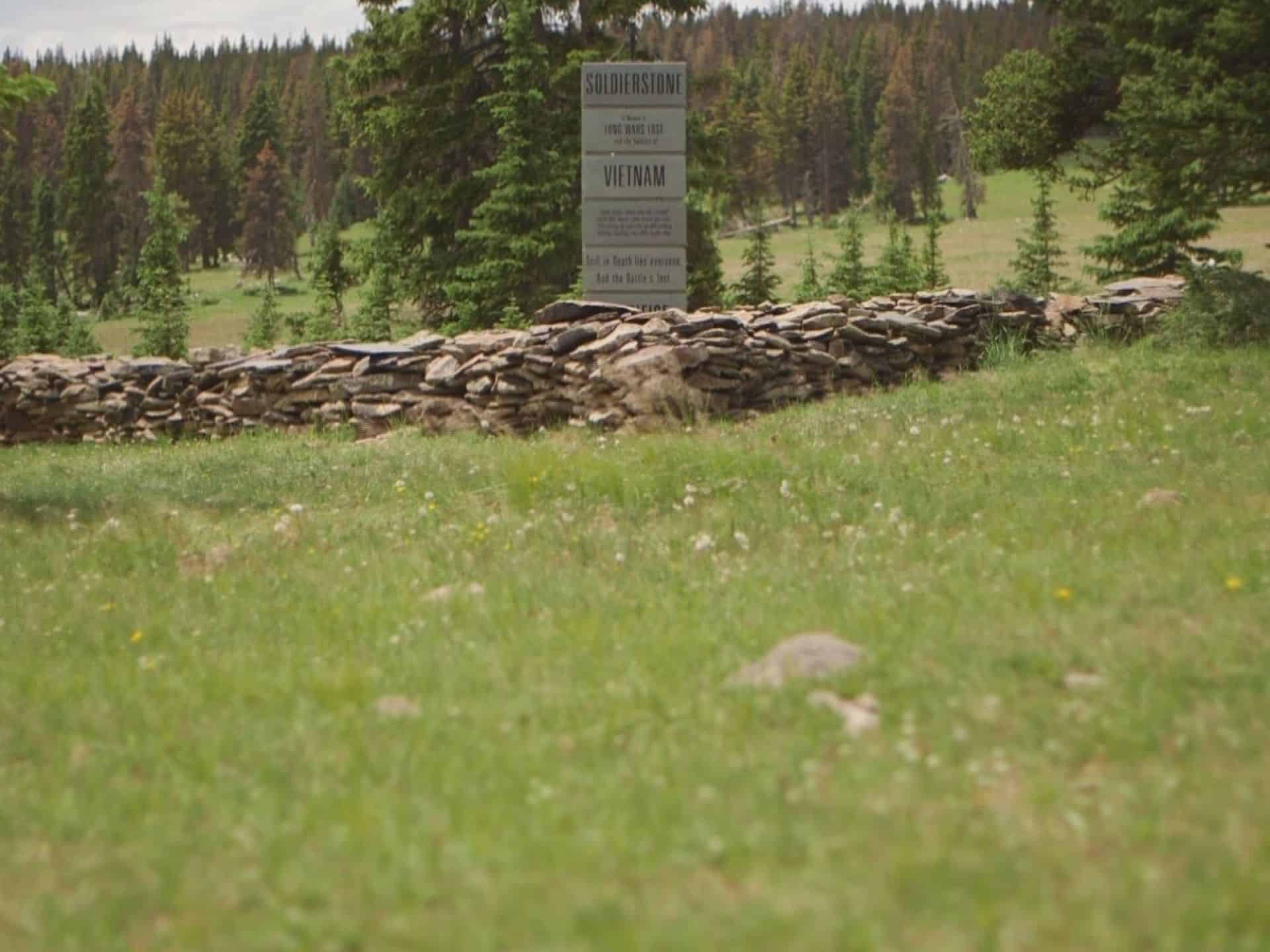
Silverstone- Vietnam Memorial on the Rio Grande

Beckley chose the Rio Grande National Forest because of its proximity to the Continental Divide – and because it was a large forest that could easily hide his memorial. (Photo: Chris Hansen/9NEWs)


I originally posted this in 2015 for Memorial Day, and many current readers were not around here then, so here goes. If you know of memorials on other Forests, please share in the comments.

**********************************

Here’s what I thought was the best story about this…thank you, Kevin Torres (KUSA), -the link no longer works, but  below is an excerpt.

The Mountains of the Rio Grande National Forest conceal mystery. The sort of mystery that fills a field as it fills a void.

Hidden away in the 1.8-million-acre forest is a treasure few people are aware of. It was created nearly 20 years ago by a man who devoted the remaining years of his life to honoring soldiers who fought in the Vietnam War.

“He was really enchanted with it. It was his only goal in life for the last 30 years,” Phyllis Beckley Roy said.

Roy is referring to her brother, Lieutenant Colonel Stuart Allen Beckley. Beckley fought in Vietnam from 1962 through 1973. After the war, Roy said her brother was deeply impacted by Vietnam and wanted to do something for his fellow soldiers – as well as the other countries affected by the war.

“He just couldn’t believe that people could not know what was going on, and he decided he would take any penny he could scrape together to build a memorial to honor the people who were not honored,” Roy said.

Beckley’s idea to build a stone memorial on national forest land was initially denied. But when the forest supervisor for the Rio Grande National Forest, Jim Webb (now retired), discovered Beckley was dying of cancer, he changed his mind.

Beckley’s last mission in life was to establish a lasting tribute in memory of the soldiers of Vietnam and Laos. His dream eventually became reality. By the mid-90s, SOLDIERSTONE had been built.

“He designed it, and he bought everything that went into it,” Roy said.

Beckley didn’t have many connections to Colorado. He chose the Rio Grande National Forest because of its proximity to the Continental Divide – and because it was a large forest that could easily hide his memorial.

According to Roy, Beckley didn’t want many people to know about it. He never intended for large crowds to visit it and to take pictures of it.

“The idea was he wanted it to be secluded. He didn’t want people to vandalize it,” Roy said.


Federal Lands Litigation – update through May 18, 2026


FOREST SERVICE

Request to clarify the remedy in Defenders of Wildlife v. U. S. Forest Service (W.D. North Carolina)

On April 16, in a case in which the court vacated the Fish and Wildlife Service’s biological opinion for the revised Nantahala-Pisgah National Forest Plan’s effects on four bat species (discussed here), the government asked the court to clarify that it had NOT vacated the revised forest plan.  On April 29, plaintiffs in the case asked the court to explicitly vacate the revised forest plan.  The article includes links to both motions.

  • Black Hills NF graphite drilling

New lawsuit:  Cheyenne River Sioux Tribe v. U. S. Forest Service (D. South Dakota)

On April 30, nine Native American tribes in South Dakota, North Dakota and Nebraska sued the Forest Service in a bid to stop exploratory drilling for graphite within a sacred area of the Black Hills, near lands privately owned by tribes.  This was the second lawsuit against this decision; the first was discussed here.  It is near a meadow called Pe’Sla by the tribes (also known as Reynolds Prairie), which is used by the tribes for tribal ceremonies, prayer and youth camps year-round. The lawsuit alleges a NEPA categorical exclusion was improper because the project includes drilling, road work and other activity near Pe’ Sla, and also that the Forest Service violated the National Historic Preservation Act’s consultation requirements.

TRO granted

On May 5, the district court granted a temporary restraining order applicable to both lawsuits.   The drilling had been partially completed.

Decision withdrawn

On May 7, the mining company sent a letter to the Forest Service asking for the project’s plan of operations and decision memo to be withdrawn. The letter says the company “does not intend” to file another plan of operations for exploratory drilling at the site, and it will conduct reclamation.

New lawsuit

At the end of April, the Gallatin Wildlife Association, Alliance for The Wild Rockies, Native Ecosystems Council, and Council on Wildlife and Fish filed a lawsuit against logging and burning on more than 5,600 acres between Hyalite and South Cottonwood canyons, south of Bozeman, Montana, an area important to both recreation and wildlife.  Issues include the effect on lynx of the delineation of the wildland-urban interface and removal of threatened whitebark pine saplings, as well as concerns about grizzly bears and goshawks.  Plaintiffs claim violations of NEPA, NFMA, ESA, HFRA and the APA.

Decision rescinded

On April 30, the Cooke City Fuels Project on the Custer Gallatin National Forest was withdrawn by the Forest Service after a lawsuit (discussed here).  This case involved the scientific basis for “daylight thinning” around whitebark pine trees, as well as effects of the Project on grizzly bears and lynx.

New lawsuit:   WildEarth Guardians v. U. S. Department of the Interior (D. D.C.)

On May 12, WildEarth Guardians filed a sweeping lawsuit against the Forest Service, BLM, and U.S. Fish & Wildlife Service for failing to respond to 15 separate FOIA requests dating back to 2020. The withheld documents cover environmental analyses for logging projects, livestock grazing permits, and authorizations to harm protected wildlife.  The plaintiff is seeking court orders requiring the agencies to comply with the Freedom of Information Act and release the requested records.  The press release includes a link to the complaint.

BLM

Court decision regarding Oregon Natural Desert Association v. Raby (D. Oregon)

ONDA and the other plaintiffs, Bird Alliance of Oregon and Defenders of Wildlife, won their lawsuit against the BLM for allowing grazing in research natural areas (discussed here).  However, when they then sought more than $1.1 million in attorney fees and other expenses under the Equal Access to Justice Act, the court found that the BLM position was “substantially justified,” so that plaintiffs were not entitled to a payment from the government.  The court pointed to the lack of clarity in the “legal landscape surrounding the threshold question” where the precedent that did exist “was not uniform, with courts employing multiple approaches.”

New lawsuit:  (D. Oregon)

On April 27, the Oregon Natural Desert Association, Great Old Broads for Wilderness and Great Basin Resource Watch filed a complaint against exploratory drilling for a potential lithium mine near the Oregon-Nevada border.  The operation would span 7,200 acres of public land and include the disturbance of 73 acres created by 168 drill sites over a period of five years.  It also would include the construction of 22 miles of new access routes, and require 18,000 gallons of groundwater per day. Plaintiffs allege that the BLM violated the National Environmental Policy Act by failing to prepare a full environmental impact statement for the project, failing to adequately analyze its impacts, and downplaying those impacts while failing to adequately assess mitigation measures proposed by backers.  Issues include greater sage-grouse and Lahontan cutthroat trout, as well as groundwater pumping that, plaintiffs argue, put vital springs used by ranchers and tribal communities in jeopardy.

Amended complaint in Conserve Southwest Utah v. U. S. Department of the Interior (D. D.C.)

On May 11, the seven plaintiffs in this case amended their complaint to include violations of the Endangered Species Act with regard to the effects of highway construction on the threatened Mojave Desert tortoise in the Red Cliffs National Conservation Area.  The press release includes a link to the amended complaint.

Court decision in Cascadia Wildlands v. U. S. Bureau of Land Management (D. Oregon)

On May 14, the district court agreed that the BLM used “inaccurate and misleading” data regarding the age and size of trees it was allowing to be felled and instead, evaluated “stands” of trees with average sizes and ages estimated. While the BLM resource management plan protects trees larger than 40 inches in diameter or established prior to 1850, “Nowhere are individual protected trees mentioned, nor are the measures that BLM will take to identify and protect them” the court said about this Project.  The agency also “failed to take a hard look at the Project’s effects on old-growth trees that BLM is explicitly required to retain.”  It therefore violated both FLPMA and NEPA, and the court vacated the decision.  The article includes a link to the opinion.  (This article discusses what was happening on the ground in the absence of old growth protective measures.)

ENDANGERED SPECIES

New lawsuit:  Western Watersheds Project v. U. S. Fish and Wildlife Service (D. Oregon)

On May 13, Western Watersheds Project and WildEarth Guardians sued over the Fish and Wildlife Service’s delay in making a decision about whether to list the pygmy rabbit as threatened or endangered.  In January 2024, the Service issued a finding that the petition “presented substantial information” that listing the pygmy rabbit might be warranted. That finding triggered a 12-month period to issue another finding, but the Service has not issued one, now more than two years later.  Pygmy rabbits are found in healthy sagebrush habitat, and according to the complaint, “On the extensive federal lands where much sagebrush steppe occurs, these discretionary policies often allow grazing, energy development, rights-of-way, and vegetation manipulation that, together, significantly reduce sagebrush habitat.”  The complaint is here.

Settlement in Center for Biological Diversity v. U. S. Fish and Wildlife Service (D. Oregon)

The parties have agreed to settle this listing delay case involving a newt found only in Crater Lake in the national park.  Under the agreement, USFWS must produce a finding regarding listing by Oct. 7 this year.

Court decision in Pesticide Action Network, North America v. Williams (N. D. California)

On May 13, the district court granted partial summary judgment to Pesticide Action Network North America, Center for Biological Diversity and Center for Food Safety, in their challenge to the Fish and Wildlife Service’s 2022 final biological opinion on national reregistration of the pesticide malathion.  The court found that data was too flawed to support the conclusion that its use would not cause jeopardy to any of more than 1500 species or adversely affect critical habitat.   The opinion was arbitrary because “the ’usage’ analysis underlying every determination relies on arbitrary species’ range estimates and/or pesticide usage data.”  The plaintiffs have asked for a new biological opinion within nine months and interim protections while the process moves forward.  The article has a link to the opinion.  Malathion is used by the Forest Service for mosquito control and plantations, and here’s their take on malathion.

OTHER

Court decision in Ambler v. Flathead Conservation District (9th Circuit)

On April 17, the Ninth Circuit affirmed the district court in holding that in 1911, Montana ceded, and the United States accepted, exclusive jurisdiction over privately owned land located within the boundaries of Glacier National Park.  This meant that in this case, the State could not enforce the Montana Natural Streambed and Land Protection Act, when the Defendants began constructing a home on a highly visible bank of McDonald Creek, excavating the stream bank to create a pad for construction without obtaining the necessary permit.  The property remains subject to federal law, but “the federal government has essentially abdicated their duty by failing to make and publish rules and regulations adequate for the care, protection and management of the resource on private inholdings in Glacier National Park,” according to an FCD attorney.  The article includes a link to the opinion.

New lawsuit:  Conservation Law Foundation v. Trump (D. D.C.)

On May 4, the Conservation Law Foundation, Natural Resources Defense Council, the Center for Biological Diversity and a marine scientist sued the secretaries of Interior and Commerce, and the National Marine Fisheries Service for opening the 3.1-million-acre Northeast Canyons and Seamounts National Monument off the coast of Cape Cod to commercial fishing. They specifically challenge a presidential “Dismantling Proclamation” and a change in federal regulations that reversed actions taken by the Biden Administration to restore the protections.  They argue that the Antiquities Act “delegates authority to the President to create national monuments,” but “does not give the President the opposite power to revoke those protections.”  They also allege the issuance of the regulation violated NEPA and the APA.

New lawsuit (D. D.C.)

Public Employees for Environmental Responsibility has filed a lawsuit against the Department of the Interior for failing to disclose records pertaining to Freedom 250, a private entity.  Reports have surfaced that Interior Department funds are being directed to Freedom 250 through the National Park Foundation and that Freedom 250 is being used to sell access to the president, hide donors, and use taxpayer funds to pay for propaganda.  PEER filed multiple Freedom of Information Act requests seeking documents in February related to Interior’s role in the creation, funding, and operation of Freedom 250, but Interior has refused to turn over any documents.

LEGISLATION NOTES

The U.S. House of Representatives voted 224-200 to pass the Farm, Food and National Security Act of 2026, known as the Farm Bill.   Included in the bill is the latest “Cottonwood fix” (now referred to as the Fir Act).  Here is our most recent extended discussion of how reinitiating ESA consultation on forest plans would no longer be required when a new species is listed that could be affected by the plan. Prior legislation has failed the legislative gauntlet; maybe this one has more momentum.

Federal legislation has been proposed to transfer land in Grant Parish from the Kisatchie National Forest (about 140,000 acres, about 24% of the national forest) to the local Grant Parish Police Jury (similar to county commissioners) and School Board for the purpose of economic development.  It has been opposed by the the Grant Parish Police Jury after public backlash.

JUST BECAUSE

A crappy situation turned into a happy ending thanks to the quick teamwork of the Bureau of Land Management (BLM) and some helpful neighbors in northwestern Arizona.  One morning, the BLM’s Kingman Field Office got an unusual report: a wild burro had fallen into a septic tank in an RV park along the Oatman Highway in Golden Valley, Arizona. This area is known for the Black Mountain Herd Management Area (HMA) and home to the largest herd of wild and free roaming burros in the country.”

Wreck Dot Gov: Article in Re:Public

Either no one was interested in organizational charts for the Forest Service, or everyone’s off for Memorial Day already. This story is significant for those hoping to find campsites this weekend.  It’s mysterious how solving these problems seems to elude Admins, Congress, and the usual outdoor industry suspects. It seems to me a Congressional investigation might be helpful, including looking into financial records.

We’ve covered some of Rec.gov before..this story is titled Wreck Dot Gov and it’s free access via the Re:Public site.

A 2023 analysis of river permit odds by The Colorado Sun. (Credit: Screenshot from The Colorado Sun).

That gap is showing up on other public lands. Maybe you’ve driven into a campground to find reserved signs on all the posts, but then watched the sites sit empty. I know I have. The Recreation.gov system was supposed to make it easier to access public lands, and to alleviate administrative work from federal land managers, who already have enough on their plates. Instead, it feels like a breaking point between the digital and physical worlds.

Even beyond bot usage, academics have shown that digital access through Rec.gov is inequitable, and that demand for camping and other public land access is outpacing technology and policy. Rangers can’t do anything about those empty campsites, which they want to see used. People like me are pissed they can’t get outside when they want.

And they’re also pissed that the government contractor Booz Allen Hamilton is profiting off of every single Recreation.gov transaction, to the tune of hundreds of millions of dollars.

As we work though our frustration about access, it’s worth considering why a consulting company Bloomberg once called “the world’s most profitable spy organization”—one that you might remember as Edward Snowden’s employer when he leaked global surveillance documents, and which recently lost 31 Department of Treasury contracts because a former employee leaked Trump’s tax documents—is holding the keys to our public lands.

**************

Throughout the system, rangers are bearing the brunt of people’s dissatisfaction. “People booked tickets through Rec.gov or with us in the visitor center, and the systems didn’t talk to each other,” says Walsh. “People would show up and claim they had tickets but couldn’t verify them. That led to stress and visitor conflict, and this was a park that didn’t have security or law enforcement.”

Rangers don’t have a lot of power to correct bad behavior. They can’t open unused campsites until after people don’t show up for their reservation, so the first night of a no-show can’t be used by anyone else. They can’t do anything about unused sites besides marking the user down in notes that are shared internally. One ranger told me he didn’t know if it made any difference—“We’re basically just blocking an email address,” he said. Some rangers told me they see the same group of people show up every year, while other people wait decades for a spot.

When BAH won the contract for Rec.gov, it was required to “provide a means to identify and suppress suspicious transactions including but not limited to web robot activity” and “recognize and prevent potentially duplicate profiles and provide a means to remove duplicate information.”

Both the company and the government acknowledge that there are issues on those fronts. “The site does experience attempted bot activity,” the Forest Service press office replied to me, “but multiple defenses are in place to detect and block large-scale attacks or efforts to capture multiple reservations.”

Healy says BAH has acknowledged the problems with bots enough that it has built availability alerts, which let users know when spots open up, to try to stay ahead of bots, and ahead of new businesses like Campnab or Outdoor Status, where you can set alerts for popular campsites or ticketed activities. In a statement, he emailed: “Booz Allen has implemented multiple defenses to detect, prevent, and mitigate bots that attempt to take advantage of the system; is constantly monitoring potential bot activity on the site; and is partnering with industry-leading vendors to leverage advanced solutions for identifying and mitigating that activity.”

But, he says, it’s tricky to create the right amount of friction to stop bad actors while still making the site accessible. “Believe me when I say the people involved want it to be fair,” he says.

These problems aren’t unique to public land, of course. They plague booking sites from Ticketmaster on down. It’s widespread enough that in 2016, Congress passed the Better Online Ticket Sales Act (BOTS) to try to outlaw bots that scoop up tickets, but the law only addresses events with over 200 people. It doesn’t apply to things like campground reservations or hiking permits, where bots are scraping for a single opening at a time. On the bright side, there doesn’t yet appear to be much of a secondary market for scalped reservations.

There’s a difference, of course, between tickets to a Taylor Swift concert and time on public land. But if getting a good campsite becomes a race for who has the most computing power, then can we really say public land is for everyone?

*******

Do the federal land management agencies suffer from tech-o-phobia? What else is going on? It seems like an issue everyone agrees on except perhaps the folks at Booz Allen Hamilton.  Like I always say, good government performance should cross party lines.  D’s generally want the government to do more things, so a track record of competence is in their interests.  R’s like being careful with/saving bucks so they should also be interested. And here is an apparent low-hanging fruit waiting to be plucked.

New Forest Service Senior Executive Org Chart and Comparison With 2020 and 1989

For those of you less interested in reorganization, I hope to get back to other topics after Memorial Day weekend.

A side note on all the reorganization discussions.  Sometimes I will argue the Administration’s (apparent) side (or try to understand it).  The purpose is to try to understand what they, or the FS employees who worked on the reorganization, were thinking (I do have a FOIA in for some reorganization documents).   It’s not that I necessarily agree, but I want us to hear their side (even if I have to intuit it, or rely on the FS Retiree Gossip Network). We are currently missing the description of why they are using this model, but hopefully that will become clearer over time.

Anyway, below is the draft organization chart.  This has been shared with employees and Congressfolk so I’m assuming it’s OK to post:

Some people have been wondering how the FS can cut down on SES positions and also have 15 SES state directors. It turns out that there used to be 55, and there are now 45 under this model.

First, clearly we would need to see the next layer down to get a picture of what positions are where, doing what.   Also clearly, the idea of using service units instead of a layered Regional/WO approach will affect who is left working directly for these SESers, doing what kind of WO work.   I’m sure that all this has been thought out, but not easily accessible to us at present.

Below is the 2020 organizational chart, although it doesn’t show (as far as I can tell) who among them  is SES. The FS has also added an SES Deputy for Wildfire (at the behest of Congress?) since then, that you can see in the new chart as Chief Fire and Safety Officer.  It seems to me that whoever wanted it, it makes some sense.   Otherwise fire would tend to suck up all the oxygen, so to speak, from coop forestry, forest health and urban and community forestry. We might wonder whether Coop Forestry now includes Conservation Education, Tribal Relations, and Forest Health, and where Partnerships is located in the new org chart.

I can’t weigh in on the wisdom of combining the CFO and Biz Ops, but if we go back to 1989 (see the org chart below), they were together.  Perhaps having a CFO was a requirement imposed on agencies since then. Those who see the Chief Strategy and Performance Officer might have a vague memory of the old Programs and Legislation Deputy Area, except Legislative Affairs is now in the Chief’s Office. Plus I don’t know what happened to Policy Analysis (it moved to R&D) as did RPA (the Program was discontinued, but the Assessment lives on in R&D).

You might wonder, “how do agencies decide which positions are SES and which are 15s?” Here’s Grok’s answer.

Key distinction: SES emphasizes executive leadership and being part of the management team. GS-15 positions (even senior ones) are more likely technical experts, independent advisors, or supervisors without broad executive accountability.

I’m sure that there’s a definition of what is “managerial” and what is “executive” probably somewhere at OPM.

Here’s the org chart from the old  Forest Service Organizational Directory from  1989.

Thoughts?

State Directors: More Than You Probably Wanted to Know About the SES Selection Process and Why Not Apply?

I know at least some readers have been SES, so feel free to correct.  This is based on some basic info that I used Grok to put together from a hand-scribbled flowchart.

It’s a little confusing at first as there is a selection process (for all comers) plus if the applicant had not been previously certified (say through the SES Candidate Development Program) and is selected for the position, that individual has to go through a separate certification process with OPM (the Office of Personnel Management).

First, here’s how the selection process goes:

Step-by-Step SES Candidate Selection Process

  1. Applicant Applies
    • Position is announced on USAJOBS.
    • Candidates submit application (resume + possibly ECQs or Technical Qualifications).
    • Multiple paths feed into this stage (new folks, reinstatement or transfer of already qualified SES)

My take is that the FS is low on SES at this point, the combo of certain age classes retiring, plus some that don’t prefer working for this Admin when they can retire. Plus the FS probably hasn’t hired new ones recently, possibly due to a hiring freeze imposed by (OPM?OMB?) plus they wanted to see what positions they need after reorg.

2. HR Screens Basic Eligibility / Minimum Qualifications

    • Human Resources checks for basic requirements (e.g., U.S. citizenship, GS-14/15 level experience or equivalent, specialized experience).
    • Ineligible applicants are screened out.

In our universe, most folks that get to the 14 or 15 level have some kind of college degree.

3. Panel Ranks / Rates Candidates

    • A rating panel (subject matter experts) evaluates qualified candidates.
    • They score/rank applicants based on experience, ECQs, technical qualifications, and other criteria.

Here is the technical qualification for the State Directors:

” Demonstrated experience and accomplishments in developing strategies and making decisions on controversial natural resource management issues where the interests of valued partners may conflict with or not align with Agency authorities or needs. This includes the full range of natural resource management programs of a multiple-use land management agency, and diverse partners such as Tribes, States, other Federal agencies, local governments, non-governmental organizations, and members of the public.” Seems like that qual would give FS, BLM and possibly State natural resource employees a leg up, because where else would one gain “demonstrated” “experience on making decisions on controversial natural resource management issues where interests may conflict or not align with Agency authorities and needs.”

4. USDA Executive Resources Board (ERB) includes one FS member, rest from other USDA agencies

    • The agency’s Executive Resources Board reviews the top candidates.
    • They recommend finalists to the Selecting Official. (This is a key oversight body ensuring merit-based process, according to Grok sources.)

5. Selecting Official Chooses Candidate

    • The hiring manager/executive (Selecting Official) makes the final choice from the recommended candidates.

If the selected candidate has not been certified as SES previously, then..

6. OPM Qualifications Review Board (QRB) Review

    • The selected candidate’s executive qualifications are submitted to an independent OPM Qualifications Review Board.
    • The QRB certifies that the candidate demonstrates broad executive leadership across the ECQs.
    • This is required before any initial career appointment to SES.
    • There are no USDA SESers on the OPM Qualifications Review Board, they are all from other agencies.

7 .Final Selection / Offer

    • Once QRB certifies, the agency can issue the formal SES appointment/offer.
    • New SES members serve a 1-year probationary period.

***************

More details can be found here. To make everyone’s life easier, compared to the past, applicants need to address the ECQs via their resume and a two pager (there is a sample two pager at the end.)

The non-SES selectee only gets two chances to go before the Qualifications Review Board at OPM. If they fail the first time, often specialists are brought in to help the candidate rewrite their application. Otherwise, it’s back to the drawing board (or the list of candidates)  and all this takes time, plus the next candidate down the line might have gotten another job..

Now some people overstate their accomplishments and some understate them. I’m not sure if the panels look at references. There is kind of a priesthoody vibe to all this, but the point is that those without an axe to grind (SESers from other agencies) rule on whether the applicant is suited for this level of position.

I encourage all who are interested and think they might fit to apply, just writing an application is a learning experience, plus it might show some gaps that you can address in your training plan.

Downsides of SES are that they can move you anywhere on a whim. There may be other downsides. For those who are attached to locations, though, wise elders advise me to wait to apply until you are retirement eligible.

Here’s a table comparing the different ways of filling SES slots summarized by Grok.

NY Times Editors Need New Nemesis- Repost of 2011 Piece

Vladimir brought up the NY Times’ various coverage of stories related to TSW issues over time. Thinking about State Directors, this one from 2011, (when I was still working, context, we used to have groups of law students and their profs come to talk with us about planning rules). I realize the image is from the New Yorker Magazine and not from the Times but it is illustrative, in my view, of a similar worldview. And here we are 15 years later, with concerns about State Directors being too close to states influenced by the timber industry.

Below is the repost. I put the italics in- note that the planning rule is seen to be only about timber, not the many other uses. Once you think about it, that’s the way possible Roadless rescission is being portrayed (millions of roadless acres will be logged) even though the State Roadless Rules in Idaho and Colorado had complicated exceptions for fuel treatments, phosphate, ski areas, underground coal mine methane venting, and other non-timber uses.

******************

Here’s the link and here’s what is says about the planning rule:

The other piece of news is more complicated. Last month, the Agriculture Department proposed long-awaited forest-planning rules. The rules, mandated by 1976 National Forest Management Act, are supposed to guide forest managers as they decide which parts can be logged and which should be fully protected.

The act’s bedrock principle is that the health of the forests and their wildlife is to be valued at least as much as the interests of the timber companies. The Clinton administration’s rules firmly embraced that principle; the industry-friendly Bush rules did not.

The Obama administration’s proposed rules improve on the Bush rules and are full of high-minded promises about maintaining “viable” animal populations. But they are disappointingly vague on the question of how — and how often — the biological diversity of any particular forest is to be measured and what actions are to be taken to ensure its survival.

The net result is to give too much discretion to individual forest managers and not nearly enough say to scientists. This is dangerous because, over the years, forest managers have been easily influenced by timber companies and local politicians whose main interest is to increase the timber harvest.

As secretary of agriculture, Tom Vilsack has been more attentive to the needs of the forest, so far, than any agriculture secretary since the Clinton days. He should make sure these rules are strengthened.

When we had the law students visit earlier this week, they also talked about “industry,” and I asked them who do they mean? The ski industry, the oil and gas industry, the ranching “industry” (not sure anyone uses that expression, but..). Is there anything they are all united on? Do they actually work together to “open up” NFs to all uses? No.

Earth to NY Times editors- timber wars are over! They need to find new evil empire or federation of empires. Timber industry folks just aren’t very scary- see this press release about the Montrose mill.

Of course, my favorite part of this editorial was this quote

“The net result is to give too much discretion to individual forest managers and not nearly enough say to scientists. This is dangerous because, over the years, forest managers have been easily influenced by timber companies and local politicians whose main interest is to increase the timber harvest.”

Now, if we were on this side of the Hudson looking in that direction, we might suggest that the NY State Legislature, or perhaps the Mayor of New York could also be replaced by scientists. Because, after all, their “local” elected officials can be too easily influenced by industries of various kinds, instead of listening to those who know better, perhaps the editors at the Denver Post ;)?