Just to be clear, I’ve done much work with TWS and TWS people and have a high degree of respect for them, so these are just questions about the governance and not so much the people.
Funny story.. a representative of TWS worked with us on Colorado Roadless, and argued for various improvements to his way of thinking. One issue was that TWS and others had different WUI maps based on different assumptions (some things never change). When he told us, “it doesn’t matter what you agree to with me, national will never support it.” I just sighed, and wondered if there is a definition somewhere for “good faith negotiations.”
If I were the board of an ENGO, I probably wouldn’t select as President of my organization, a former political appointee. If it were an elected organization, they’d probably want to have members in a broad tent. However if we look at their funding, we see that the Wyss Foundation provides substantial support.
Now, if you don’t follow this stuff, you might not have seen this in Nebraska..
Atop the scheme is Swiss billionaire Hansjörg Wyss. Wyss contributed large sums to two nonprofits, the Wyss Foundation and the Berger Action Fund. Those nonprofits, in turn, contributed to two other nonprofits, the New Venture Fund and the Sixteen Thirty Fund. Those nonprofits then contributed to several other nonprofits, including three Nebraska entities: Nebraska Appleseed, Civic Nebraska, and Nebraska Abortion and Reproductive Justice Fund Inc. Besides the Wyss Foundation and Berger Action Fund, all the other nonprofits in the web also contributed directly to Nebraska ballot question committees.
Now I am not within a light year of being an attorney, and I assume the best about everyone, so I’m sure this alignment between a D dark money donor and the hiring of Stone-Manning is simply an interesting coincidence.
*******************
I was mildly surprised when I read this piece in High Country News.. (I was actually wondering why The Folks Who Decide What’s Important were so focused on the FS and not BLM.. more on that later).
Lee introduced his measure in June as an amendment to Trump’s so-called “big, beautiful” budget bill and pitched it as a common-sense solution to America’s housing crunch. Many treated Lee as a lone actor pushing an extremist public lands privatization agenda, though the Trump administration launched a task force months earlier to study selling off as much as 400,000 acres of federal land for housing development.
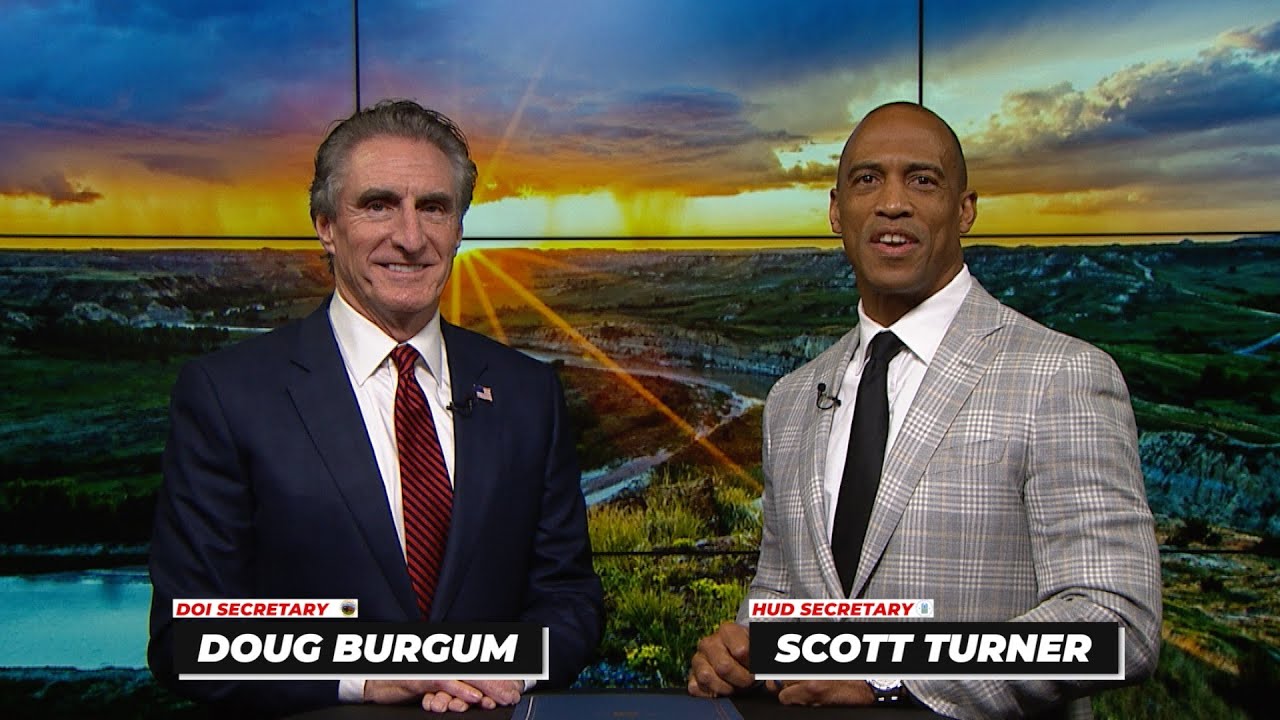
As public backlash to Lee’s proposal reached a boiling point, Interior Secretary Doug Burgum attempted to distance the Trump administration from Lee’s effort.
“I don’t think anybody is really spending much time thinking about it up there,” Burgumtold Scripps News in front of the White House in late June, adding that “it doesn’t matter to me at all if it’s part of this bill because that wasn’t part of the president’s agenda to be part of the bill in the first place.”
Rep. Ryan Zinke (R-Mont.), a former Trump Interior secretary who was widely credited with helping block a House effort to sell off federal lands weeks prior, applauded Burgum’s comments in a June 27 post to the social media platform X, writing “the great Interior Secretary Doug Burgum says public land sales are not part of the Trump agenda.”
But two weeks earlier, Burgum’s team provided Lee’s committee with technical data about the impact of his proposal and offered feedback that Lee ultimately used to downplay the significance of his proposal.
On June 10, Chris Prandoni, Lee’s legislative assistant on the Senate Energy and Natural Resources Committee, emailed two Interior staffers with draft language for their review.
“This is the quote I’ve been working up with your guys to accurately reflect your research: ‘The Department of the Interior estimates that the Bureau of Land Management has about 1.2 million acres of land within 1 mile of a population city center and another 800,000 acres within 1-5 miles of a population center. Much of this land may qualify for disposal under this section,’” Prandonic wrote. “We also are going to dedicate five percent of the revenue to maintenance backlog.”
The subject of the email — “[EXTERNAL] DRAFT / PRE-DECISIONAL RE: land disposal for housing–new question” — suggests Interior’s engagement with Lee’s staff went beyond what is detailed in the exchange.
Greg Wischer, a former critical minerals consultant who was tapped last year to serve as Interior’s deputy assistant secretary for land and minerals management, signed off on the quote later that evening.
“Good to go on the quoted content. Thanks for running it by us!” Wischer wrote.
That talking point appeared verbatim at the top of an FAQ that Lee released the following day alongside his public land sell-off proposal.
In that same email chain, Jeremy Arendt, Interior’s deputy assistant secretary of natural resources and infrastructure, encouraged Lee’s staff to “include a % of total acres this represents for BLM, which is about 0.7% of the total, or about 30% of lands within 5 miles of population centers.”
The committee’s FAQ dismissed the idea that the proposal is “a massive sell-off of federal land,” noting that it “requires disposal of only 0.5%-0.75% of the [Bureau of Land Management] and [Forest Service] estates. It leaves the remaining 99.25% untouched.”
The communications also indicate that several Interior employees were scheduled to meet with Lee’s staff on June 11, the day Lee unveiled his proposal.
“Thanks, guys. See some of you all tomorrow,” Prandoni wrote after Wischer approved the draft quote.
“Thanks Chris, looking forward to it!” replied Matt Schafle, a former National Rifle Association employee and current congressional and legislative affairs director at Interior.
The Wilderness Society, an environmental organization, obtained the emails through a public records request related to the Trump administration’s housing task force and shared them with Public Domain.
Michael Carroll, the BLM campaign director for the Wilderness Society, said the documents “paint a troubling picture.”
“Rather than engaging the public or pursuing real housing solutions, the administration appears to have spent that time coordinating messaging with the same members of Congress who pushed large-scale public land sell-offs last summer,” he said in an email. “That’s not problem-solving — it’s laying the political groundwork to sell off America’s public lands.”
If I were in Congress, I would want to make sure that my numbers were correct by checking with the agency (!). Somehow I’m not shocked that politicals in Admins talk to their counterparts on the Hill. We know that D’s do the same.
The amazing stretch in this piece is from underlings sharing (helpful info) to… “the Admin really wants to sell off federal lands.” But what’s really interesting to me is that TWS is doing FOIAs as well as interpreting them for us. Note that in this “news article” we are given the picture TWS wants us to hear. Historically, HCN has not been particularly skeptical of claims from ENGO’s so this is not surprising.
The article says that the report was produced by a Substack called Public Domain.
We practice non-partisan adversarial journalism — providing hard-hitting reporting on a critical beat that is too often ignored by mainstream news outlets. We aggressively cover threats to America’s great conservation tradition. We push hard for government transparency and shine light on the inner workings of environmental agencies. We dig into the powerful interests that influence policy from the shadows. And we strive to earn and keep the trust of our readers.
Hmm. Non-partisan. OK then.
You probably won’t be surprised as to who funds the Substack: The Wilderness Society and The Fund for Investigative Journalism. The three reporters seem to work preferentially in outlets with a certain point of view. We know the Wilderness Society and the Park Foundation, a major funder of the Fund for Investigative Journalism. The Park Foundation funds a variety of interesting things (including “keep it in the ground” and Earthjustice and the Tides Foundation, which is itself a big funder so why give them money?) All very confusing.
One good thing about AI is that it’s much easier to track funding for those of us who don’t want to pour through 990’s.
Maybe the real story is that the Trump Admin as a whole never really supported Lee’s proposal. As I said at the time, despite desperate efforts to resurrect the issue, that dog won’t hunt.
To say that the Trump administration never supported selling public lands is intellectually dishonest at best.
Trump’s “Freedom Cities” plan proposes to sell them https://www.cnn.com/2023/03/03/politics/donald-trump-freedom-cities-flying-cars#:~:text=By%20Eric%20Bradner%2C%20Kristen%20Holmes,DC%2C%20on%20undeveloped%20federal%20land.
Doug Burgum in the Wall Street Journal: “Federal Lands can Be Home Sweet Home” https://www.wsj.com/opinion/federal-land-can-be-home-sweet-home-joint-task-force-hud-interior-department-housing-affordability-3a281d36?st=RsNh1w
DOI and HUD secs on the creation of their joint task force to sell public lands: “HUD and DOI Open Under Utilized Federal Lands For Affordable Housing”
I doubt it’s news to anyone that the Wilderness Society and all similar ENGOs are fundamentally partisan institutions thoroughly enmeshed in the Democratic Party’s NGO patronage network. There’s a lady who goes by the name Data Republican who has been mapping the financial ties between all the different left wing NGOs and has a fascinating website with all this info. Here is the map for the Wilderness Society: https://datarepublican.com/expose/?eins=530167933
In my experience both the Wilderness Society and Stone Manning are selling out the environment, so for the writer to portray these 2 entities as some form of radical environmentalists is a BIG stretch. Here in Bozeman TWS is a founding member of the Gallatin Forest Partnership, a “collaborative” group that has authored a bill to carve up our Hyalite Porcupine Buffalo Horn Wilderness Study Area, allowing mountain bikes and motorized vehicles in elk calving areas, grizzly habitat, and wolverine habitat. With “environmental” groups like this we don’t even need the Trump admin to whittle away at our last remaining wilderness. We disparagingly refer to them as BIG GREENS – and they have lost their purpose because it’s all about collaboration.
Perhaps you can explain what harm a bicyclist causes in the area you mention?
Aside from offending some people’s aesthetic notions about how wildlands should be properly venerated, that is. Or complaints about impingements on their “experience” in them. These are public lands, supported by all taxpayers. They are not the British monarch’s royal reserves.
I mean, what is the practical harm? And what is any harm in relation to horses and profit-generating pack trains, which I assume are allowed?
If you think no one at all should be allowed to venture into this area, that I can respect. It’s principled, though politically untenable.
If there is any good news about this there are Indigenous Nations who can afford to buy much of the land in the public domain if it indeed goes up for sale. After a 23-year effort and $56 million about 47,000 acres in the Klamath Basin have been returned to the Yurok Tribe after studies showed how conservation goals are more effectively met when Indigenous peoples manage their own territories.
There is at least a $billion in the fund for the Black Hills Claim just for instance so maybe tribes can buy some of their own land from the US Forest Service and Bureau of Land Management in red states like South Dakota and Wyoming.
Ahead of the 2023 White House Tribal Nations Summit and as part of the Cobell settlement the Interior Department’s Land Buy-Back Program for Tribal Nations, some three million acres in fifteen states were returned to tribal trust ownership.
“Is The Wilderness Society Becoming Overtly Partisan?” I’m sure they supported Republican Rep. Zinke’s position on not selling public lands, and I’m sure the Wilderness Society would support anything else that Republicans would do to support wilderness. The implication of this headline is that the Wilderness Society (and its funders) should be criticized for not supporting a political party that rarely supports their interests. Really?
Is the Wilderness Society political….I hope this is headline is in jest.
The Wilderness Society has always been a political machine. “Wilderness” is only politically defined. Something we like–sometimes–but there is no science here–only politics.
Since its inception by Marshall, The Wilderness Society has been a refuge for Forest Service staff and, to a lesser extent, the Forest Service has been an opportunity for TWS employees. Truly a revolving door.
Bob Marshall, a New York-educated forester and one-time research scientist in Missoula, Montana, founded the Wilderness Society in 1935 along with recreation/conservation planner/historian Bernard Frank (a wilderness designation in the GW NF is named for him) and Aldo Leopold, who had resigned from the Forest Service. In the Reagan Administration, Barry Flamm retired as forest supervisor of the Shoshone and became the “Chief Forester” with The Wilderness Society in the mid-80s, analyzing agency programs and policy with an insider’s perspective.
Over the years, Forest Service employees have built their resumés or completed their SES details at The Wilderness Society. Now, one of the Deputy Regional Foresters of the Southwest Region, Cecilia Clavet, worked as a senior policy advisor for TWS in the first and second decades of the 21st Century.
Is The Smokey Wire Becoming Overtly Partisan?
I’ve lost track of how many times Sharon has honed in on the Wyss Foundation and ENGOs as the partisan bogeymen who must not be trusted without any of the same scrutiny for the Heritage Foundation or the like.
Hi A, please let us know what the Heritage Foundation is funding with regard to our work, and what news stories in what outlets showcase their views without showing the other side. I haven’t seen it, but it might be out there.
Heritage Foundation…Project 2025…dismantling the federal government, including public land management agencies…
And the like…you’ve dug in on who funds this ENGO or that one. Who funds all the entities pushing for conservation rollbacks and the use of the CRA to undo management plans? Who funds the campaigns of the legislators introducing those bills?
You’re mad that a Substack self-identifies as non-partisan but maybe has an agenda? Pot, meet kettle.
There is an entire chapter about Forestry within Project 2025. We should consider that to be a template on what this Administration wants to do with the Agency, and its policies, in general.
I thought the Forest Service section was within USDA, plus I searched on “Forest Service” in the document. Can you give me the page numbers for the chapter you are talking about?
FSEEE’s (short) summary:
https://nationalforestadvocates.org/project-2025-what-is-the-plan-for-public-lands/
The whole Project 2025 document is available here:
https://static.heritage.org/project2025/2025_MandateForLeadership_FULL.pdf
The specific Forest Service page is at 308 – rumored to have been drafted by Frank Carroll.
There is some really scary stuff in Project 2025, but the policies outlined on page 308 would (with perhaps fewer adjectives) probably be part of any R administration.