Is Anyone Minding the Store?

For three years I’ve been wondering whether anyone in USDA pays attention to what the Forest Service does or says. Left to its own devices, the Forest Service is capable of much mischief. Here’s today’s example, from the “National Cohesive Wildland Fire Management Strategy“:

Wildland fire management actions are guided by a suite of laws, implemented through regulations and adopted as agency policy after public review and comment. Regulations and
policies, however, are often more limiting than the authorizing legislation itself, and sometimes may impede the accomplishment of management objectives and timelines. While legislation
such as the Healthy Forest Restoration Act (HFRA) has been beneficial to active management of public lands, other legislation has been used to promote agendas and philosophies that are not necessarily in harmony with the legislation’s original intent. This is especially true of the Equal Access to Justice Act (EAJA), which was meant to provide a means for underprivileged people to bring legal action against the federal government. Similarly, the Endangered Species Act (ESA) and the National Environmental Policy Act (NEPA) are sometimes utilized by special interest groups to achieve objectives not considered by Congress when the bills were enacted. In addition to barriers presented by existing regulations and policies, the articulation of new or revised policies and changes in agency terminology and/or goals create challenges related to communication and implementation. It is important to seek out opportunities to streamline and coordinate procedures and to pursue broader use of authorities across jurisdictions to achieve common goals. Legislative barriers that are impeding project implementation must be examined and reformed to create incentives for resolving conflict through collaboration rather than litigation.

So, there we have it. The Forest Service now supports legislatively amending the Equal Access to Justice Act, the Endangered Species, and the National Environmental Policy Act.

Is the Forest Service speaking for the Obama Administration? Does USDA know or care that its flagship agency has called upon Congress to amend three bedrock laws?

Is USFS World’s Most Expensive Wildland Firefighting Agency?

At least in the U.S., no one even comes close.

The Forest Service oversees 193 million acres with a wildland fire management budget of about $2 billion. That’s $10.36/acre.

The Department of Interior manages 500 million acres with a wildland fire budget of $856 million. That’s $1.71/acre.

By the way, DOI enjoys a 98% initial attack success rate (defined as % of fires kept smaller than 300 acres) — same as the Forest Service.

Aerial Fire Retardant Is Like Avastin

Today the FDA withdrew its approval for Avastin’s use as a breast cancer treatment. The FDA’s decision was based on large-scale clinical trials that failed to show Avastin improves life expectancies or controls tumor size. The lack of any statistically significant positive benefits combined with serious side effects, such as high blood pressure and hemorrhaging, has pulled this drug from the shelves.

But, some women and physicians (some with financial connections to Avastin’s manufacturer Genentech) believe that Avastin has been effective in treating particular cases of breast cancer. One protester said that the FDA’s decision is “nothing short of a death sentence” for some women.

The problem for Avastin’s promoters is that although it is conceivable that some women might benefit from Avastin therapy — even if women, in general, do not — we do not know how to predict which women these are.

Although the FDA did not consider cost in its analysis, Avastin’s $80,000/patient/year expense also does not counsel for its unsubstantiated use.

So, how is aerial fire retardant like Avastin? The Forest Service acknowledges that no data nor studies show that fire retardant improves initial attack success or decreases average fire size. In fact, fire data for the last ten years show no correlation between firefighting effectiveness and retardant use by national forest.

Fire retardant has known serious “side effects,” like dead fish and crashed airtankers. It is expensive, too, at over $1/gallon to administer — $3,000/drop from a large airtanker.

Although it is possible that fire retardant might be effective under some circumstances, we don’t know how to distinguish those fires from every other ignition.

Just substitute “fire retardant” for Avastin in this summary:

“Many breast cancer specialists say that Avastin does appear to work very well for some patients and some advocates have said the drug should be left on the market for the sake of those patients. But Dr. Hamburg said there was no way to determine in advance who those patients are, so many women would use the drug. “The evidence does not justify broad exposure to the risks of this drug,” she wrote.

Fourmile Canyon Fire Report Confirms Firewise

The Rocky Mountain Research Station released its Fourmile Canyon Fire report, requested by Senator Udall of Colorado. The Report confirms that:

1) A home’s fate depends upon fuel in its immediate surroundings and construction materials;

2) Fuel treatments, especially those that leave fine fuels untreated, are ineffective protection against wildfires that threaten homes, i.e., windy, dry conditions; and,

3) Fire suppression resources are easily overwhelmed precisely when Fire-Unwise homes need them the most.

The report took a special look at aerial attack, finding that the great preponderance of retardant was dropped after the fire had already stopped advancing.

Republican Revolution Proposed for County Payments

House Natural Resource Committee Republicans have floated a “discussion draft” of a county payments bill. It would phase out the current system of payments from the Treasury to be replaced by mandatory payments from national forest gross receipts. This scheme will surely cost the Treasury much more than the current payments.

The reason is simple. In most national forests, it costs the Forest Service substantially more than a dollar to produce a dollar of revenue. The bill tries to reduce these costs by eliminating most environmental laws. But the laws aren’t the source of the problem — the high-value trees have mostly been logged. The national forests, especially in the West, are not productive places to grow timber.

The bill would also create a new legal mechanism that allows counties to sue the Secretary of Agriculture to force him to spend whatever it takes to produce the necessary receipts.

The bill would mean the end of stewardship contracting in most places. No longer would the Forest Service afford to use timber value to purchase work in the woods. The counties’ mandatory revenue payments would soak up all the timber value.

Environmental groups will also blister the bill because it repeals NFMA, NEPA and the ESA. I don’t know why (as the courts have said it “breathes discretion at every pore”), but the bill even repeals the Multiple-Use Sustained Yield Act. And the bill exempts national forest logging and other revenue-generating projects from any and all review in the courts.

As a “discussion draft,” it is sure to engender a lot of discussion. But it is not a serious piece of legislation that will see the President’s desk in this Congress.

Senator Hatfield’s Forest Legacy

Oregon’s longest-serving senator, Mark Hatfield, died yesterday at 89. As a youngster, I remember my mother campaigning for Hatfield in his first election to the U.S. Senate (1967), notwithstanding her life-time Democratic Party affiliation. As Oregon’s governor, Hatfield had opposed the Vietnam War, and that was enough to earn my mom’s support. Later, as an adult, I got my own chance to see him at work.

The first time was during the Mapleton litigation, circa 1982. My employer, the National Wildlife Federation, sought to reform logging practices in the steep and erosion-prone Oregon Coast Range. For a generation, the Forest Service had paid little heed to its own scientists who warned that clearcut logging and roadbuilding would accelerate mass wasting and landslides. When environmental disclosure documents fabricated erosion calculations, we sued and won a court injunction stopping timber sales on the Mapleton Ranger District. Throughout the lawsuit and its aftermath, I made it a point to stay in constant contact with Senator Hatfield natural resources staff. Sure enough, the Senator used his Appropriations Committee chairmanship to attach a rider that allowed buy-back timber sales (sales returned to the government due to purchaser speculative bidding) to go forward, notwithstanding the court’s order. It was a measured legislative response (we had not sought to stop these sales in the first instance) to the beginnings of an inexorable reformation in Coast Range logging practices.

A couple years later, Hatfield presided over a fractured Oregon delegation as it passed the 1984 Oregon Wilderness Bill. His office vetted every roadless area included in the bill, which, among other things, gave Siuslaw coastal rainforests their first (and, so far, only) wilderness protection.

Although Hatfield did not have any great interest in forest or environmental policy — his scope was much broader — his last act as a legislator was the protection of Opal Creek’s ancient forests.

In today’s era when many elected officials seem less leaders than supplicants, Hatfield stood tall as a true Oregon statesman.

Glen Ith’s Enduring Legacy

This week, in a 3-0 opinion, the Ninth Circuit Court of Appeals ruled that the Forest Service’s use of a deer habitat suitability model was “arbitrary and capricious” because key numbers in the model were altered without any rational explanation. The case is a testament to the persistence of Greenpeace’s Larry Edwards, a Sitka resident, the advocacy skills of co-plaintiff Cascadia Wildlands Project (one of my favorite grassroots outfits for its combination of smarts and passion) and their legal counsel’s (Chris Winter of Crag Law Center) talents.

It is the back story that it is especially poignant to me.

That story begins six years ago, when Tongass wildlife biologist Glen Ith emailed me aerial photographs taken by an Alaska Department of Fish and Game employee. The photos showed on-going logging road construction to access the Overlook project area. Overlook was an old-growth forest timber sale that is prime winter range habitat for Sitka black tail deer. What caught Glen’s eye was that the Forest Service had not yet completed the Overlook NEPA analysis, but had already started building the roads. Turns out that there were several million dollars that Senator Ted Stevens (R-AK) had earmarked for Tongass road work; money that if not spent by fiscal year’s end would be lost to the Forest Service, and incur Stevens’ displeasure. Overlook’s NEPA documents were behind schedule, but that didn’t stop the road engineers from moving forward. [NB: The conspiracy to spend the money was broader than the engineers alone, including district and forest-level planning staff, line officers, and contracting officials.]

Glen and FSEEE filed suit, challenging the Overlook and Traitors Cove (another site of illegal “advance” work) road building. It was the first-ever environmental lawsuit by a Forest Service employee. We won. The Forest Service retaliated, suspended Glen from work, and eliminated his job. Several days thereafter, Glen passed away from sudden heart failure.

Early on in our roads litigation, Glen told me that the Tongass was using irrational numbers in its deer habitat capability model. He wanted to cure the errors. We agreed the on-going roads case wasn’t the place to do so, primarily because the issue was not ripe as the timber sale environmental reviews were not complete. Glen said he would try to work internally to fix the modeling problem, but he wasn’t confident he would be successful. He believed the errors were intentionally designed to allow the Forest Service to defend logging high-value old-growth forest habitat.

Glen assiduously documented the problems with the deer habitat model; documents that Greenpeace’s Larry Edwards later found in the administrative records. Glen also administratively appealed the Scott Peak sale on these grounds.

Larry Edwards dedicated this week’s court victory to Glen’s memory.

Out-of-Date Planning

Last week the Colville and Okanogan-Wenatchee National Forests released their “proposed actions,” a new step in NFMA planning preceding the draft EIS and proposed forest plan.

This gem from both plans (the plans appear identical — only the maps differ) illustrates that adding more process does not make plans any more timely:

While the U.S. demand for timber remains relatively high and is expected to increase in the future (USDA FS 2000), timber harvests from 1990 to 2002 in Washington have declined by 39 percent (Washington State Department of Natural Resources 2004). United States lumber markets have relied increasingly on foreign imports, such as from Canada, to help offset declining timber harvests in the state. Softwood lumber imports into the Seattle Customs District from 1992 to 2002 have increased by 11 percent (Warren 2004), while inflation adjusted wholesale prices for Douglas-fir 2x4s have dropped by 33 percent (Warren 2004).

Washington DNR has issued no fewer than five state-wide timber harvest reports since the 2004 report cited here. And Deb Warren has published five more annual statistical summaries, up through 2009, since the 2004 version.

Lo and behold, using the more up-to-date statistics shows that softwood lumber imports into the Seattle Customs District have dropped 70% since 2002 — a far different picture from the 11% increase claimed in the already out-of-date plan.

I suspect that these “proposed actions” were actually written several years ago and have been gathering dust on the shelves while the Forest Service tried to sort out its planning process. Rather than up-date these documents, the FS just slid them out the door with nary a glance.

Just one more illustration of how silly it is for the FS to bite off more planning than it can chew.

Fire Retardant DEIS Comment Deadline

Tomorrow is the deadline for commenting on the Forest Service’s draft fire retardant EIS.

FSEEE’s comments can be read here. The associated spreadsheet collects together national forest-level data over an 11-year period on initial attack success rates, numbers of fires by size class, and retardant use. These data are the basis for FSEEE’s statistical analysis of retardant effectiveness.

Here is our take-home message:

“The fact of the matter is that each and every year the Forest Service drops millions of gallons of a toxic chemical slurry, predictably killing about a half-dozen air personnel while jeopardizing dozens of protected plant and animal species, all for a program that could best be characterized as faith-based firefighting. The Forest Service can and should do better.”

Will Anyone Miss NFMA Planning?

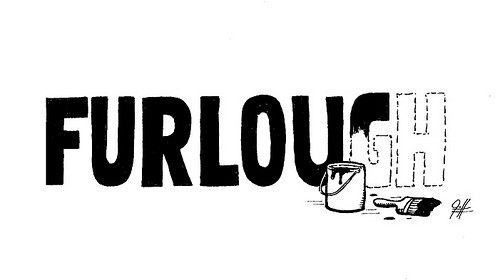
At midnight tonight, NFMA planning ceases to exist. All forest planners will be furloughed. No more collaborations, assessments, EIS writing, model-building, monitoring, or map-making. Will the sun still rise on Monday morning without NFMA planning? Will the deer still browse and the birds still sing? Will trees still grow, die, burn, and rot without planning to guide them?

Tune in next week to find out.