Should Wilderness Be Safe?

Pacific Crest Trail thru-hikers had better be ready for a lot of detours in Oregon this summer. In November and December, after fire season-ending rain and snow storms, the Forest Service issued orders closing three of Oregon’s most popular PCT segments (e.g., Three Sisters & Mt. Jefferson), along with their associated wilderness areas and connecting trails. The reason? “Public Safety.”

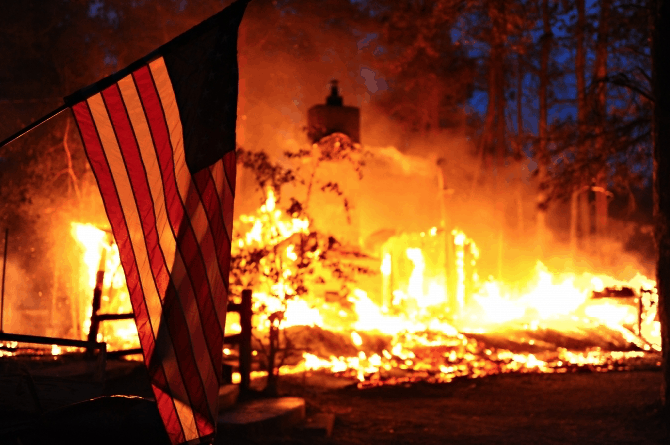
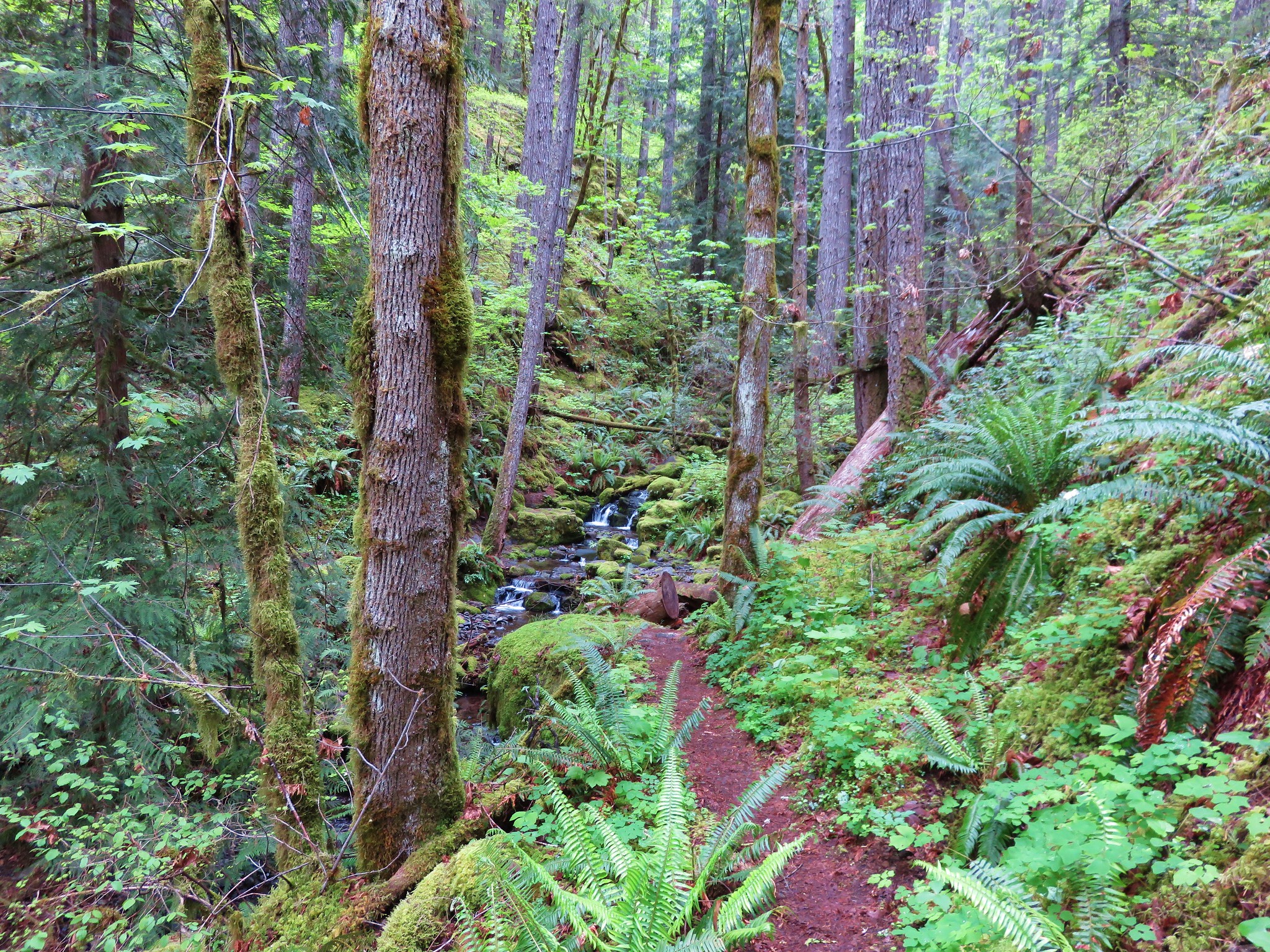
This summer, fires burned parts of the wilderness areas that have been closed to the public. As with most western Oregon fires, the burns are a patchy mosaic of burn intensities. Ridge tops tended to burn hotter; valley bottoms cooler; many acres not at all. Fires are not uncommon in these Douglas-fir/western hemlock forests, with a return interval on the order of 100 years. The popular French Pete trail traverses through forests with numerous fire-scarred trees, snags killed by previous fires, and other fire-affected structure typical of the area’s old-growth forests. This trail, like dozens of others, is now closed to the public.

The Wilderness Act directs the Forest Service to manage wilderness areas for “their primeval character and influence” to “preserve natural conditions.” Wilderness areas are to be “affected primarily by the forces of nature” and “offer primitive and an unconfined type of recreation.” The Act’s only reference to safety is an exception to the ban on motorized equipment (e.g., aircraft) if “required in emergencies involving the health and safety of persons within the area.”

Even if the Wilderness Act countenanced a nanny state approach to wilderness management, the Forest Service did not explain its closure decisions, nor invite public comment on whether it’s too dangerous to hike in these woods. People do die in wilderness areas. They drown, freeze, fall off mountains, and have heart attacks. Trees cause about 1% of wilderness-related fatalities.

The default condition of national forests is that they are open, by law and without permit, to dispersed recreation. The Forest Service must follow the law when it decides to lock the public out. Under the Administrative Procedures Act, the Forest Service must explain its reasons, including how the facts support its conclusions. The Forest Service did not do so. The agency must also follow NEPA’s procedures, including explaining the degree to which its closure decision affects “extraordinary circumstances,” such as wilderness. The orders have an obvious and profound effects on wilderness and Pacific Crest Trail users, eliminating all forms of dispersed recreation. The Forest Service made no attempt to comply with NEPA.

What should our nanny state do?
What If Ignitions Are Not Suppressed?

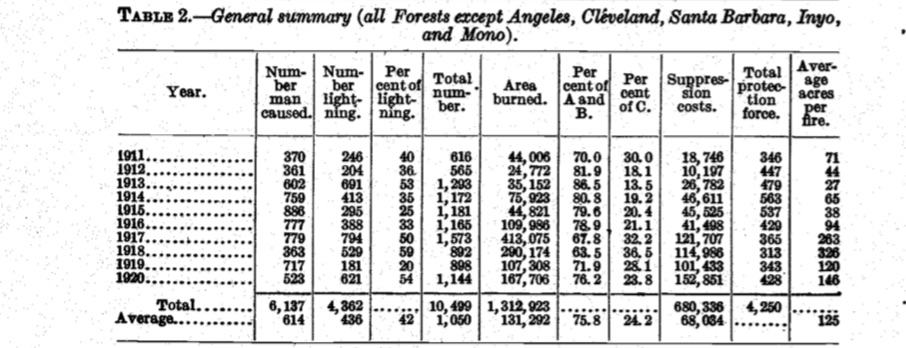
What happens if forest fire ignitions are not suppressed? It’s a tough experiment to perform, but some old Forest Service data may help answer. In 1923, the Forest Service published an analysis of fires in 12 California national forests (excepting southern California) that ignited between 1911 and 1920. The data include suppression costs, which are a good proxy for suppression effort. Recall that 1910 was the “Great Fire,” which ushered in the era of Forest Service fire suppression. In 1911 fire suppression was almost non-existent with costs on the 12 forests totaling $18,746. That’s $450,000 in today’s dollars. Compare to 2015’s $500 million spent by the Forest Service suppressing fires in California (even more in 2017), and the numbers show the Forest Service puts about 1,000 times more effort into suppressing fires today than it did in 1911. In 1911 there were no air tankers, no fire engines, and few roads into the national forests. In sum, 1911 is a pretty good proxy for what happens when ignitions are not suppressed.

So what did happen to ignitions in 1911? Click on the table above: 70% remained smaller than 300 acres, while 30% exceeded 300 acres. [“C” fires are those greater than 300 acres]

There Is No There There

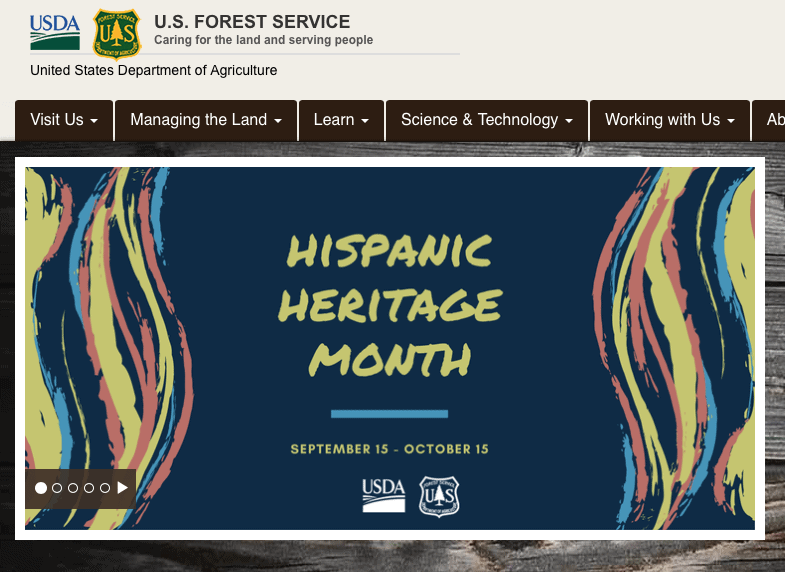
Hispanic Heritage Month began on September 15 and ended yesterday. Or so says the U.S. Forest Service’s homepage. However, unlike the other four banner ads, which click through to provide information on Fall Colors, wildfires, and the like, the Hispanic Heritage Month banner ad links to nothing. The Wayback Machine says that the Forest Service’s Hispanic Heritage dead link first showed up on its homepage on October 10, five days before the month-long observance’s end. For those who wish to know about National Hispanic Heritage Month, click on this link.

California Fires Ravage Private, Industrially Managed Landscape

Add together the structures lost to every national forest wildland fire this year and their sum would be a rounding error compared to the more than 1,500 2,000 3,500 5,700 7,000 8,400 homes and businesses lost in the on-going Napa Valley fires.

Radical environmentalists are being blamed for the devastation: “White wine-swilling San Francisco liberal elites created the conditions that fueled these catastrophic fires,” explained a House Natural Resources committee spokesman.

Nearby federal wilderness areas remain unaffected.

[Satire alert!]

We Got This!

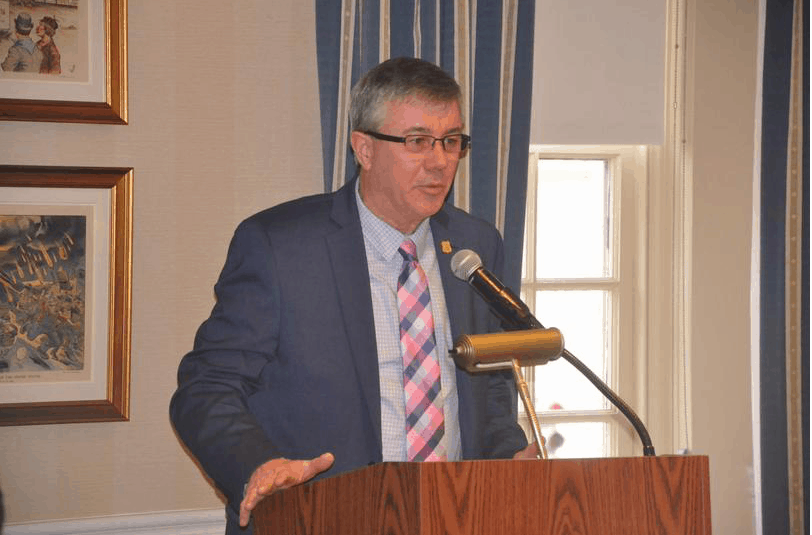
New Forest Service Chief Tony Tooke announced today that the Forest Service is unrolling “bold moves we will make throughout the agency to help our employees improve our ability to do more work on the ground, deliver more results and live up to our responsibility for sound land stewardship.” The new planning and analysis tactics will be announced next week at a Phoenix workshop attended by over 200 Forest Service leaders. These “innovations [will] demonstrate ways to significantly reduce costs and the time it takes for us to do this work, while delivering safe, high quality outcomes—with meaningful results that honor our stewardship responsibilities.”

The Forest Service’s Phoenix workshop comes at a time when some members of Congress believe that changes in environmental laws are needed. It appears Chief Tooke and his leadership team believe that the Forest Service already has the tools needed to get the job done.

Here is the complete text of Chief Tooke’s all-employees email:’

From: FS-Office of the Chief
Sent: Thursday, September 21, 2017 5:03 AM
To: FS-All FS
Subject: ***MESSAGE FROM THE CHIEF***Employees Invited to Participate via Live Stream in National Workshop on Environmental Analysis and Decision-making

Next week more than 200 leaders from around the country will convene in Phoenix, AZ, for a national workshop aimed at initiating Forest Service-wide reform of our environmental analysis and decision-making processes.

We invite you to join us via live streaming for the opening and closing sessions of the Environmental Analysis and Decision Making workshop, which brings together professionals from every level of the organization. It will result in bold moves we will make throughout the agency to help our employees improve our ability to do more work on the ground, deliver more results and live up to our responsibility for sound land stewardship.

The Workshop takes place Monday-Thursday, September 26-28. You can join 8 a.m.-noon Pacific Time Tuesday, September 26, for the opening session and 2:15-4:15 p.m. Pacific Time Thursday, September 28, for the closing session. (See instructions below)

The National Leadership Council and I will participate in portions of the session. Participants will draw on more than 30 years of experience of completing environmental analyses and making sound decisions. This includes learning from innovative efforts taking place in various units of these agency. These innovations demonstrate ways to significantly reduce costs and the time it takes for us to do this work, while delivering safe, high quality outcomes—with meaningful results that honor our stewardship responsibilities. Now is the time to apply these innovations nation-wide.

This gathering serves as a critical next step toward a collective shift for the Forest Service. The timing is right: A confluence of factors—including a back log of needed mission critical work, a need for increased employee capacity, land conditions calling for extensive forest restoration, and increased expectations for the agency to deliver services—have come together to create an urgency for change. To be successful, we will need support and commitment from all employees. I am asking you to participate in this change that will advance our commitment to citizens we serve and lands we steward.

I am personally committed to keeping this effort moving forward; I am working right alongside you to get it done. We look forward to your workshop participation—in person or live stream–and thank you for the commitment to our work ahead to improve results to sustain healthy, resilient and productive forests.

Live Steam Broadcasts:

Opening Session: 8 a.m-12 Noon, Pacific Time, Tuesday September 26
Closing Session: 2:15-4:15 pm. Pacific Thursday, September 28.

To connect to the live stream, please click on the link below:

http://fsweb.wo.fs.fed.us/nfs/live.html

Helpful advice:
· Because of bandwidth limitations, every unit should attend from a central location if at all possible.

· Confirm your system has the most recent version of Adobe Flash player appropriate for your computer.

Chief Tony Tooke

Rain’s Ecosystem Service Value

The Columbia River Gorge’s Eagle Creek Fire will be history as about 5 inches of rain are forecast to fall within the next several days. Tongue-in-cheek, we can calculate the ecosystem service value of rain by analyzing the avoided cost of an alternative delivery vehicle — the Global Supertanker.

Five inches of rain delivered across the Eagle Creek Fire’s 48,387 acres is 6.6 billion gallons. The Supertanker can dump about 20,000 gallons per sortie, and, if a sufficient airfield is nearby, can perform about seven sorties per day at a daily rate of $250,000 (note that these calculations are for dumping water, not retardant, which would add a couple of bucks per gallon to the cost). It would take the Supertanker about 47,000 days to dump the equivalent of 5 inches of rain at a cost of $10 billion and change.

Ahh, blissful, beautiful, cheap free rain!

Is Private Property the Key to Keeping Firefighting Costs Down?

Regular readers know that the U.S. Forest Service’s firefighting expenses just keep going up. Some believe that a dramatic decline in federal land logging over the past 30 years is the reason. Others say long-term cycles of drought, while some blame increasing number of wildland/urban interface homes.

If federal land logging policies are to blame for rising firefighting costs, why have Cal Fire’s costs skyrocketed, too? Cal Fire provides fire protection services across 31 million acres in California, including over 7 million acres of private timberland, e.g., Sierra Pacific’s timberland holdings. Cal Fire doesn’t pay the freight for federal land fires.

On Time and Under Budget

On September 1 31, the federal government’s fiscal year clock turned over from FY17 to 18. The numbers year-to-date are now in.

The Forest Service spent $1.75 billion of its regular $1.89 billion firefighting appropriation. No FLAME funds spent. No borrowing.

What? How is that possible? Turns out that when the boss says “we ain’t gonna borrow no more,” the can-do FS figures out how to get the job done.

Which is a good thing. Should there ever be another regular appropriation (the government is running on a continuing resolution, as it has seemingly forever), there may not be the “fire funding fix” that some western legislators covet. Hurricanes may stretch Congress’ tolerance for disaster funding to its max.

Will up-date after 9/31!

Will CLT Make a Difference in National Forest Small Wood Demand?

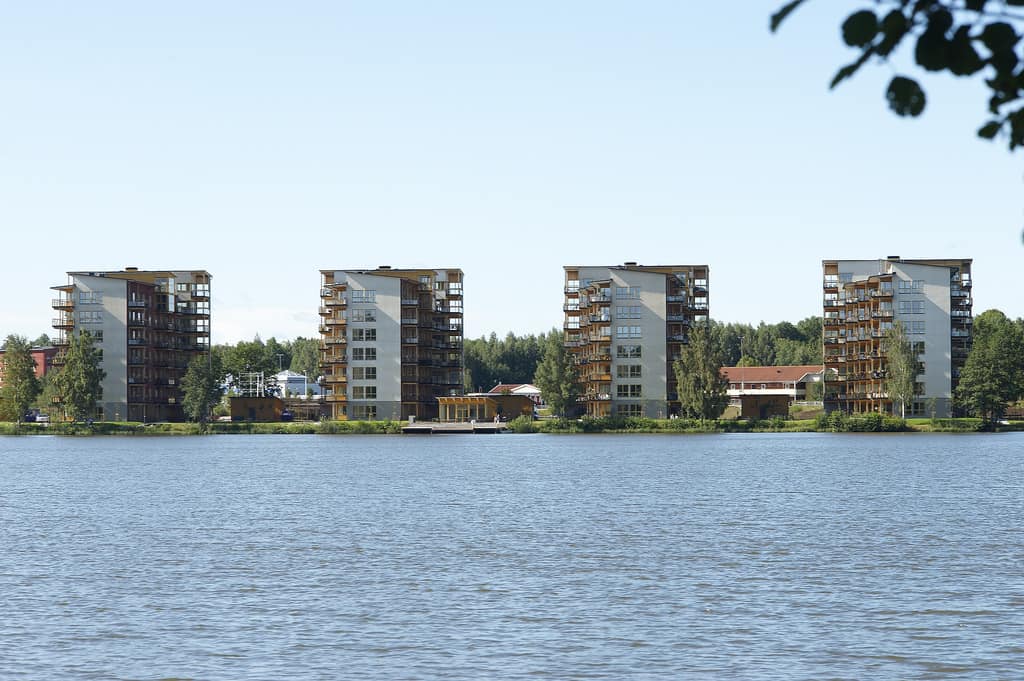
Cross-laminated timber (CLT) technology makes large construction panels from low-value lumber. The panels can be used to build floors, walls and roofs for buildings up to about 16 stories, which is substantially taller than possible using ordinary lumber and plywood. The Forest Service has been shoveling money to study CLT properties and uses, hoping to create a market for national forest small-diameter wood, of which the Forest Service has a lot.

A recent Forest Service-funded study throws some cold water on the agency’s CLT bullishness. The “CLT Demand Study for the Pacific Northwest” authors are experts in econometric modeling, building codes, and wood products technology.

Two take-aways from the study. First, CLT, at best, will take a couple of decades to penetrate its narrow market niche. Second, even at full build-out, its use won’t make a dent in the available timber supply: “The predicted demand for softwood lumber to manufacture CLT panels represents less than 1% in the annual Pacific Northwest timber harvest.”

What, Me Worry?

Today, a federal appeals court ruled that the U.S. Forest Service is liable for toxic waste clean-up costs from mining on national forest land. The appeals court remanded the case back to the district court to determine how much the Forest Service would have to pay of the $1 billion in clean-up costs associated with a single molybdenum mine in New Mexico. The case is the first to conclude that the 1872 Mining Act, which gives mineral claimants the right to mine federal land, does not relieve the Forest Service from its CERCLA (“Comprehensive Environmental Response, Compensation, and Liability Act”) responsibility as landowner for the cost of cleaning up toxic wastes.

The unanimous opinion by Reagan, G.W. Bush and Clinton appointees, scolds the Forest Service for dereliction of its duty to regulate mining to avoid spendy clean-up costs:

There is no dispute that the United States held fee title to relevant portions of the Questa mining lands during the time of hazardous substance disposal, part of the area that today comprises the Questa Site. We do not doubt that it could have exercised greater powers, regulatory or otherwise, over the lands if it wanted to do so.

This decision could be a game changer. No longer can the Forest Service and BLM hide behind the 1872 Mining Act and ignore the environmental costs of the mining operations they approve on public lands. Just the existing liability for past mining waste could put a big dent in the Forest Service’s budget, which has a sum total of $0 appropriated for CERCLA clean-up costs.

From here on out, when the Forest Service approves surface occupancy plans for 1872 mining act claims, it had better look carefully at its clean-up liability. Under some scenarios, the Forest Service, as landowner, could be stuck with 100% of the clean-up costs.