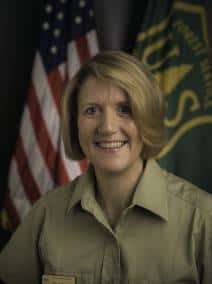
Secretary Perdue’s Email re: Interim Chief Christiansen

Here’s the note from Secretary Purdue:

Dear Forest Service Family:

I want you to know that I understand that it has been a difficult week in the Forest Service. While challenges remain in fostering a workplace that is rewarding, responsive, and respectful, the Forest Service has taken concrete steps to improve the working environment for all employees. In fact, the Office of Inspector General is issuing a report on those issues later today, which will confirm progress with new processes to combat sexual harassment and protect victims from retaliation. The report will also highlight ongoing concerns and make constructive recommendations on what can be done better. At the same time, the Forest Service must focus on the mission of promoting and maintaining healthy and productive forests for the taxpayers and future generations.

To help achieve these goals, today I have appointed Vicki Christiansen as Interim Chief of the Forest Service. Vicki has been serving as Deputy Chief of State and Private Forestry in the agency and brings with her the experience of a long career in forestry, natural resources, and fire leadership positions. She takes on her new role during a time of challenges and new opportunities at the Forest Service, and I trust everyone will make her feel welcome.

As you know, our policy priorities for the Forest Service include returning forests to health and productivity, finally fixing the problem of fire funding, and making sure that Good Neighbor Authority is more than just a slogan. With seven years at the Forest Service and 30 with the states of Arizona and Washington, Vicki knows what is needed to restore our forests and put them back to work for the taxpayers. As a former wildland firefighter and fire manager, she knows first-hand that failure to properly maintain forests leads to longer and more severe fire seasons. And as a former State Forester, she knows the benefits of Good Neighbor Authority and how best to partner with our state and local colleagues. Vicki’s professional experience will complement these efforts and help us achieve those objectives.

As we promote and maintain healthy, productive forests and preserve our natural resources, we will work to ensure a place where people can work with respect and dignity.

I am confident that the entire Forest Service family will rally behind Vicky Christiansen as Interim Chief as we move forward.

Sincerely,

Sonny Perdue

Secretary

Yup, IMHO choosing a woman as interim is a good symbolic stroke, as well as someone who understands the Fire Biz. FWIW I also think that choosing someone who came up through State and Private will add some thought diversity.
Wildfire Today on Sexual Harassment


Bill Gabbert, of Wildfire Today, has a nice round-up of all the stories and news around this in this post.

He concludes:

Chief Tooke is, of course, innocent until proven guilty of the sexual misconduct allegations.

Our opinion:
This is a disgusting, demoralizing, distasteful, detestable scandal facing the agency where I spent 20 years. Looking at the sheer numbers, and knowing that allegations of sexual misconduct go all the way to the top, it is hard to fathom how anyone who has been mistreated can be optimistic that the harassment will stop, or that the perpetrators will be brought to justice.

This HAS to be the Forest Service’s number one priority — clean up this wreckage that is festering within their workforce.

Would you recommend that your daughter, girlfriend, or spouse apply for a job with the U.S. Forest Service?

Of course, I would say absolutely apply for a job with the Forest Service! If you are in, say coop forestry, or research, or a NEPA or silviculture person, you can go for 30 years or more without sexual harassment. If you are a woman and you want to go into fire, well then I would look at the statistics comparing women in fire in the Park Service, BLM, BIA, FWS and so on… even state agencies. I wonder whether they are available? Any folks know of these? Based on what I know now, I would say “stay out of Fire” not “stay out of the FS.”

Fire is part of the FS, but it is not the FS.

U.S. Forest Service chief under investigation after complaints of sexual misconduct- PBS story

Chief Tony Tooke
Here’s the link.

The U.S. Forest Service has confirmed that the United States Department of Agriculture, its parent agency, has “engaged an independent investigator” to look into complaints against Chief Tony Tooke.

News of this investigation comes as the Forest Service is dealing with allegations of a broader culture of harassment and retaliation within its ranks, as detailed in an investigation published by the PBS NewsHour this week.

In the course of reporting its investigation, the PBS NewsHour discovered allegations of sexual misconduct against Tooke, specifically relationships with his subordinates, before he became chief.

In a statement, Forest Service press officer Babete Anderson said the investigation would “undertake a thorough review of [Tooke’s] conduct. We take very seriously the responsibility to promote a safe, respectful and rewarding work environment for all employees.”

When asked about the allegations, Tooke said in an email: “I’m in support of this investigation, and I have fully cooperated from the start. I expect to be held to the same standards as every other Forest Service employee.”

In an email to employees responding to the NewsHour’s original report, a spokesman from Tooke’s office said: “The stories the Forest Service employees shared during the PBS NewsHour piece are important to hear, difficult and heart-wrenching as they may be. Stories like these, which have come to light over the past few years, have underscored that there are elements of sexual harassment in the Forest Service that have existed and continue today.”

It continues: “While we have taken significant actions over the past several years to address sexual harassment in the Forest Service, we acknowledge that we have more work to do. These are critical issues that the Forest Service must continue to take on to increase our efforts to protect our fellow employees so they know they can speak up and speak out, without any fear of retaliation or reprisal. We continue to consult with outside experts and focus internal resources to help us better support victims of harassment during investigations. Victims must know that there will be accountability for persons who engage in sexual harassment and reprisal. We are committed to our duty to create a workplace that is respectful, rewarding, and above all, a safe place for all employees. The Forest Service is committed to permanently changing our culture to create the workplace we all deserve”

The statement, from Dan Jiron, acting deputy undersecretary for natural resources and the environment, did not mention Tooke.

(note, Dan Jiron is an FS employee and former Regional Forester for Region 2.) #whoneedspoliticalappointees?

Discussing the Undiscussables: Gender, Harassment, Discrimination, Favoritism and All That

Back when I worked for pay in Region 2, our Regional Leadership Team had a couple of discussions around “undiscussables”. One I remember was about the Regional Forester overruling a Forest Supervisor on a resource decision. In my experience, just talking about it openly took out some of the underlying tension. But don’t believe me! You can read this from Leadership and Change, in an article from 2015:

Last year, the New York Times revealed that not everything has been golden at Harvard Business School. And surprisingly or not, the crack in the ivy-covered veneer at Harvard Business School is the challenge of gender equity. Revealed was that females got lower grades than man even though the sexes enter the school with similar test scores. Female students and younger female faculty in the classroom were hazed, and female students felt pressure to dress well, ‘look hot’ and not be ‘too assertive’.

Yikes, nothing really new here – but what is most surprising is how long these behaviors appear to have been tolerated at the Business School to the point that Harvard staff describe them as their “dirty little secrets.” As at Harvard, asking people to name their own workplace undiscussable, or a difficult to talk about topic, is a great way to open the door to ‘honest culture conversations’ in most organizations.
…..
As you can see, just naming the undiscussable can lead to ‘honest culture conversations’ that are the basis for sustainable change. At Harvard Business School, Dean Nitin Nohria named this approach: “Sunshine as the best disinfectant.” “

I don’t think it’s remarkable that the undiscussables in this article were about gender and favoritism. Forester 353 raised these same questions in a comment here.

How will the numerous – possibly hundreds of accusations over the past several years with increasing intensity, both true and especially those proven false, effect the future work place? I can tell you from personal experience that it won’t be positive one, even though it should be. Attractive women will be shied away from by self conscious male superiors because the risk of some accusation isn’t worth it. I’ve already seen people walking on egg shells in meetings and in the field when in mixed company because of the fear of something being mischaracterized.

Less than qualified people of both sexes have already be being promoted because of “equality” issues, often creating an elephant in the room. Now will we see more women promoted regardless of qualifications or being the best person for the job? Long term if this happens, it is not beneficial to an agency, company or the person being promoted.

At first I thought “this is a society wide problem, someone smarter and more experienced than we are can figure it out.” But it affects our lives and undiscussables are not good for the Forest Service. Plus we have a place here where people freely disagree all the time, mostly civilly. So if people are interested, this seems like a good place to host this conversation. We can start a new thread for other FS undiscussables people might want to bring up. While this is generally about the Forest Service, others are welcome to share their own experiences and thoughts.

USDA OIG Harassment Survey and Report in Forest Service Region 5 Released

Posted today: The FS response here.
Here are some actions that the FS is doing or is going to do.

Opened the Harassment Reporting Center (Nov. 2017): The Forest Service Harassment Reporting Center is a single office dedicated to receiving all reports of all types of harassment. The Harassment Reporting Center is open seven days a week from 7:00 a.m. to 11:00 p.m. Eastern. Representatives can be reached by calling the toll-free number: (844) 815-8943. It is operated by skilled and trained, contracted representatives who are available to confidentially take reports of harassment from employees, supervisors and anyone who does business with the Forest Service.

Launched the Anti-Harassment Program intranet page (January 2018): The Forest Service has created a new intranet page committed to the Anti-Harassment Program. The intranet page was created to provide a single dedicated resource for all employees and contractors to receive current and accurate information regarding the anti-harassment policy and program. The new page will answer frequently asked questions, such as what is harassment, how to report it, what to expect once reported and what to expect regarding the inquiry or investigation.

Applied accountability and continuous learning
: Since the establishment of our new anti-harassment policy in September 2016, we have received 1,013 reports of harassment and have completed inquiries/investigations in 632 of those cases. Of the 632 cases, 150 cases found misconduct and we have implemented corrective actions. The 150 corrective actions taken range from letters of warning all the way to termination/removal depending on the severity and facts gathered in each case. When looking at the cases where no misconduct/harassment occurred, those cases suggest the need to provide a better understanding of what harassment is. Along with that, we see a need for quicker assistance to overcome workplace conflicts or communication barriers that are not harassment or misconduct. This is particularly true when it comes to the bullying category. In these cases, we have implemented a process to quickly provide opportunities to resolve conflict and communication issues by offering the services of our Conflict Management and Prevention Program.

Created a senior advisor in the Chief’s Office
: The senior advisor will integrate agency efforts that improve the work environment. This position aims to reinforce the Forest Service’s ongoing commitment to create a harassment-free workplace where every employee feels valued and respected.

In coming weeks here are other actions we will take:

Finalizing an agency-wide anti-harassment training to continue to provide employees with the tools they need to eliminate harassment from our work environment. It addresses the five key points of our policy while stressing that every employee has a responsibility for doing their part when it comes to eliminating harassment. Training will be delivered to all employees by our senior leaders. We expect to begin delivering this training in late spring 2018.

Designing work environment engagement opportunities that focus on building trust and provides a safe forum for employees to discuss the work environment.

Establishing an employee advisory group to identify proactive steps for peer-to-peer engagement and support to empower employees. This group will advise the Chief and senior leadership on additional practices or policy steps needed to eliminate harassment and promote safe and respectful workspaces. As we learn more, we will continue to enhance and strengthen our agency. We must continue to uplift and empower our employees and maintain a respectful, safe working environment.

If you have been harassed, or you know of harassment taking place, please report it to the national Harassment Reporting Center, where it will be documented and investigated. Learn more on the center’s website.”

Here is a link to the OIG survey. I must admit I was a little curious about “supervisor harassment.” I searched and couldn’t find it defined in the document.
Comments welcome!

NAFSR Follows Up on OneUSDA

The National Association of Forest Service Retirees, better known by the acronym NAFSR, followed up on the OneUSDA concept, which we previously covered here. As most of you know, changing the Forest Service name or logo in any way shape or form is a highly touchy subject with many retirees.

I was told that NAFSR had reached out to the Department and were told that Secretary Perdue’s OneUSDA vision is focused on increasing the effectiveness and efficiency in the Department to better serve the American people. He outlined four objectives dealing with review of policies, processes, directives, awards, telework. They were told none of these objectives included changing the name of the Forest Service. I’d like to thank NAFSR for their work and encourage retirees to join. You can also check out their website for items of interest (including some stuff about the “improving NEPA” effort). When I was trying to get a handle on Wildfire Bills, I found their analysis very helpful. It’s not that easy to get relatively unbiased analyses of legislation, and I appreciate that also.

Hello, everyone.

Earlier this week, I introduced to you a broad vision called OneUSDA.
We are one family working together to serve the American people. And if we are to fulfill our mission – to make USDA the most effective, most efficient, most customer focused department in the entire federal government – we must function as one single team.
You all may know that I love sports and frequently use sports examples to explain concepts. One of the best came from the story of an underdog basketball team from a tiny Indiana high school that makes it all the way to the state championship game, portrayed in the movie, Hoosiers. Coach Norman Dale, for the longest time, never let his players shoot the basketball in practice, opting instead to focus on fundamental drills and what it meant to move together. At one point he tells them the whole point: “Five players on the floor functioning as one single team: team, team, team. No one more important than the other.”

And that’s us. Team, team, team USDA. We are all important to one another and to all Americans.

So every change we detail today and in the weeks and months ahead is to make us function as one single team.

I will be forthright with you. Some of these changes may be drastically different than the old way of doing things, and that’s okay.

All of them point to our first strategic goal: to ensure our programs are delivered efficiently, effectively, and with integrity.

To that end, today I am directing USDA to:

· Restore sanity and commonsense to a cumbersome, labor-intensive, and costly departmental directive review process;

· Enhance the Secretary’s Awards and Recognition Program so that we can properly celebrate our accomplishments toward achieving all of our strategic goals;

· Amend our telework policy to one that works for the American taxpayer and for our colleagues who come to the office each day; and

· Review a wide array of directives – through Human Resources and the General Counsel’s Office – to create policies and processes that are transparent and consistent for the employee, the supervisor, and the American citizen.

And this is just the start. I am serious about holding everyone accountable, but most especially every leader and every supervisor, and that starts with me. OneUSDA only works if, like Coach Dale did with his players, we turn the focus on the fundamentals. Are we doing right by the taxpayer? Are we doing right by our colleagues?

I hope that you will join me and approach this change as something exciting, something that reorients our mission, and something that helps us be OneUSDA.

Thank you very much and happy New Year.

Sonny Perdue
Secretary

Sexual Harassment in the Forest Service- What Would You Do?

Let’s take a look at this Congressional testimony by Lesa Donnelly. Here are some claims she makes:

  • Region 5 is equivalent to the rest of the Forest Service
  • The problem is more or less the same across land management agencies
  • In the Obama administration, political leaders were responsible for the different reactions (the difference between Vilsack and Jewell)

We have been reporting egregious incidents of sexual harassment, work place violence, discrimination, and reprisal to Secretary Vilsack since 2009 to no avail. Forest Service investigations invariably are turned against the employee reporting incidents. Reprisal is swift and severe. There are very few instances of accountability for the perpetrator. In fact, perpetrators often receive what we call “disciplinary promotions.” Before any cultural change can occur, the agency must acknowledge the scope of the problem and be willing to make a good faith effort to address it. USDA and Forest Service have been unwilling to do this despite mountains of evidence of harassment, discrimination and reprisal against women, people of color, and people with disabilities

For this series of posts, I’d like to focus on sexual harassment alone rather than the broader world of discrimination.

It is important to point out that Congresswoman Jackie Speier, Congressman Peter DeFazio, and Congressman Raul M. Grijalva wrote a letter to USDA Inspector General Phyllis Fong in November 19, 2014. They were highly concerned about the sexual harassment, attempted sexual assaults, gender discrimination, and whistleblower retaliation against women in Region 5 of the Forest Service. They asked for an investigation. As of this date, no investigation has occurred.
There are two clear indicators that the USDA and Forest Service are unwilling to acknowledge the pervasive and endemic discrimination against women and minorities. First, the comments made this year by Chief Tidwell are indicative that the Forest Service has no true intention of preventing and eliminating the discrimination against female employees. After the Huffington Post article on the Grand Canyon and Region 5 women was published this past summer, Chief Tidwell sent an email to all Forest Service employees, referring to it and telling the employees that the incidents were, “older allegations.”

Then, less than a week ago, Chief Tidwell had an all employee “Webinar” meeting. He referred to the recent Washington Post article and this Hearing, again stating that our claims are, “older allegations.” These public comments are Chief Tidwell’s continuing attempts to minimize the serious civil rights incidents that he is fully aware of, and to undermine our efforts to have them acknowledged and addressed. Yes, some of the incidents occurred awhile ago, but he failed to state that these employees are still being harassed and are still in the EEOC system because of continued reprisal and the agency’s absolute refusal to settle EEO complaints.

I recommend reading all the testimony. I wonder what Secretary Jewell did and how successful that was?

While there is much room for improvement in her response to the issues, I commend Secretary Jewell’s quick call for an investigation, the investigator’s professional interviews and data gathering, the transparency of the process and results, and Secretary Jewell’s decision to open up the investigation across the Park Service.

Maybe all the FS needs to do is emulate that? How could we find out how well it worked?

I also took a look at the military to see if they’d figured it out. Apparently they have not, even in terms of assaults, according to this and this story. Despite the fact that they (have an entire system set up to deal with them that looks much more sophisticated than the FS or USDA, here.

If I were Chief, I would get a team led by a strong advocate with high visibility and access, possibly the Associate Chief. I would get groups of victims, supervisors of harassers, and the frontline Employee Relations, EEO, and HR people together and listen carefully to what they had to say about how to stop this. What would you do? Feel free to share your own stories, and what you think might have helped. Also, if you would like to write something longer about your ideas, email it to me and I will post it.

The Power of Storytelling and Forest Service Culture

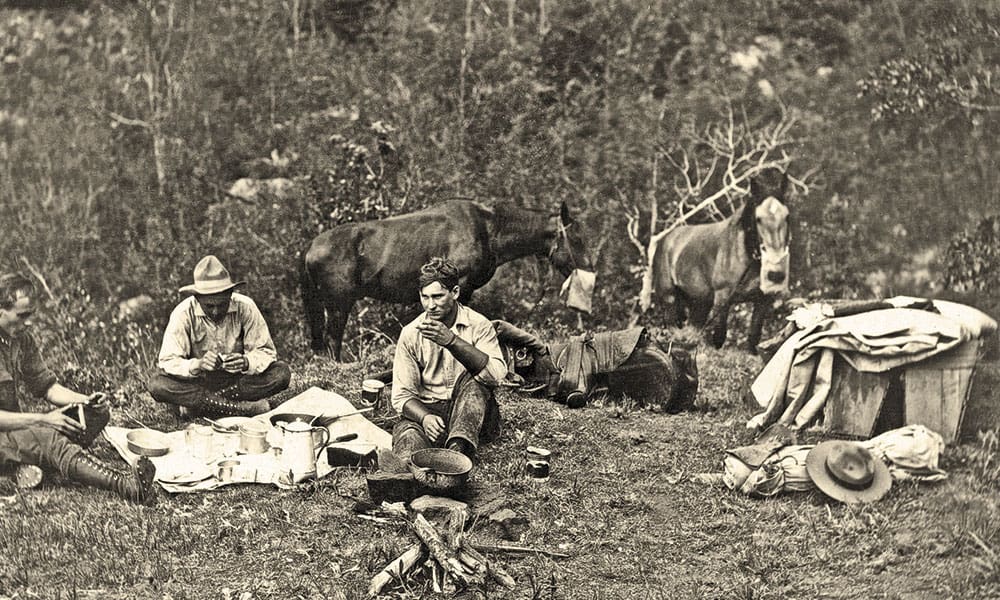
Rangers take a mid-day lunch break on the Pike National Forest in 1913,
Long before “organizational culture” was trendy, I was interested in Forest Service organizational culture and the role of stories. We were hiring lots of people (in the mid 90’s) and I wanted to give them some of the same (good) experiences that I had had. My first years in the Forest Service (in the late 70’s and early 80′) involved many hours of driving time and lunch time in the field, with the elders sharing stories of the organization. It was fun because, after all, they were stories. At the time, there were few women professionals, and many men did not reach out to help us. At least in part this was for fear that we or others would mistake their intentions. I have to give a special shout out here to John Nesbitt who was a great mentor (and storyteller).

My dream at the time, (in the mid-90’s) was to collect stories that reflected organizational culture and put them in a book for new employees. I received many stories through the Data General (email for FS folks at the time), and still have many of them. I plan to post them here as time and space allow. If people would like to contribute some now, we can post them here. My idea was that you would tell the story and then reflect on what you think the story tells about the culture.

Recently, I ran across this piece in Forbes:

The eclipse of storytelling in the 20th Century
Anthropologists always knew that storytelling is a universal feature of every country and every culture, even if, for most of the 20th Century, storytelling got very little respect. As so-called scientific approaches to life became dominant, mechanistic, machine-like thinking was everywhere triumphant. Analysis was king. Narrative was seen as either infantile or trivial.

The phenomenon didn’t just affect storytelling. In retrospect, the 20th Century can be seen as a giant experiment by the human race to find out what could be accomplished if organizations treated people as things and communicated to them in abstractions, numbers and analysis, rather than through people-friendly communications such as stories.

Employees became “human resources” to be mined, rather than people to be minded. Customers became “demand”, or “consumers” or “eyeballs”, to be manipulated, rather than living, feeling human beings to be delighted. Storytelling was only one of many elements that suffered “collateral damage.”

The whole experiment can be seen as a success to the extent that the material standard of living of a proportion of the world’s population for a time improved. But the experiment was an abysmal failure in most other respects. It made human beings people miserable. And organizations steadily became less and less productive, as the need for innovation grew.

Regular readers know that stories, personal experiences, photos and scientific studies are all fair game for commenting and discussion on this blog. For new readers, as we discuss topics like sexual harassment or government shutdowns or whatever, let it be known that stories are honored and valued here.

US Forest Service Finds 34 Cases Of Sexual Harassment After Internal Review: Daily Caller


Some of us have wondered why the Daily Caller was the only media outlet to report on the Tooke affair. It turns out that they have reported on sexual harassment in the Forest Service previously, most recently only a few months agao, 11/20/17 here:

After decades of denying it, the U.S. Forest Service (USFS) has finally acknowledged it has systemic problems with sexual harassment.

“Since implementing an updated anti-harassment policy in September 2016, the agency has carefully reviewed and resolved over 400 cases of alleged harassment,” the USFS said. “Of the 400 cases, Forest Service has substantiated 83 cases of harassment including 1 sexual assault (that employee was removed); 34 cases of sexual harassment (employees were removed/terminated, suspended or received reprimands depending on the offense;) and 51 employees were found to have engaged in other, non-sexual harassment.”

The Daily Caller first exposed widespread sexual harassment at the USFS in February 2014, and since the issue was covered by the New York Times, Sharyl Attkisson and the Huffington Post, along with a 2016 hearing in the House Oversight Committee.

The story has examples:

Whitmer said she worked as a firefighter in the Bureau of Land Management, before moving to a hotshot crew at the National Park Service and then the USFS, experiencing harassment at all three.

“During work hours, while in travel status in hotels, and in many cases during after-hours partying on government compounds I felt harassed and pressured to have sexual relations with supervisors,” Whitmer said of the harassment at USFS. “To survive as a female, I knew early on I would be expected to accept the culture or leave. For years I did try to just do my job and ignore the negative aspects of the culture.”

“I recall on one of my first fire assignments I walked into my hotel room, we were in travel status and my squad boss had let himself into my room and was drunk on my bed inviting me to have sex. A few years later something similar would happen with a Captain, laying on a bed drunk in a hotel room, again requesting sex. I would turn down these requests and confront the person and it was never taken seriously.”

Worse than that, she told The Daily Caller she was raped by a superior while working at the San Bernardino National Forest in 2011, and then even after reporting the rape, was forced to report to her rapist while working on a fire.

And apparently in November 2017 (hard to believe it’s been almost 50 (!!!) years since women started working in these kinds of jobs), there is now a reporting center:

“The USFS has taken bold steps to address incidents of harassment and is committed to providing a work environment that stresses respect for individual values and appropriate conduct among all employees. The Forest Service doesn’t tolerate harassment in the workplace.” The USFS said in its most recent statement. “On November 6, 2017, the Forest Service launched the Forest Service Harassment Reporting Center to build upon the agency’s efforts to address harassment.”

I wonder if there are federal agencies or the military that have “best practices” that could be adopted, or whether all such groups are equally behind the power curve. I also wonder whether the fire organization is worse than the rest of the FS in terms of culture and whether that needs to be addressed at the level of the interagency fire organization, so that when people go on fires they are all reading from the same set of rules and expectations.