This Too Shall Pass- Memories of Chief Thomas’s Bumpy Ride

Our recent discussions have caused me to reflect on the role of Chief and the expectations of people in the FS. Certainly there is a strong cultural meaning to that position (and not Associate Chief, nor Deputy Chief for Research, nor Regional Forester in Alaska) that perhaps resonates differently in the cultural FS DNA than, say, the BLM Director does to BLM folks. In some ways, perhaps, it resonates more as a wise elder or a spiritual leader than a CEO.

Take a look at this article about Chief Thomas’ bumpy ride. Maybe you will shed a tear, laugh out loud, or say a prayer to or for JWT. For those of you who weren’t there. you might be surprised!

I’ve excerpted the section about what we usually talk about on this blog..note that there are several quotes from our own Andy Stahl.

Thomas dismisses criticism phlegmatically. He hasn’t changed, he says; the critics “just got to know me.”

The timber industry still resents Thomas’ role in the Northwest Forest Plan but has warmed to him personally. Industry lobbyist Crandall says “a lot of people in the industry that work with him respect him and trust him, including me.”

As for the administration, Lyons and White House officials make no bones about their resistance to Thomas’ broad policy proposals that are opposed by environmental groups.

Lyons sat on Thomas’ proposal to streamline forest planning, saying it would dilute the same wildlife “viability” rule that led to the shutdown of federal logging in the Northwest. The rule calls for ensuring that all native vertebrate species remain viable throughout their range. Thomas claims that the rule is impractical and favors using indicator species and their habitat.

Lyons also watered down Thomas’ 1994 Forest Health Initiative, which included more salvage logging than environmental groups wanted. And the undersecretary stymied Thomas’ bid to fold several laws on environmental compliance into one coherent statute, eliminating overlapping and sometimes contradictory language.

Katie McGinty, Clinton’s top environmental adviser, said Thomas is correct to suggest that “it is time to start looking at” a revised and streamlined environmental compliance statute.

But she doesn’t want this Congress to do it.

“It would be a dangerous prospect at the very least to unleash many of these members on environmental laws,” she said in an interview. “They’re not going to improve the laws, but to repeal them.”

….

But Thomas’ Forest Service gets low marks from advocates on both sides. Environmental groups say it has slid back toward destructive logging. Industry officials charge that it is unable to make decisions and is nearing collapse.

“Decisions are being made by the political system or the legal system,” said Crandall of the AFPA, which has aggressively used both. Agency officials, he said, “are losing their authority to make decisions.”

“If things don’t change,” Crandall said, “the Forest Service as an agency, as we know it today, isn’t going to survive this.”

The strife should come as no surprise to Thomas. Before becoming chief, he wrote that “land-use planning based on an adversarial approach inevitably produces results that please none of the participants.” And in a passage that seems even more appropriate today, he wrote:

“The fighting goes on and even accelerates in frequency and intensity. The people and the forest are bruised and battered in the process. The gladiators never tire of the fight — it is what they do.”

My favorite quote, as a person who spent many cubicle hours working on Ecosystem Management was “Never before in my memory has a term of public discourse gone from virtual anonymity to meaninglessness without an intervening period of coherence,” from Mark Rey,

Anyway, remember that quotation from Santayana “Those who cannot remember the past are condemned to repeat it”? I’d say “those who cannot remember the past find it easier to say “this is the worst ever”. We all survived it, despite what Doug thought at the time. Please feel free to post your own reflections or memories.
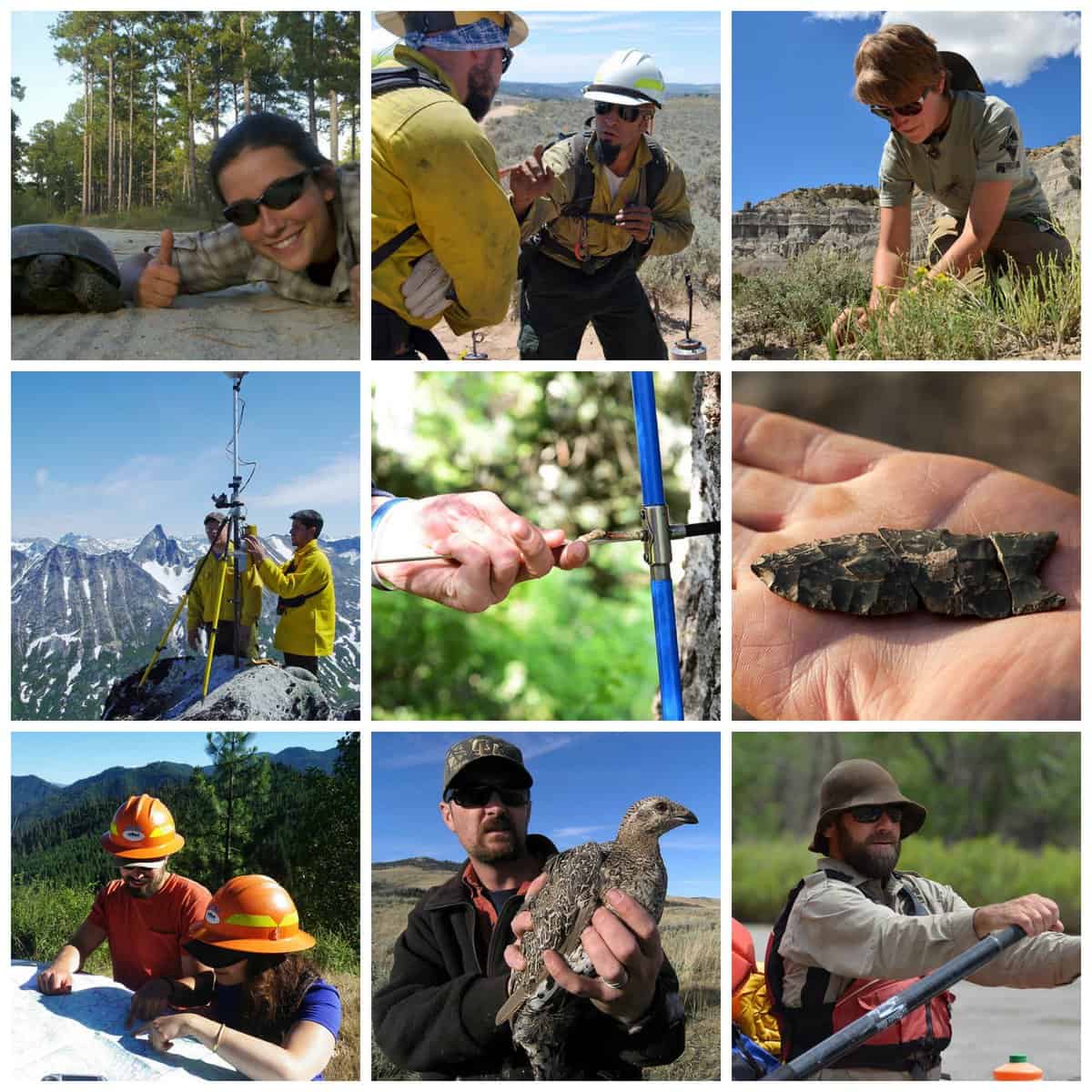
Best Places to Work 2017: BLM Improves Rankings

Thanks to Andy’s closer look I have updated this post, which originally said that the BLM had pulled ahead of the FS, but actually the FS has not been posted yet.

I always compare it to the BLM, which has a similar mission, and was 60.1 this year. BLM went up 4.3 points last year. I wonder if they did something workforce-wise, or ??? Many of the individual categories went up, as you can see in this chart, so it seems like something real is going on… ideas?

We’ll have to wait and how the FS did.

Chief Tooke’s Five National Priorities

Chief Tony Tooke

Here’s a link:

Five Priorities for Our Work

These five national priorities do three things: They give urgency and focus to critical needs; help foster the work environment we want for our employees; and set expectations for the manner in which we accomplish our work with citizens, partners, volunteers, and each other.

1. Uplifting and empowering our employees through a respectful, safe working environment.

I have enormous respect and admiration for the work every employee does. I am committed to ensuring our work environment is safe, rewarding, respectful, free of harassment, and resilient—that every one of you works in an environment where you are recognized and valued for your contributions. I want every employee to be empowered to continuously improve our work.

2. Being good neighbors and providing excellent customer service.

We will work with efficiency and integrity with a focus on the people we serve. I envision a broad, diverse coalition for conservation, working across boundaries and using all authorities available to us. We have a backlog of special use permits, range allotment work and deferred maintenance and other needs to address. To increase customer service, we must understand customer requirements, expand our use of best practices, apply innovative tools, and address barriers that get in the way of doing good work. Each and every visitor, forest or grassland user, contractor, partner, cooperator, permittee, volunteer, and citizen deserves our very best service.

3. Promoting shared stewardship by increasing partnerships and volunteerism.

We can’t do this alone and only on National Forest System lands. It takes others to help us make a difference on the whole landscape. We will work with all citizens—from rural and urban communities—as we pursue the work in front of us. Strengthening and expanding partner and volunteer programs around shared values is critical for a sustainable future.

4. Improving the condition of forests and grasslands.

About 80 million acres of the National Forest System are at risk from insect disease and wildfire. About one-third of these lands are at very high risk. Drinking water, homes, communities, wildlife habitat, historic places, sacred sites, recreation opportunities, and scenic vistas are among many of the values at risk of loss. Having sustainable, healthy, resilient forests and grasslands in the future depends on our ability to increase work on the ground and get increased outcomes. We will use all management tools and authorities available to us to improve the condition of our forests and rangelands. Improving the National Environmental Policy Act (NEPA) environmental analysis and decision-making processes will help us increase our capacity and ability to improve the condition of forests and rangelands. This work will also restore ecosystem function, deliver dependable energy, provide jobs and economic benefits for rural communities, and be responsive to the American taxpayer.

5. Enhancing recreation opportunities, improving access, and sustaining infrastructure.

Most Americans experience the national forests and grasslands through recreation activities. Although these lands offer some of the most valued outdoor recreation settings in this country, the settings and visitor experiences are increasingly at risk. Deteriorating recreation facilities and roads, eroding trails, and increasing user conflicts pose numerous challenges and a decline in the quality of the visitor experience. Currently, we can only maintain to standard half of our roads, trails, facilities, and other components of our infrastructure. Access to the National Forest System is more limited. We will take steps to address these challenges and create more enhanced, sustainable recreation opportunities, access, and infrastructure to better meet the needs of visitors, citizens, and users.

NEPA environmental analysis and decision-making improvements can help us achieve goals and objectives for enhanced recreation, improved access, and a more sustainable infrastructure.

The Chief also asks:

My questions for you are: What do you see standing in your way? What are you experiencing that we can collectively learn from?

I’d be interested in how folks on the blog might answer this question, just substitute “they” for “we” if you’re not an employee.

Friday Feel-Good Story: Glenn Ryan and the Rocky Mountain Packstring

Here’s a human interest/ Forest Service history story for Friday. It’s about employee Glenn Ryan and the Region 2 Packstring, from the Colorado Springs Gazette.

SHAWNEE – In the late 1960s, freshly removed from college for what he says were false accusations of “mouthing off,” Glenn Ryan did not go home. He hit the road and slept where he could, under trees or in chicken coops.

“Spent about three years being a bum,” he says, “which was actually training for this job.”

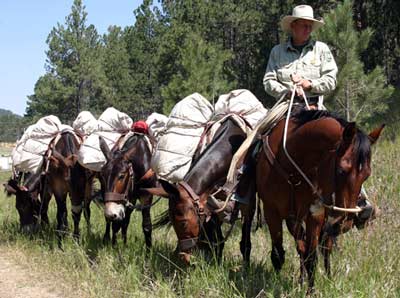
Now he’s spent 13 years living in Colorado forests, working as an Old West packer, leading a string of mules that make up one of the last two hooved trains across the U.S. Forest Service.

“If it involves getting dirty, bloody and blistered, then we’ll work with ya,” says Ryan, 67, a Forest Service employee who rides horseback while commanding the Rocky Mountain Specialty Pack String.

The Rocky Mountain Field Institute, a Colorado Springs nonprofit, has called upon Ryan’s string yearly to deliver thousands of pounds of equipment to a base camp deep in the wilderness surrounding Kit Carson Peak.

Other frequent requests come from the Colorado Fourteeners Initiative, which also employs trail builders on the state’s highest mountains and counts on the mules to move heavy necessities such as tools and stoves.

“The amount of work and the type of work he does is just mind-blowing,” says Ryan’s boss, Brian Banks, head of the South Platte Ranger District. “There really are very few professions left in the world like that, and his is not only one of the most unique positions, but also one of the most dangerous. It’s one of the most difficult positions in the Forest Service.”

Ryan spends summer days driving a trailer around the state and beyond; missions are also in Wyoming’s Medicine Bow-Routt National Forest, South Dakota’s Black Hills and Nebraska’s grasslands. Often his team of 11 mules starts before sunrise and finishes after sunset, performing as their ancestors did.

Here’s the link to the packstring site itself.

Undersecretary Watch- Remembering What They Said About Harris Sherman

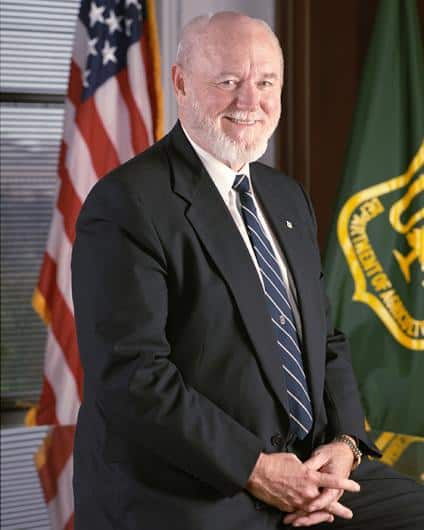
Portrait

I had heard some rumors about the Undersecretary position which intrigued me, so when I heard that there were confirmations last week, I checked to see if “our gal/guy” had been on the list, but she or he was not. Now this is not necessarily a bad thing, because it shows that the wheels of the executive branch can run smoothly (like appointing a Chief who doesn’t seem very controversial) with vacancies unfilled.

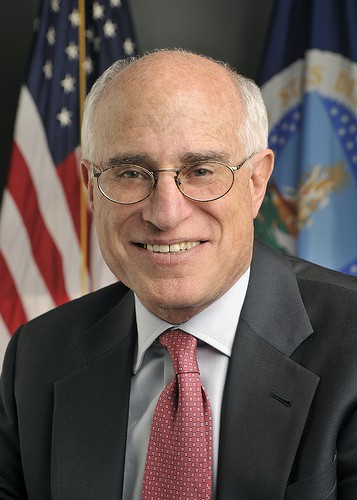
Anyway, I thought we could take a trip back in time to the last “new administration first Undersecretary” to see what people said about him. You may remember it was a fellow named Harris Sherman, who had experience as the Department of Natural Resources Director in Colorado (and was amazingly qualified for the job, IMHO). When I first met Harris, he was a lawyer for some ski areas. Were people concerned about his background as an attorney for evil corporations? Or even that he perhaps did not do enough as DNR director with oil and gas regulation? As it turns out.. not so much. If we look at national media and the people they interviewed..they were concerned about his involvement with.. the Colorado Roadless Rule (!).

The New York Times here reposted a piece from Greenwire.. first let’s look at who got quoted in what order..

TRCP- why them? What is it about this group that would make them go-to people about the new undersecretary? Whatever they have/had going on, it would be nice to know how to get that kind of position on someone’s contact list.

Yesterday, the Theodore Roosevelt Conservation Partnership responded to Sherman’s nomination by stressing the need for safeguarding roadless areas.
“We would like to congratulate Mr. Sherman and ask that he promote the long-term conservation of our backcountry hunting and fishing traditions, including upholding and defending the Roadless Area Conservation Rule, which safeguards our nation’s roadless areas, should he be confirmed as undersecretary,” Joel Webster, associate director of campaigns for the TRCP Center for Western Lands, said in a statement.

TWS- makes more sense.

In June, Michael Francis, director of the Wilderness Society’s national forest program, said Sherman’s work on the Colorado rule makes him a poor choice for Agriculture undersecretary. “The process that Mr. Sherman has been leading in Colorado would essentially eviscerate the protections of the 2001 rule,” Francis said. “I question whether he could do what the president would want him to do” (Greenwire, June 11).

Earthjustice Vice President Marty Hayden said that while Sherman’s biggest challenge will be the roadless rule debate,

And then, and only then, do the reporters quote Coloradans. What I think is interesting to reflect on now is that Idaho and Colorado Roadless are pretty much history (ho-hum, what State Roadless Rules?), and as far as I know, nothing worth the rhetoric has happened. In fact, when part of the compromise finally made it through (8 years later) our friends at the Sierra Club issued a release here saying it was Trump’s doing and related it to the Paris Climate Talks. No, I’m not making this up. Anyway, the Durango Herald had a more nuanced view of Harris and his history and qualifications, including important work he did with oil and gas here.

When the new undersecretary is nominated, we can look at national coverage and see what the national “issue of the day” is. Or maybe a Republican nominee will get a rating better than Harris’s “poor” from TWS?

Personnel, politics and public access to public lands


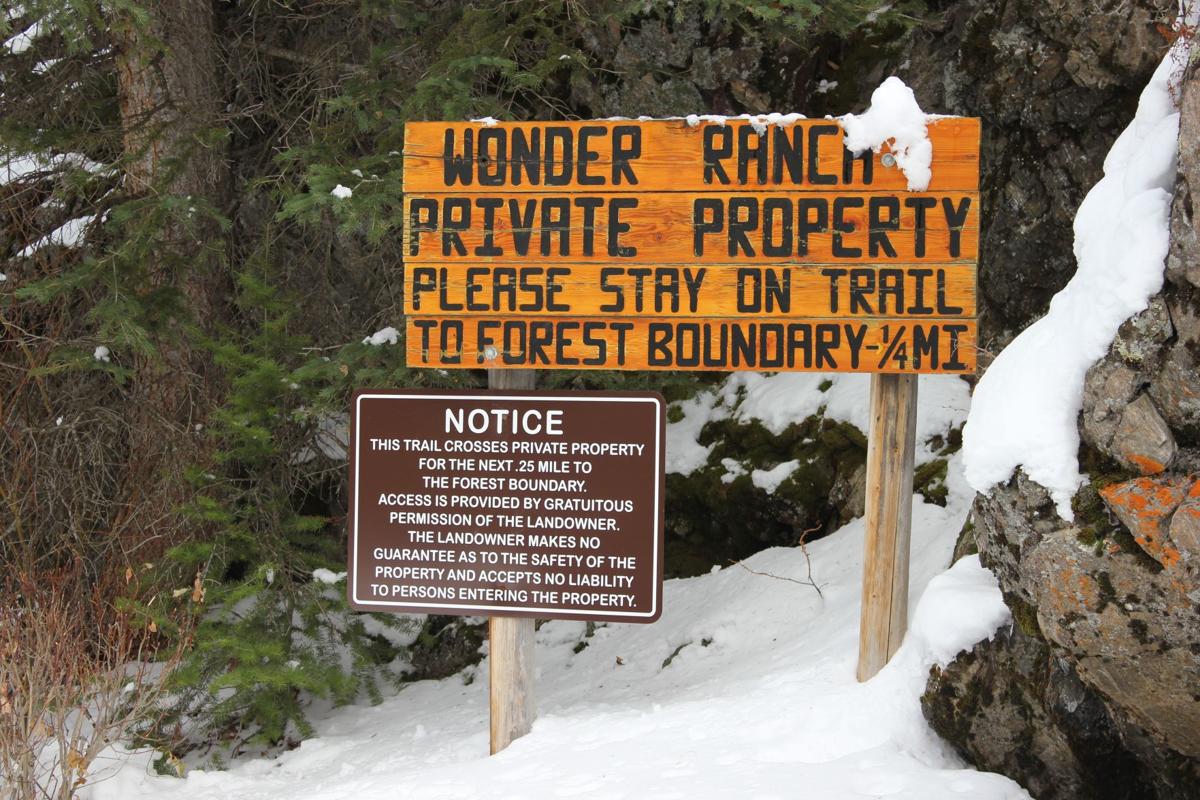
Yes, it looks like Forest Service employees should be concerned about how Trump might affect their careers.  Here’s an example about offending private landowners who block access to national forests.  (And, without any facts beyond earlier stories, I’ll suggest that you not think of these as long-term rural residents, but more likely some recent, possibly seasonal transplants, with money and political connections.)

Here’s one version of the story from a private property rights promoter:

Such cooperation, however, changed under the Obama administration as the Forest Service took a more strident approach in asserting claims to “traditional public access” routes. The dramatic change is reflected in a posting by Yellowstone District Ranger Alex Sienkiewicz who publicly advocated “NEVER ask permission to access the National Forest Service through a traditional route shown on our maps EVEN if that route crosses private land. NEVER ASK PERMISSION; NEVER SIGN IN. … By asking permission, one undermines public access rights and plays into their lawyers’ trap of establishing a history of permissive access.”

According to Sienkiewicz and access advocates, traditional public access is sufficient to establish a legal right, known as a prescriptive easement, to cross private property. Centuries of legal practice, however, have required that individuals or agencies wanting to establish prescriptive easements must prove that access was continuous, open, notorious, and hostile to the owner. In other words, the access must be without expressed permission by the landowner, a burden of proof that has been difficult, to say the least.

This doesn’t sound like the complete story.  The federal government does try to protect its existing legal interests, and that includes historic access that may not have been formalized, which it tries to negotiate.  I doubt if it often pursues litigation, but does sometimes end up in court to defend public access, as in this case involving access to the Lee Metcalf Wilderness on the Indian Creek trail, cited by the author of the op-ed above as a good example of negotiation (at least until it apparently went bad).  The Forest Service met its “difficult” burden of proof in this case.  There is a risk that asking permission now could undo the historic rights that already exist, but I don’t think it’s large, and I am a little skeptical that the Forest Service would “post” statements like that above except in cases where a particular landowner had made it clear that they were declaring war on public access, such as in this example.

Here’s another version of the same story from a recreation outfitter:

Recently, the U.S. Forest Service removed District Ranger Alex Sienkiewicz from his position in the Yellowstone Ranger District pending an internal investigation into his efforts to defend historical Forest Service trails and easements along the Crazy Mountains.

When legal access to public land does exist, I believe Montanans fully expect the Forest Service to defend and maintain that access for Montanans. As with so many of these issues involving political pressure on public agencies, a look behind the curtain reveals a very troubling story. According to media reports, U.S. Sen. Steve Daines, and Congressman Pete Sessions from Houston, Texas, both contacted Agricultural Secretary Sonny Perdue regarding Sienkiewicz’s efforts to protect legal, established accesses to landlocked public lands. According to Mary Erickson, forest supervisor, “the reassignment was made after allegations from an assortment of landowners in the Big Timber area were raised to the level of the Secretary of Agriculture, Sonny Perdue, and Sen. Steve Daines.“

Here’s the background on the Crazy Mountains access.

Blocking and posting no trespassing signs at the head of Trail 115/136 prompted Yellowstone District ranger Alex Sienkiewicz to organize a trail clearing and marking trip this past summer. Prior to that the agency traded letters with the Langhuses’ Livingston attorney, Joe Swindlehurst, who has denied there is an old forest trail at that location.

It’s not a stretch to see this as politicians ordering a personnel move to keep public lands from public hands.  Dangerous on both counts.


Chief Rumors.. Cables for Chief?

Rick Cables

Here’s the link:

Colorado native Rick Cables, a veteran Forest Service boss who led Colorado Parks and Wildlife before joining Vail Resorts as vice-president of natural resources and conservation, is on the shortlist to become the new chief of the U.S. Forest Service, according to news reports.

The energy and environmental network E&E News last week reported that Cables, a native of Pueblo who spent 35 years with the Forest Service, could be the Trump Administration’s choice for chief of the 34,000-employee Forest Service. (Another rumored choice is Lyle Laverty, a Colorado-based Forest Service veteran who served under the Bush Administration in the Interior Department. And there is speculation that the Trump Administration may retain Forest Service Chief Tom Tidwell, who served for most of the Obama Administration.)

The idea of Chief Cables excites Colorado’s recreation and ski industry officials as well as public land managers.

“I think he’s a perfect, perfect choice for that role,” said Luis Benitez, the head of the Colorado Outdoor Recreation Industry Office, citing Cable’s experience in both the private and public domains. “It is the logical conclusion for their search for a new chief.”…

Jim Bedwell, the retiring Forest Service’s Rocky Mountain Region director of recreation, lands, minerals and volunteers, said Cables would be the best choice as chief.

“He has the Forest Service in his blood,” said Bedwell, noting how Cable’s mother was a pioneer as one of the first female leaders in the agency. “His work with Colorado Parks and Wildlife and now Vail Resorts, it’s really rounded him out. His experience with Vail has brought him heightened awareness of how important that industry is and what it can deliver and our need to manage that appropriately for them to reach their potential.”

This is an interesting example of good industry (skiing), bad industry (imagine if the head of BLM had retired and gone to work in the oil and gas industry). As to “best” and “perfect”, reasonable people, including me, could disagree.

Happy Fourth of July, everyone!

“Political” personnel moves afoot at BLM?

“Sources” say three BLM state directors are being moved:

“Alaska, Colorado and New Mexico have all been involved in controversial energy development and natural resource issues in the past few years, and sources say Interior brass do not view the three state directors at issue as being compatible with the Trump administration’s stated push to promote more oil and gas development and mining activity on federal lands.”

Should anyone in the Forest Service be concerned?


Dan Jiron New Acting Deputy Undersecretary

Dan Jiron new Acting Deputy Undersecretary

From an announcement . this is excerpted.

As you know, USDA announced a reorganization on May 11, 2017. In accordance with a directive in the 2014 Farm Bill, we created a new Under Secretary of Trade and Foreign Agricultural Affairs as part of a realignment of several mission areas. The reorganization also included a reconstituted mission area reporting to a newly-named Under Secretary for Farm Production and Conservation. The U.S. Forest Service, given its size and importance, will be the only agency to report to the Under Secretary for National Resources and Environment. For these three mission areas, we have named Acting Deputy Under Secretaries, who will serve in their roles until the Senate confirms permanent presidentially-nominated appointees.

Natural Resources and Environment

Dan Jiron will fill the role of Acting Deputy Under Secretary for Natural Resources and Environment. With more than 29 years of public service and natural resources management, Jiron was appointed Associate Chief of the Forest Service in July 2016. Prior to this appointment, Jiron served in many leadership positions, including Regional Forester of the Rocky Mountain Region; Deputy Regional Forester in the Pacific Southwest Region; Forest Supervisor of the Santa Fe National Forest; District Ranger on the Salt Lake Ranger District of the Uinta-Wasatch-Cache National Forest; District Ranger on the South Park Ranger District of the Pike and San Isabel National Forest, Comanche, and Cimarron National Grasslands; Director of Communications and Legislative Affairs of the Intermountain Region, National Press Officer in Washington, D.C.; and aide to United States Senator Ben Nighthorse Campbell of Colorado. Jiron earned a bachelor’s degree from Colorado State University and a Master’s degree from Regis University of Denver.

Under the reorganization plan, the Under Secretary for Natural Resources and Environment will retain supervision of the U.S. Forest Service.

For those of you who aren’t familiar with USDA bureaucracy, there is one Secretary and Undersecretaries who are right below him. A Deputy Undersecretary works for the Undersecretary.( In the Obama administration, there were two Deputy Undersecretaries, at first Harris Sherman and Robert Bonnie, and Harris Sherman moved on and was replaced by Butch Blazer.) Parentheses indicate that this information may not be correct and I welcome corrections.
Perhaps with the reorganization, they will only need one Deputy Undersecretary?
FWIW, as far as I’m concerned, Dan is a great choice for this job.

Trees on the Great Plains: Shelterbelts and the Forest Service

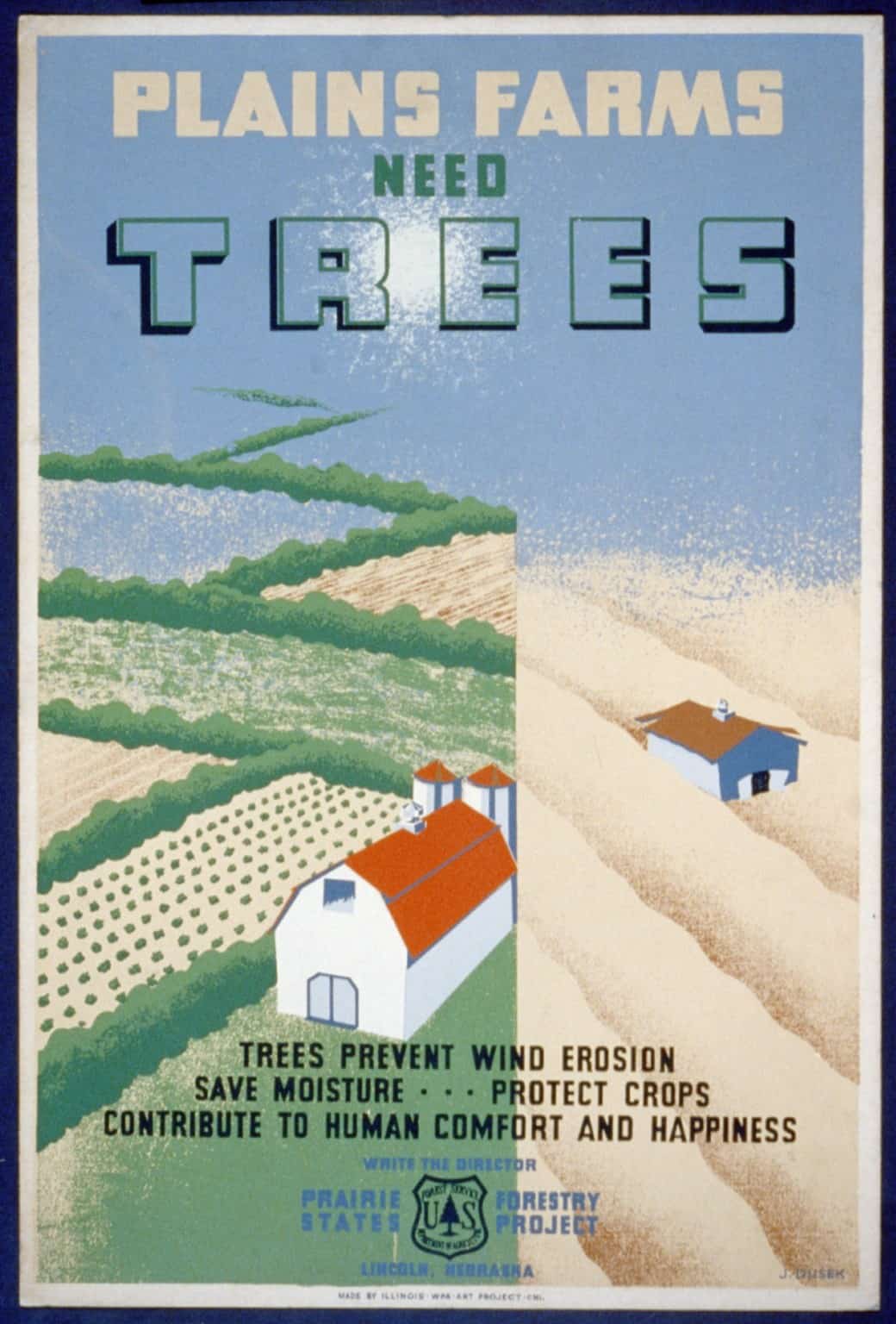
Early agroforestry poster created by artist Joseph Dusek
between 1936–1940 (Work Projects Administration
Poster Collection, Library of Congress).

Here’s an excellent piece of history by by Andy Mason and Sarah Karle from the Rendezvous (Rocky Mountain FS retiree newsletter).  I particularly liked these photos that show how a few folks with a big dream for improving the environment, almost a hundred years ago, succeeded (after hard work, research and experimentation) succeeded, and is still working today.

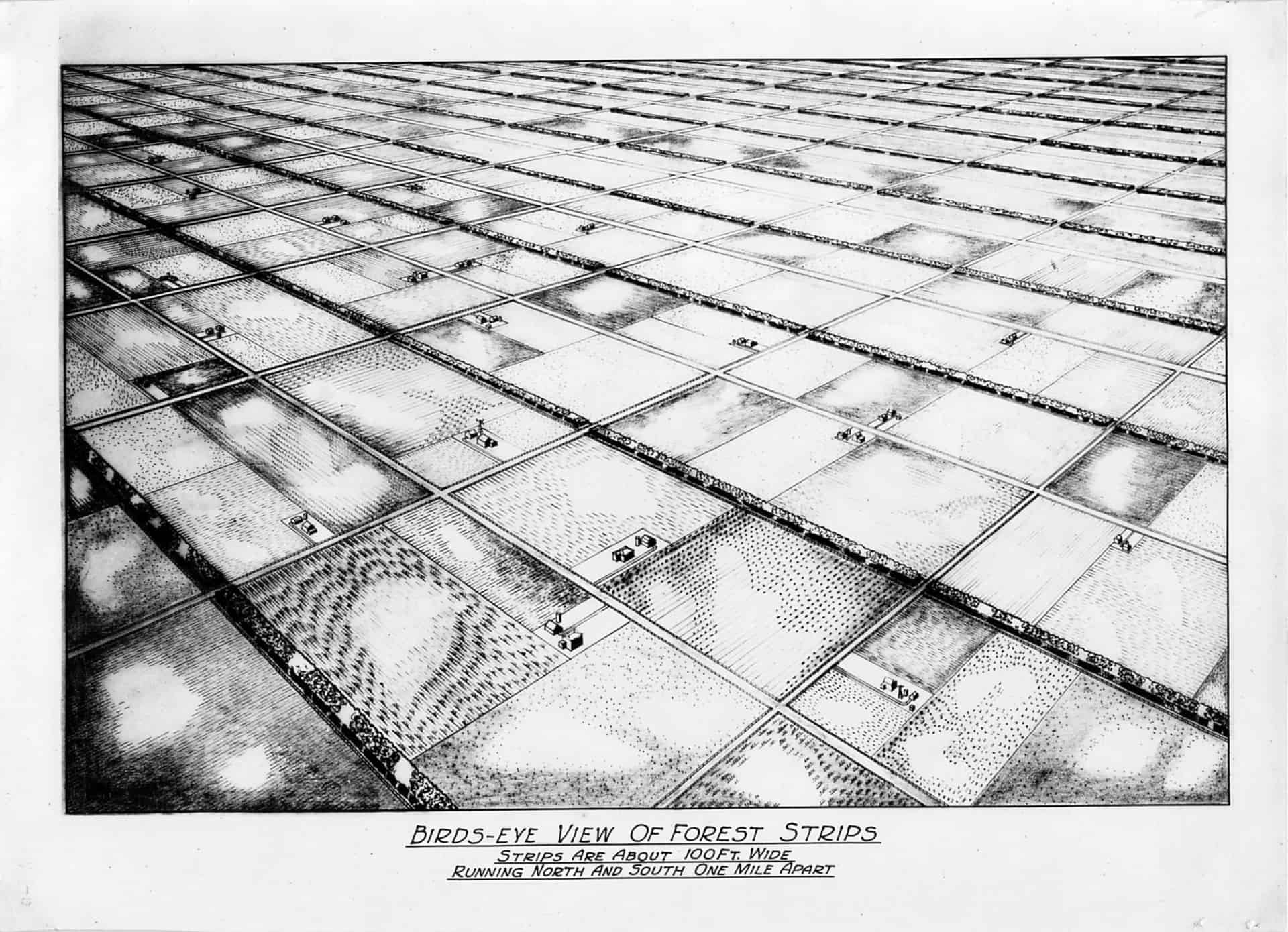
Artistic representation of shelterbelt spacing. Shelterbelt strips are planted in parallel rows following the Jeffersonian grid. Lake States Forest Experiment Station, St. Paul, Minnesota, 1934. Forest Service, USDA.


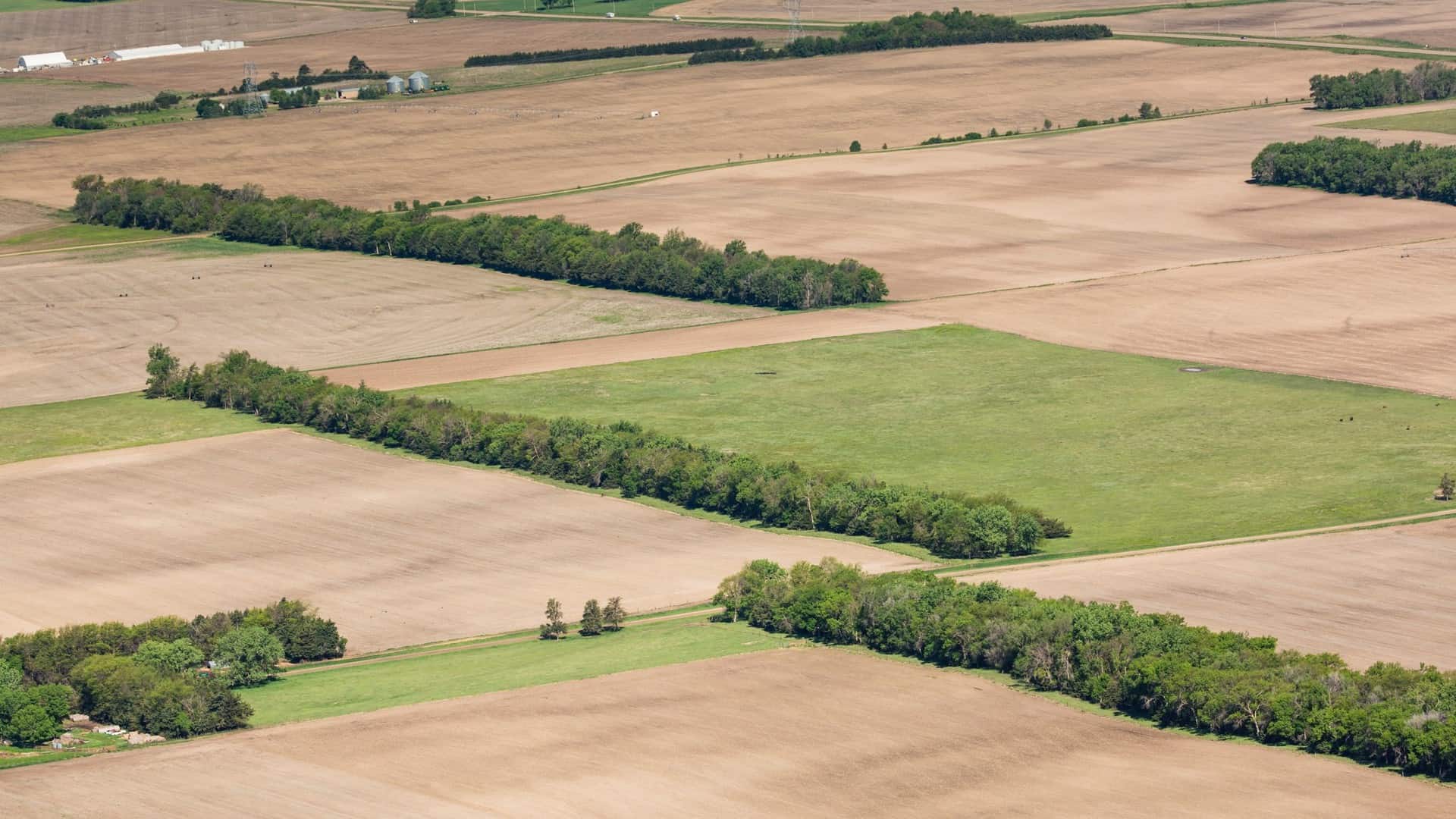
Three intact Prairie States Forestry Project shelterbelts continue to protect farmland and provide cover for wildlife. The straight rows represent a zone blurring the line between human-made and natural. Courtesy of Scott Drickey, photograph taken in Spring 2015.


Prairie States Forestry Project (1934-1942)

In 1934 President Franklin D. Roosevelt initiated the New Deal’s Prairie States Forestry Project to create “shelterbelts” of newly planted trees to mitigate the effects of the Dust Bowl in America’s Great Plains. The project stretched from North Dakota to northern Texas and helped stabilize soil and rejuvenate farm communities affected by the dust storms. Under Roosevelt’s Administration from 1934 to 1942, the program both saved the soil and relieved chronic unemployment in the region. The U.S. Forest Service was responsible for organizing the “Shelterbelt Project,” later known as the “Prairie States Forestry Project.” Paul H. Roberts from the agency’s Research Branch directed the project that was headquartered in Lincoln, Nebraska.

When FDR came to office in 1933, the Great Plains and other regions were suffering from what would become an almost decade-long period of economic, environmental, and social crises.  Several large-scale factors led to the environmental devastation of the Dust Bowl and contributed to the economic hardships of the Great Depression, leading to the social upheavals that followed. As president, FDR used conservation projects as a job-creation tool against the Great Depression, and within months of becoming president, he devised the Prairie States Forestry Project. The project, based to some degree on Roosevelt’s personal experience with forest management, was proposed as an ambitious “Great Wall of Trees” using shelterbelts across the Great Plains to reduce soil wind erosion, retain moisture, and improve farming conditions. Trees were typically planted in long strips at 1-mile intervals within a belt 100 miles thick. At the time, it was believed that shelterbelts at this spacing could intercept the prevailing winds and reduce soil and crop damage. The project used many different tree species of varying heights, including oaks and even black walnut. The plan engaged scientific knowledge with shifting political ideals, including regionalism and the role of government in the conservation of private land.

Though seemingly beneficial, the Forestry Project was ridiculed from its inception. Some professional foresters expressed doubts about its chances of success, while the general public perceived it as an outdated scheme of dubious credibility to “make rain.” Despite a general lack of scientific and Congressional support, the Forest Service worked across six states with local farmers, the Civilian Conservation Corps, and the Works Progress Administration to plant over 220 million trees, creating more than 18,000 miles of windbreaks on 33,000 Plains farms. Although Works Progress Administration and Civilian Conservation Corps workers planted the trees and shrubs, landowners were responsible for their long-term care and maintenance.  At the height of the Great Depression, the project employed thousands of residents (notably both men and women) of the Plains states and CCC members from around the country.

The program officially ended in 1942, but by 1944 (scarcely a decade after its inception} environmental and economic benefits from these shelterbelts, including land management practices, control of wind erosion, soil conservation, cover for game birds, and the creation of snow traps along highways, were already apparent. Since 1942, tree planting to reduce soil losses and crop damage has been carried out primarily by local soil conservation districts in cooperation with the Soil Conservation Service (now Natural Resources Conservation Service) with help in later years from State forestry agencies aided by U.S. Forest Service programs. Today the rows of shelterbelt plantings, while diminished by subsequent changes in agricultural policies and practices, continue to communicate culturally recognized signs of human intervention and interaction with the landscape.