Privatization vs. Insourcing

Thanks to Kitty Benzar for this link … Below is an excerpt.

The most commonly reported reason for insourcing is inadequate service quality, followed by inadequate cost savings. Using 2002 and 2007 survey data from the International City/County Management Association, researchers examined why city managers decided to bring previously privatized services back in-house. In both years, the top reasons were problems with service quality and lack of cost savings when the service was privatized.

Of the local governments that insourced services, 61% said that the reason was a decline in service quality, while 52% said that there were insufficient cost savings.2 The researcher concluded that citizens prefer local services to be locally controlled and publicly delivered.3
Insourcing is a viable and popular option.

Research shows that from 2002 to 2007, the rates of outsourcing and insourcing among local governments were about equal. 11% of municipalities surveyed contracted out services previously performed by city employees, while 12% took contracted functions back in-house.4 Insourcing has also gained traction in the federal government, as agencies including the Internal Revenue Service, U.S. Army, Department of Homeland Security, and Department of Defense are increasingly bringing contractor jobs back to the public sector to successfully save money and reduce debt.

Insourcing creates good jobs, while saving money.

A recent study by the Project on Government Oversight showed that the federal government pays almost twice for contracted services than what it would cost if public workers performed the same job, even when accounting for the long-term employee benefits of federal workers. The study found that even though many public employees are paid higher salaries and receive better benefits than contractor employees, the lower compensation of the contractor employee was more than offset by the overhead, executive compensation, and profits that the contractor company charged the government.6 By bringing contracted functions back in-house, the government is often able to create good family-supporting jobs, while saving valuable taxpayer funds. For example, when the Department of Homeland Security insourced 200 previously contracted technology jobs, the agency was able to save $27 million that year not by lowering employee pay, but by cutting out the fees that they had to pay the private contractor.

In my experience, the desire to contract is more about ideology than reality. Plus it comes with the creation of separate lobbying needs.. remember Eisenhower and the “military industrial complex”? That’s how I feel about the risk of concessionaires.

I feel like using concessionaires for campgrounds is like being the pastor of a church and sending contractors to your flock’s bedsides when they are dying. When the public is with you camping or at other times, is the time to make a difference and really touch their lives (those folks who own our public lands). Even for kids at the campground be able to say “I want to work for the Forest Service, because they helped us, or I really learned from that ranger talk.. or ..” “I want to work in public service and wear a uniform with history.” All these things are very right-brained, but the important things in life are all that way (love, spirituality, art). Rearranging our lives around the apparently cheapest way to do things, regardless of implications to others, is not a compelling philosophy.

Our former RF would say that the Park Service has that right.. the brand, the uniform, the respect for people .. I would say presence is a sacred act, the most sacred to honor a person.

Kissing the Past Gently Good-bye

mandela

Yesterday I spent the day doing other things, so didn’t see Bob’s post on the Tinder Box book until last night.

We have posted on the book before (last October, even with a photo on the cover) with some interesting discussion here.

Here is a bit of my take and another side. But as folks can tell, it is kind of silly on the surface. I was in Region 5 before the Consent Decree and people were grumpy about “losing herbicides” and not having as much money as Region 6. They also didn’t understand how women in fire wouldn’t move down from Region 6 to take a downgrade! There was something very strange about the way it was (mis) managed in 5 compared to 6. But since the people running things at the time were not women, then it really couldn’t have been women’s fault. Similarly, the CD was only in Region 5, which is not equivalent to the Forest Service as a whole. Region 6, where I started, seemed to have an attitude “just get on with it, if we don’t do it on our own terms, we’ll do it on someone else’s.” Of course, they had more money.. and so on the conversation could go.

But I think Travis said something very pertinent in his comment here, and after all, as I understand it, Travis is one of the future generation:

I also liked that Travis quoted Faulkner “the past is not dead, it’s not even past”.

This is “a new century” for the Forest Service, as the blog title suggests. Misogynistic, spiteful, morally-wrong and legally-impossible arguments are not helpful in a debate about the direction of the agency in the 21st century.

I read that comment, and then saw the Mandela quote posted above.

What would it take for us to leave our past (timber wars in Oregon, diversity wars in California) behind and imagine a future as good as we could all mutually make it?

Federal workers would get cash for pinpointing government savings

Thanks to an alert reader for this submission:

Hope there is a panel of (volunteer) externals to review these for each agency..otherwise we’ll we might have suggestions like “answering the phone even less often when federal retirees call OMB..”

I think the FS might have done something like this during the Pilot period. It was very incentivizing! Hopefully retirees can also input suggestions and maybe get a half of one percent? How about contractors and the public?

P.S. I don’t know anyone who believes that end-of-year spending flurries are the optimum use of federal resources.

WASHINGTON — By MICHAEL COLLINS

Federal employees could soon have a big incentive to help the government save money: They could take home a share of the savings.

A bill filed Thursday by U.S. Rep. Chuck Fleischmann, R-Tenn., would give bonuses to federal workers who come up with ways for the government to save money. The employees could receive 1 percent of the total cost savings, or up to $10,000.

Fleischmann said offering the bonuses would not only be a way to encourage workers to cut wasteful spending, it also could return to the U.S. Treasury millions of unused tax dollars that could then be applied toward deficit reduction.

“This is a bill that I think will appeal to all fiscally responsible members of Congress — Republicans and Democrats — because it’s just a good, common sense bill,” Fleischmann said.

Federal agencies are appropriated a certain amount of funds every year. “Right now, sadly, what happens is when a government agency is allotted funds, sometimes those funds are not really needed,” Fleischmann said.

Regardless, critics say, agencies rush to spend unused dollars in the last quarter of the fiscal year, encouraging a “use-it-or-lose-it” mentality.

Fleischmann’s bill, known as the EASY Savings Act, seeks to end that practice by encouraging government workers to look for and suggest ways to stop frivolous spending. Sen. Rand Paul, R-Ky., has filed the Senate version of the bill.

The legislation has bipartisan support and has been endorsed by the American Taxpayers Union and other government watchdog groups.

“In order to bring spending reform to Washington, we need to make fundamental changes such as improving the incentive structure,” said James Valvo, director of policy for Americans For Prosperity. “The EASY Savings Act would provide better incentives for federal agencies and grant recipients to return unused funds for deficit reduction.”

Forest Service Inflamed By Brooklyn Anti-Fracking Artist’s Smokey the Bear

Lopi LaRoe
Lopi LaRoe

Really.. she said it was in a national park and the Voice also said it was in a national park??? Editor, where art thou, editor?

Here’s the link and below is an excerpt:

As a kid raised by environmentalists, she grew up with him, she says, and feels a particular connection to the affable, but informative cultural touchstone invented by the US Forest Service in 1944. “So I thought it was a perfect culture-jamming opportunity to take this very familiar conservationist and turn him into an anti-fracking activist,” she told the Voice.

The Forest Service, on the other hand, isn’t a fan of LaRoe’s representation of a Smokey who tries to prevent “faucet fires.” Nearly a year after LaRoe began carrying images of a newly-radicalized Smokey Bear to protests, selling t-shirts, and circulating what soon became a viral meme online, the Forest Service asked LaRoe to cease and desist.

“The feds want to frack our national parks,” LaRoe said. “It’s not surprising that they’re coming after me to try and censor my political speech.”

For nearly two years, the Forest Service has been embroiled in a debate over whether to allow hydraulic fracturing in western Virginia’s George Washington National Park.

Personally, I think the Park/Forest convolution was very poor journalism. Not just accidentally wrong, but egregiously wrong on something very easy to understand and easy to check (like from the link within the article to the GW national forest).

Which lead me to this story the cited, which has nothing to do with the Forest Service but seems to be about giving loans to poor rural people for their homes. Weird convolutions.

Don’t Mess with the Forest Service: Char Miller

barbarians

This is from High Country News, Writers on the Range, here.

Below is an excerpt:

In a one-sentence release April 4, the department granted the Forest Service an exemption to its One Brand directive. You could hear the hosannas from agency retirees and staffers a mile off.

Every other department in Agriculture, however, has had to submit to the exorcizing of their respective insignias, causing blows to their staff’s morale. In British Columbia, Canada, public-land managers in the provincial forest service, learning of their American counterparts’ successful pushback, regretted that they had not had generated as forceful a reaction when their home department obliterated their own century-old pine-tree emblem in favor of yet another bland, generic symbol.

What this Forest Service protest reveals is a deep uneasiness with the growing, corporate-style flattening of difference and identity within governmental bureaucracies. To their credit, Forest Service defenders showed an alert wariness toward lockstep representation and uniform thought.

Rebranding consultants, like the ones that the Agriculture Department hired to guide its efforts, probably promoted this strategy as a positive way to harness a company’s disparate personnel. But the Department of Agriculture is not a business, and its sub-agencies’ varied missions and different objectives cannot be, and should not have been, unilaterally reined in.

As the dustup with the Forest Service suggests, a proud institutional history is a sustaining source of workplace identity and individual satisfaction. That’s a core value even Earl Butz might have respected

.

“Seeking the Greatest Good” Documentary on PBS

BSeeking_Greatest_Good_pic8

Just received this from the retirees’ network, some of the dates have already passed…

Here
is a link to the site where you can see a promo for it and type in your zip code to see if it has been scheduled.

Here are some listings..

New Hampshire Public Television: April 20, 8pm

Pittsburgh, PA WQED: April 21, 3pm

Alabama Public Television: April 21, 3pm

Washington, DC, WHUT 32: April 21, 5pm

Scranton, PA, WVIA: April 22, 7pm

Colorado Public Television 12: April 23, 7pm

Topeka, KS, KTWU: April 23, 10pm

San Bernadino, CA, KVCR 24.3: April 25, 11pm

Spokane, WA, KSPS: April 28, 1pm

Knoxville, TN, WETP 2.1: April 28, 3pm

University Park, PA, WPSU: April 28, 7pm

Dayton/Cincinnati, WPTO ThinkTV 16.1/16.5: May 28, 8pm

“Politicization” and the Forest Service: What Do We Mean?

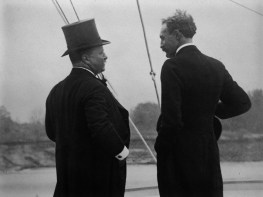
TR and GP
TR and GP

Relevant Maxims

Use the press first, last, and all the time if you want to reach the public. Get rid of the attitude of personal arrogance or pride of attainment or superior knowledge.

Don’t try any sly or foxy politics, because a forester is not a politician.

Ed raised this issue in our discussion of the Shield Snafu here, and it seems like a rich and important area. What do we mean when we say that? Traditionally, we were attached to the idea of having a career Chief.. yet if that would mean that all key decisions were kept from her/him (not saying that that is the case, I have no idea) because they are made by politicals, would that still be valuable? I don’t know.

So I thought I would expound on my opinion, and let others give their impressions. After all the Dept of the Interior has a new secretary, the USDA (will get) a new undersecretary.. perhaps one of their future staff folks will read this and consider it in deciding how to approach their work.

First, federal agencies are in the executive branch. So when one party wins, they get to have their buddies take the reins, and have primary seats on the policy advice team. They also get to reward people of varying talents, experience, and management capabilities with political jobs; often overseeing large organizations.

Let’s take a look at this article on the new Interior Secretary, Sally Jewell.

“When you think about this appointment, it’s the first time you have someone—a CEO—from our industry coming into the Department of the Interior,” Frank Hugelmeyer, OIA’s CEO, tells Quartz. “I actually find this curious, that this is a big surprise. When you look at Treasury secretaries, they’re often from the investment world. So we see this as completely appropriate and overdue.”

So if it’s OK to get CEOS (“appropriate and overdue!”) from industry for secretaries, do all industries count? Like the CEO of Monsanto for USDA Secretary? And did that work well for SEC? .. anyway, that’s a bit of an aside..

But you know, I don’t really think it’s about policy. I don’t. I don’t even care if they picked Salazar and Sherman to have an in with Colorado in the last election (pickin’ people for political purposes) as long as they’re good folks. I think it’s about how you work with the career folks and whether you treat them with respect (as fuzzy wuzzy as that is).

Like if your buddy is a neighbor to a timber sale, do you go through channels to ask questions? Do you assume your buddy is right and your employees are yo-ho’s? Do you make glaring press-covered mistakes about diversity and then flagellate others as your penance? Do you appear to spend scarce government funds on secret dumb ideas that don’t seem to have any practical role? Do you call some science folks going to a conference and tell them they can’t go because it’s a swing state during an election and could be targeted as wasteful?

I worked in DC during three administrations (close enough to observe a lot of behavior), so I have seen some things. You can read Jack Ward Thomas’s journal for some of the things he found annoying. Again, my hypothesis is that it’s not what politicals believe so much, as the actions they do to carry out their policies and how they treat career employees in general (not just their buddies). Like trusting them to do their communications job, and just jumping on specific ones when they screw up. In a large organization, people will always screw up..so keeping them from doing their job is not really a solution. At least I didn’t learn that in any management course I took.

I remember a new Undersecretary coming in once, and I attended a meeting where he was talking to alumni of our mutual school. He gave me the impression that he thought of the FS as a bunch of dinosaurs who would staunchly resist all inklings of Goodness and Light. At the time, I remember looking up a quote, something about “if you want to change people, first you have to love them” but I can’t find it now. Maybe that’s a bit strong. Or as I used to say about Ronald Reagan “if he really believes that federal employees are so useless, why does he want to be out boss?”

Anyway, what does “politicization” of the FS mean to you, good or bad? You are welcome to share your experiences.

Forest Service Gets to Keep Pine Tree Logo, But Controversy Points to Larger Problem: By Char Miller

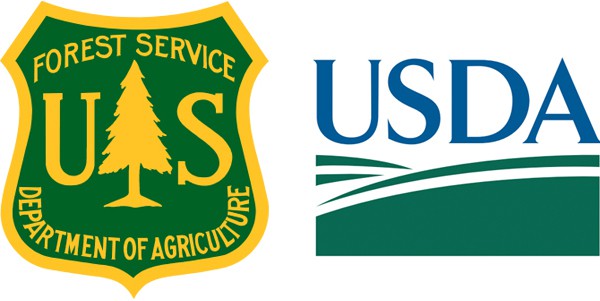
forest-service-usda-logosI, too, think there’s something creepy about the way this was handled (as well as other actions of the USDA vis a vis FS employees and citizens).

Here’s a link and below is an excerpt.

Yet so reluctant was USDA leadership to admit defeat at the hands of the Old Smokeys — the thousands of Forest Service retirees who wrote impassioned emails and letters to the secretary and his minions challenging the department’s action; so cornered were they by the onslaught of negative public opinion, that they would not allow Forest Service Chief Tom Tidwell to make the announcement directly to his 30,000 employees and would not identify a particular person with the 13 words exempting the agency from the rebranding effort.

How apt that the department set its notice in the passive voice. By doing so it took no responsibility for its actions, an adept evasion that Czarist Russia’s faceless bureaucrats routinely practiced and which Fyodor Dostoyevsky took such dark pleasure in pillorying.
Although there is no crime in being thoughtless (or evasive), the punishment in this case was meted out by those who once had worked within the system and now fought against its mindlessness. All credit for preserving the pine-tree logo goes to the agency retirees, the large number of FSx who remain committed to resolving some of the vital challenges confronting the 193 million acres of national forests their former employer stewards.

As I wrote in my column last week, they swiftly responded to what they interpreted as an attack on the Forest Service’s legacy, and on the honorable work and years of devoted service that they had given to the agency, the Department of Agriculture, and by extension the American public.
By leaping into the fray, they turned back Secretary Vilsack’s ill-conceived and ill-considered rebranding campaign. Their quick reactions also testify to the inescapable value of an engaged citizenry to a democratic society.

Smokeys..arise! You have nothing to lose but your non-confrontational style and cultural disinclination for conflict!

Restive Retired Smokeys Step Up and Speak Out

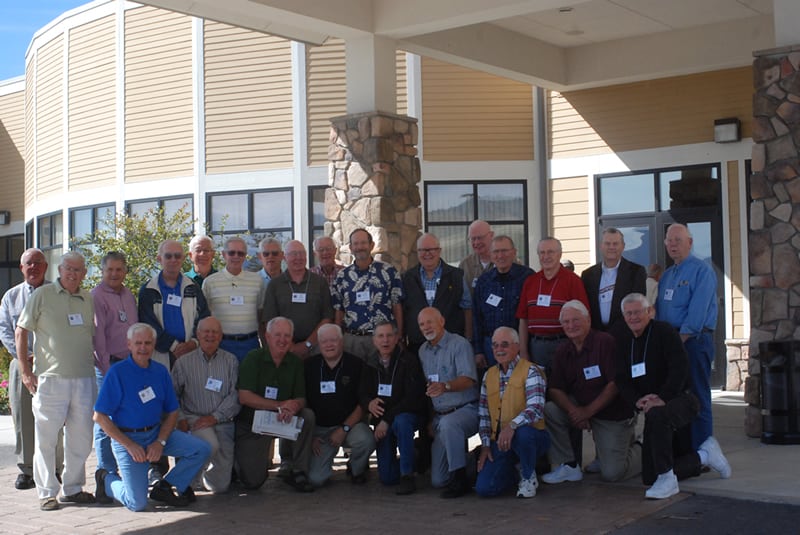
Today, having a beer…tomorrow, who knows? (Retired R6ers at Missoula Reunion 2009)

Yes, feds are generally go along to get along kinds of folks. And aging doesn’t usually make us more likely to fight. Still..check out this article. I do think the retiree group mentioned is more commonly known as NAFSR, but I could be wrong…

Here’s the link and below is an excerpt..

But that policy was kept so under wraps that not even Pacific Northwest forest supervisors were told. Some of them only heard about it in retrospect late last week — after the USDA had decided, in light of the virulent opposition from the Forest Service’s “Old Smokies” retiree group, to keep the service’s shield logo intact.
“We were all getting ready for a good fight,” said Jim Golden of Sonora, Calif., chairman of the retiree group.
“Of course the alarm went off with our group. The strength of an organization like ours is we can say things in a different way — we can say things the Forest Service (current employees) can’t because of politics.

“We went into it with the attitude that it would be no holds barred.”
The retirees, though, didn’t swing into action until barely two weeks ago because the new USDA policy — while ostensibly already in force for 31/2 months — wasn’t known to the people in the field.
Questions sent Monday morning by the Yakima Herald-Republic to the office of USDA Secretary Tom Vilsack prompted a short email reply with this statement, which was “to be attributed to ‘a USDA spokesperson’ ”: “The US Forest Service shield is exempted from the One USDA branding directive.”
Also Monday morning, Forest Service headquarters around the country received the same message, with this terse directive, from Forest Service headquarters in Washington, D.C.: “Good morning, colleagues. Per USDA, we are cleared at all levels to provide only the following comment when queried about the (Forest Service) shield. If we get further guidance, we will let you know.”
While current Forest Service employees could not comment on the record, many retirees were aghast at the idea of what they saw as the USDA’s usurping the service’s shield logo.
“I just think that’s horrible,” said Doug Jenkins, who retired as a Naches Ranger District information specialist four months ago. “It doesn’t surprise me, as if they didn’t have better things to do than do away with the Forest Service shield so they can have their own little realm.”
The Forest Service’s logo has been around since the agency’s inception in 1905 under then-chief forester Gifford Pinchot. It was a former Gifford Pinchot National Forest supervisor who was instrumental in marshaling the opposition to the shield logo’s removal.
Ted Stubblefield, who retired in 1999, said he was told about the shield logo’s impending demise two weeks ago “from an insider, a person at a fairly high level,” who asked not to be identified. Stubblefield spent the next day and a half verifying it, and then began getting the word out to the “Old Smokies.”
Almost immediately, the retiree group began receiving and forwarding letters from former employees from all levels of the service.
One retired 34-year employee sent sarcastic congratulations through the USDA’s online feedback forum, calling the new standards “egotistical bureaucratic tunnel vision” and “the best example of top-down, super-centralized, micro-managed piece of bureaucratic direction that it has been my disgust to read.”
Stubblefield said he and the “Old Smokies” began hearing from retirees “that had never commented on any issue prior to this. It really got to them. It’s pretty sad for politicians to not really look at the history of something before they decide to discard it.”
Golden, chairman of the “Old Smokies,” said the decision to merge the logos into one would also cost “millions of dollars” to replace the shield “on thousands of uniforms, thousands of vehicles and office buildings, every darn campground sign. And to do this in this day and age of budget issues?”

To the Department: being secretive about dumb ideas just makes things worse when people ultimately find out.

Harris Leaving, Wonder Who’s Coming?

Here’s a link…sounds like the Coloradans are coming home…first Salazar and now Sherman.

Here’s a quote from him…

After four years of having the privilege to work alongside the enormously talented, hard working people at USDA, and especially my colleagues in the United States Forest Service and Natural Resources Conservation Service, I am today announcing my upcoming departure from USDA.

We have worked together to accomplish tremendous things in the past four years. With the Forest Service, we developed a new Planning Rule for management of our national forests and grasslands, accelerated restoration of millions of acres of forests and watersheds, and supported traditional forest products and other uses of the national forests. We expanded recreation opportunities and supported thousands of recreation-related jobs, protected Native American sacred sites, and invested in our young people and veterans by giving them jobs and training opportunities. We worked with partners around the country to create new public-private partnerships, fostering an ethic of collaboration. In addition, we protected communities from catastrophic wildfires, supported State and private forest landowners, and conducted critical forest research.