Chief Blames “Climate Change” for New Mexico Prescribed Burn that Got Away

In its report on the New Mexico prescribed burn that got away several hours after ignition to burn 341,471 acres so far, the Chief places the blame on climate change: “Climate change is leading to conditions on the ground we have never encountered.” Washington Post commenters aren’t buying it.

1) Loosely translated, some USFS employees screwed up badly by ignoring the weather reports, and are using climate change to cover their mistake.

2) All lies and a coverup. Any first grader in New Mexico can tell you not to light a fire in the spring. The Forest Service operates under a blind and arrogant determination to set fires at any cost.

3) This actually isn’t a climate change issue. This is actually an issue of outright negligence! The Forest Service in New Mexico ignited a controlled burn on a week with red flag days, and strong winds that were gusting to gale force. That’s actually very normal weather for the higher elevation areas in New Mexico at the time those controlled burns were started. If this isn’t an example of outright negligence by the Forest Service, then I don’t know what is! “Climate change” is just a dodge that is a pile of cow crap a mile high!

4) This is BS. Who is running the agency? Larry, Moe, and Curly? The day I heard about the prescribed burn, I thought this is a terrible day to start a fire. It was windy as all get out in Santa Fe. And it is just about always less windy in the city than NE in the higher elevations (where they fires were started). At that time we had experienced no significant rain since last summer and little snow in the last two winters.
Biden to Bail Out South Dakota Sawmills with California Logs

From an E&E News article (behind paywall) today: “The Forest Service is working out the final details of a plan to keep South Dakota timber mills open by supplying logs from other areas, agency Chief Randy Moore said.” The “other areas” may include California, which is concurrently proposing the largest logging projects in state history.

Back in the good old days, the Forest Service sold timber to the highest bidder. Exceptions to that rule included a small handful of Sustained Yield Units. These were anti-competitive, protectionist measures designed to ensure that timber was milled locally. Now the Forest Service wants to do precisely the opposite — require that timber be milled far distant from the area in which it grows.

How many tax dollars will be spent on this boondoggle? This administration won’t care; in fact, I doubt it even asked the question. With hundreds of millions sloshing around in the FS’s budget accounts there’s enough to finance any crazy idea.

What’s that in barns?

In other news, the “biggest” of three fires in Alaska has burned “about 0.06 square mile,” according to the Associated Press (quoting Alaska Division of Forestry spokesperson Sam Harrel). The two smaller fires have burned one and five acres, respectively.

For the numerically challenged, 0.06 of a square mile = 38.4 acres.

PS: A “barn” is a unit of area equal to 10−28m2. You’re welcome.

Are Trees Deadly? A Photo Essay

Over the past 2 years I took these pictures while bicycling and hiking in Oregon’s national forests.

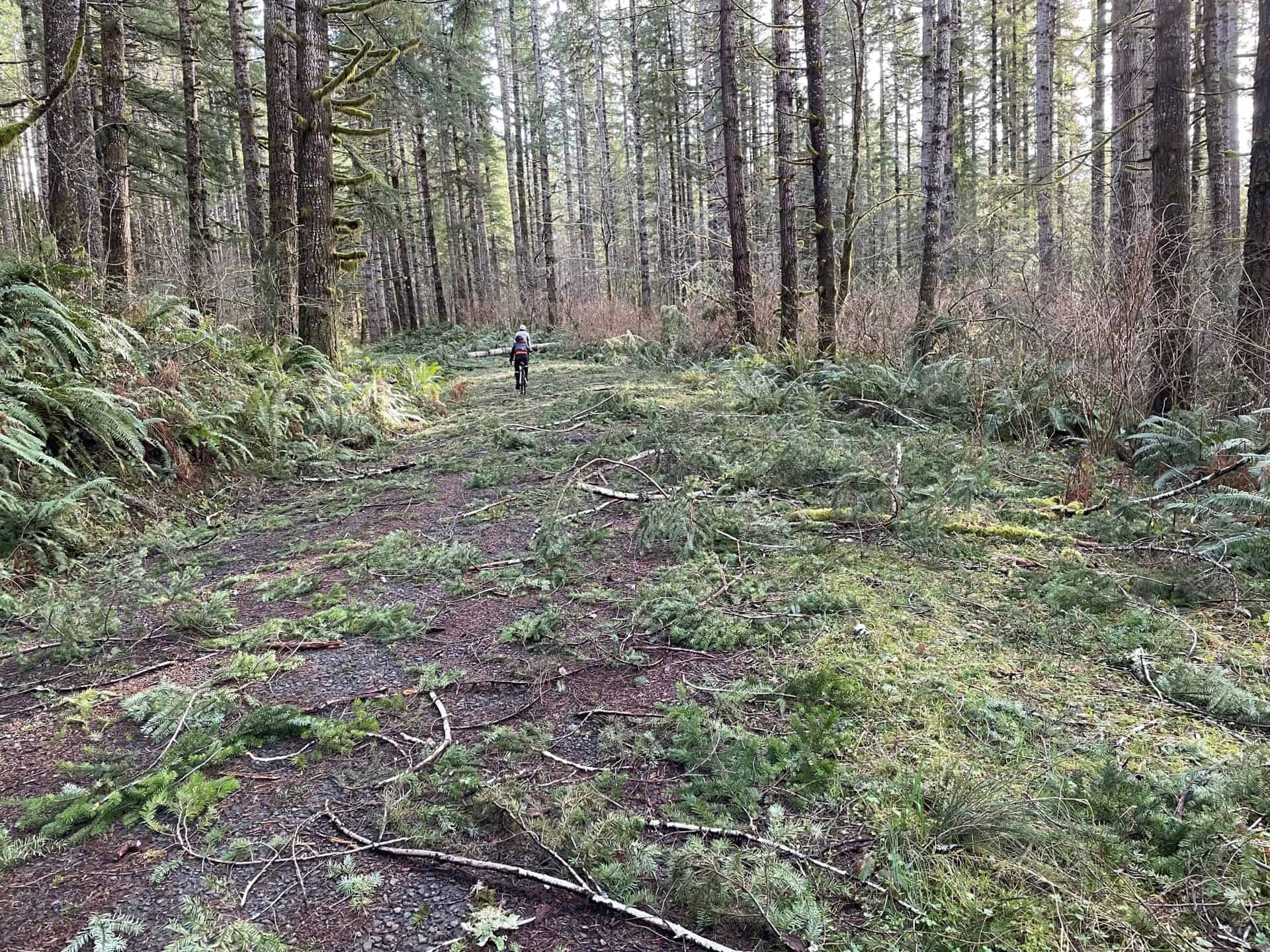
Cycling a Siuslaw National Forest gravel road — note the many down, green branches, which could have killed or injured me had I been underneath when they fell.

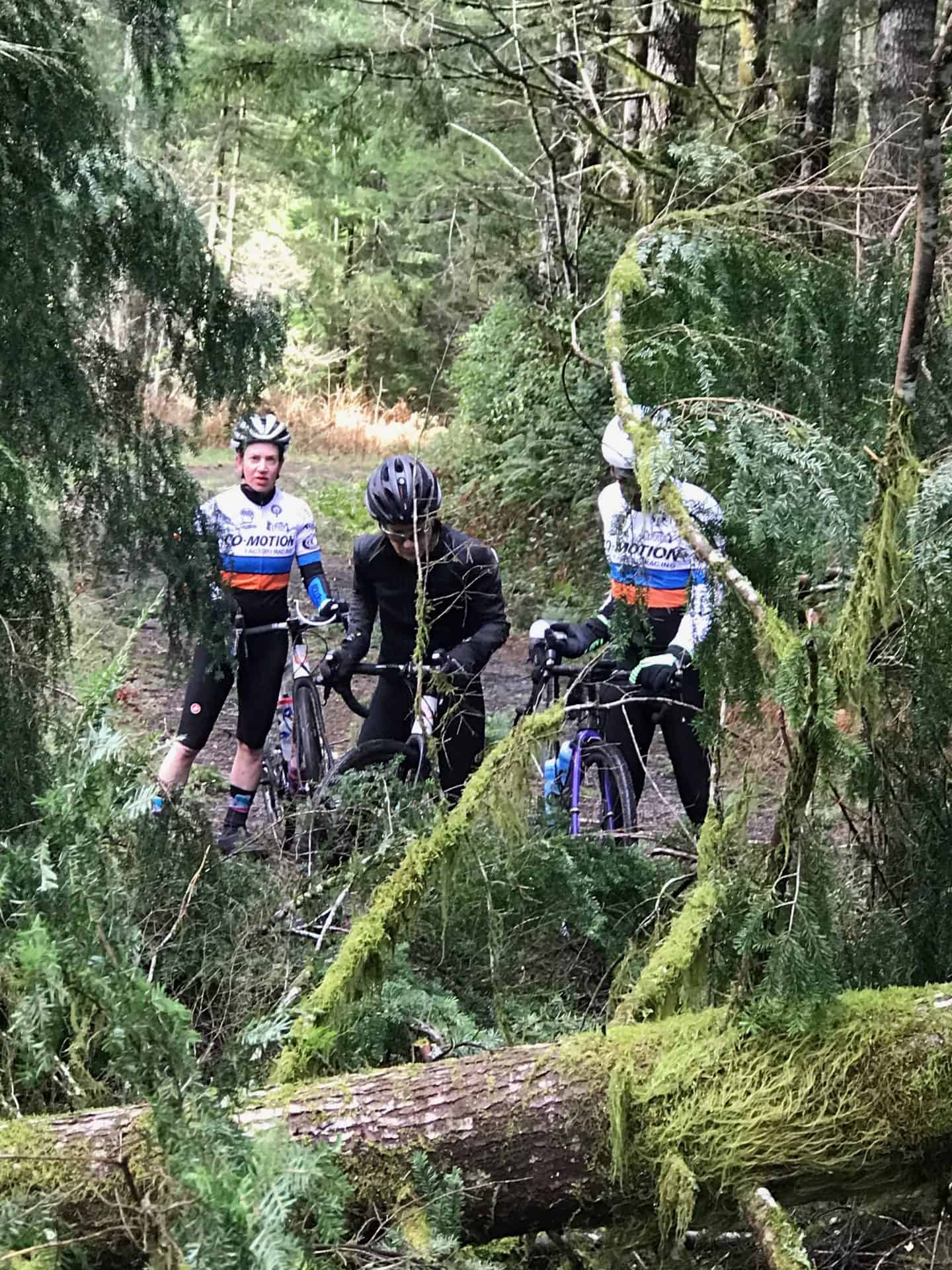
Downed trees littered the road, too. Lucky to have escaped unscathed!

I barely avoided this killer on the Deschutes National Forest last spring. Phew!

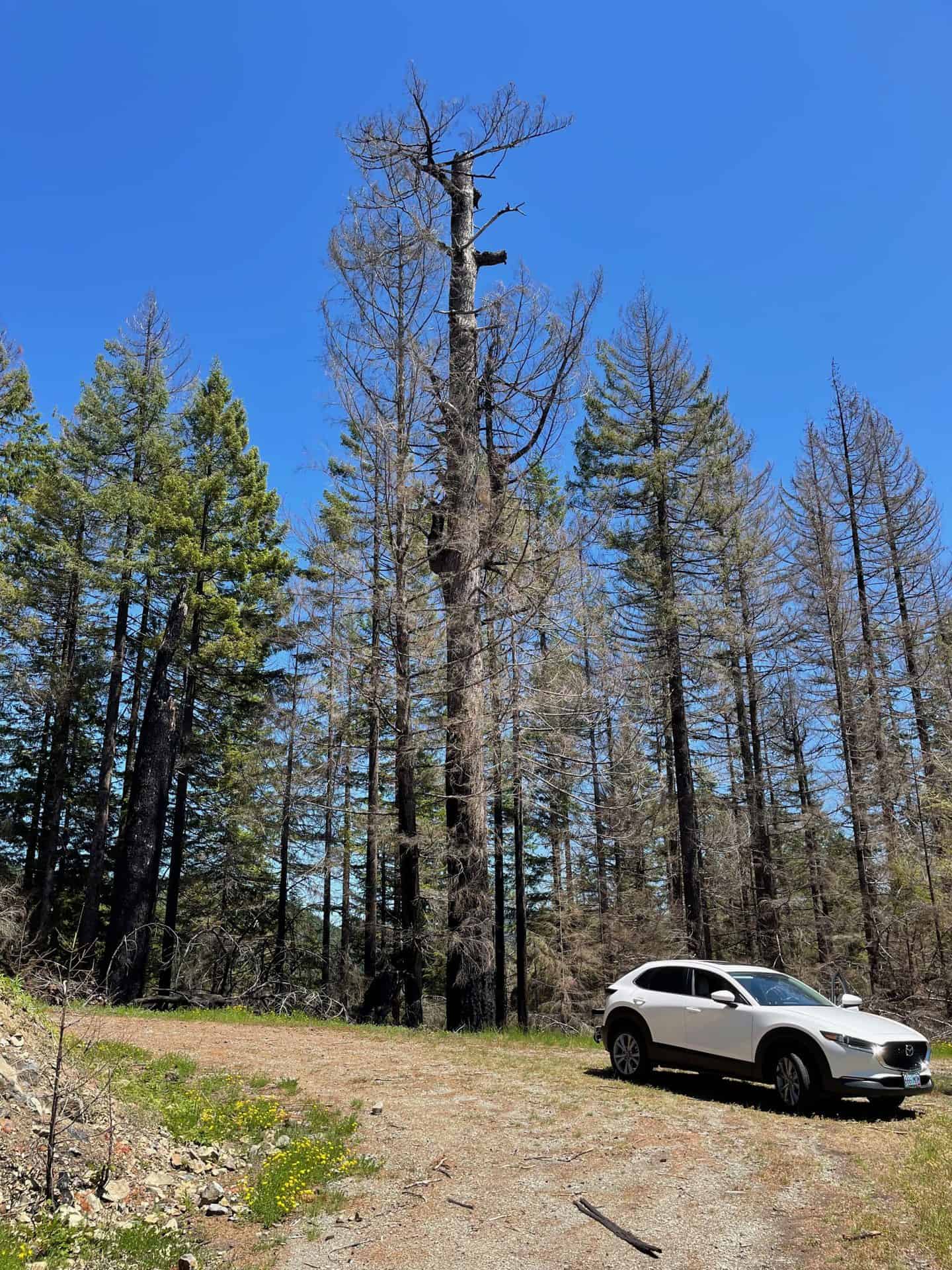
The Forest Service wants to log these dead trees because they threaten the visiting public along this highly used recreation road.

Although this decade-old landslide blocks visitor use, the Forest Service wants to log the dead trees (shown in the previous pic) beyond the slide because they are “hazardous.”

Forest Service “hazard tree specialist” said this big snag would have to come down because it is too dangerous. The FS never thought the snag dangerous enough to remove before a 2020 fire burned neighboring trees.

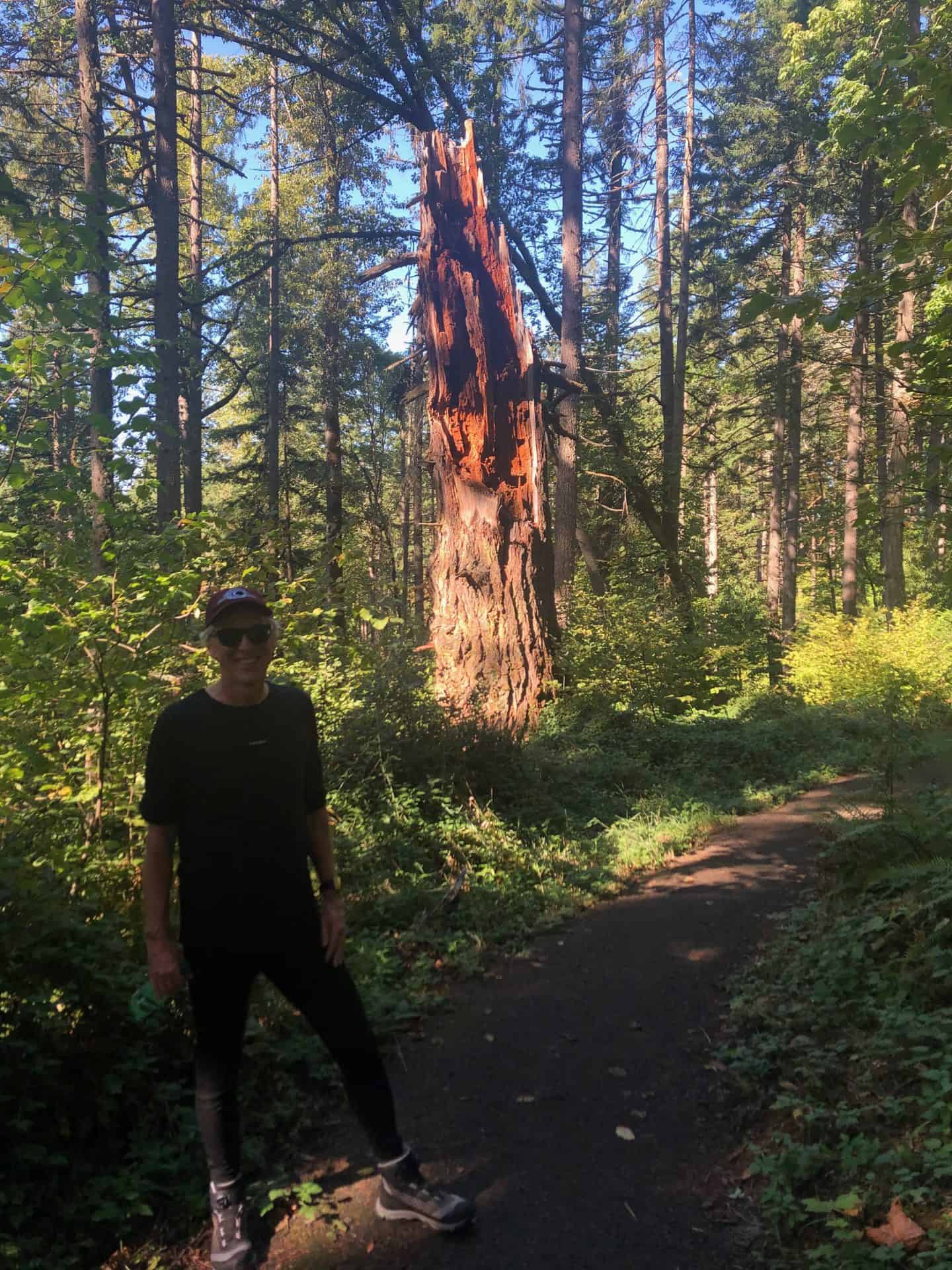
This one is sure to kill the unwary. Oops, this dead tree isn’t in a national forest at all. It threatens hikers along Eugene’s Ridgeline Trail, probably the most visited trail system in Lane County. The Ridgeline Trail has hundreds of recently-killed (drought) Douglas-fir trees within striking distance of the trail. Occasionally, they fall, sometimes across the trail. No one has died. No one is prophylactically cutting them down. Life goes on. Ho hum.

Timber Industry Hoodwinks Forest Service — Again

This is a graph of lumber value (click to enlarge). The recent low point for lumber was in April, 2020. Remember that date, we’ll come back to it below.

Now see what lumber has done since April of last year. Quadrupled in price by early 2021! That’s a lot of gelt for some lucky mills.

The luckiest of those mills are the ones that had Forest Service timber contracts expiring in April 2020. Why lucky? Because on April 10, 2020, the Undersecretary of Agriculture issued a two-year extension on the performance of those contracts. See what happened? Those purchasers quadrupled their earnings!

In my 40-year experience, Forest Service planners and economists have a perfect track record in predicting the future — they are always wrong.

Cut Them All Down


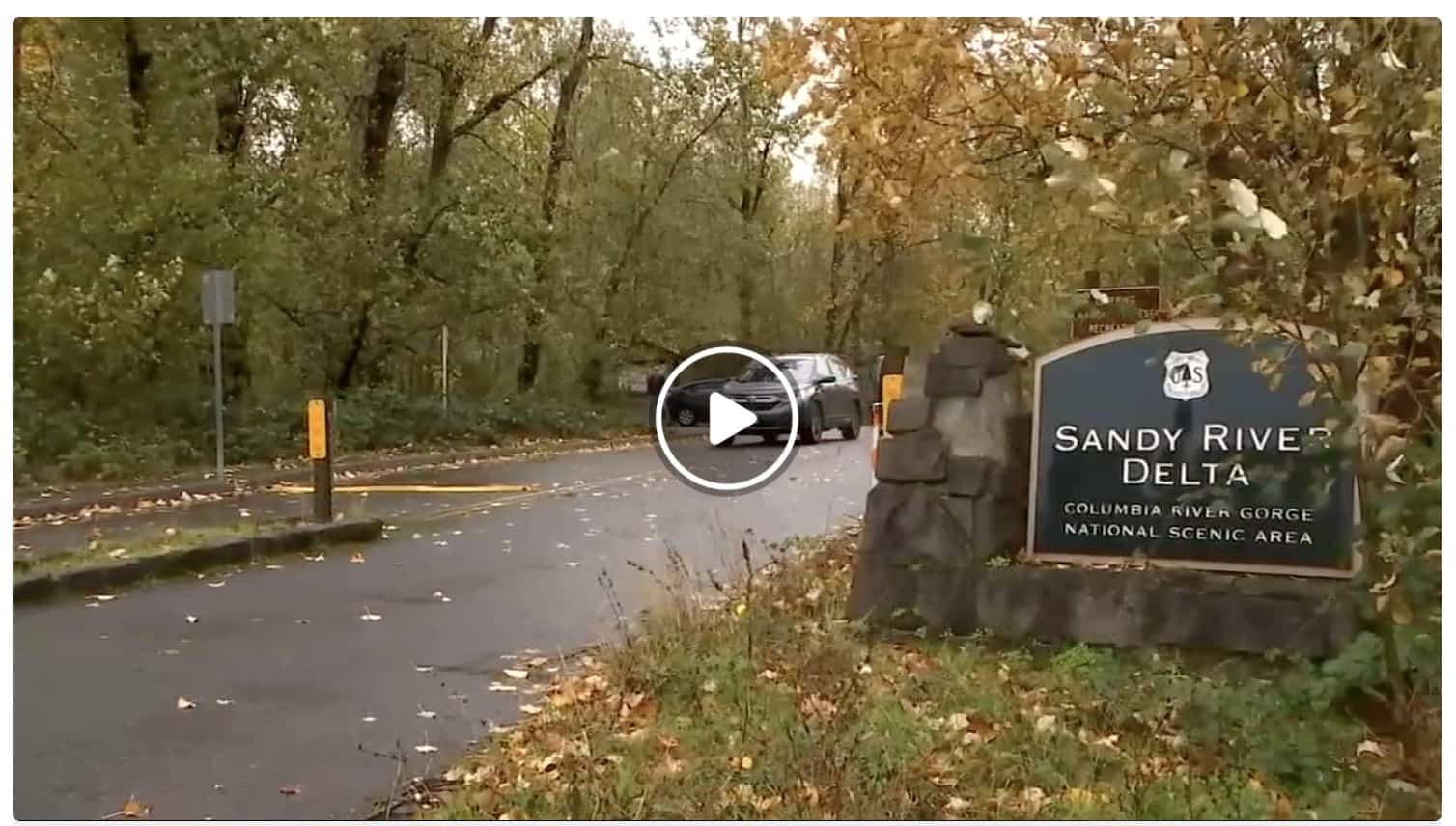
Over the weekend in Portland, Oregon, a 14-year-old volunteer with Friends of Trees was killed by a falling branch while planting seedlings in the Forest Service’s Sandy River Delta, a part of the Columbia River Gorge National Scenic Area.

The tragedy and the irony of this loss struck me hard. At a time when the U.S. Forest Service’s post-fire “hazard tree” logging is breaking the law up-and-down the Pacific Coast, what lessons should the Forest Service learn from this tragic event? Last month, for example, the Forest Service argued in court that because one “charred tree” took the life of an ATV rider in a Montana national forest, the risk associated with dead trees near roads warrants cutting them all down in Oregon’s Willamette National Forest. By that logic, the weekend’s Columbia River Gorge tragedy would counsel for cutting down all trees everywhere.

In this pandemic era, evaluating health and safety risk has become a political football (sorry, Green Bay fans). Republican governors have won a temporary injunction against the federal Nanny State’s imposition of vaccine mandates on large employers. Accusations and counter-accusations of COVID-19 misinformation have proliferated around the globe, many as “efforts to shape political debate.”

The Forest Service is not immune from the temptation to use health and safety misinformation to shape political debate. According to Dr. Travis Heggie, a world-class expert in backcountry safety (and former National Park Service Public Risk Management Specialist and Tort Claims Officer), the risk of being killed by a falling tree (whether dead or alive) while visiting national forests is minuscule. Yet, you wouldn’t know it from the Forest Service’s hyper-ventilative rhetoric around “hazardous” trees.

So before you venture out into the woods this weekend, consider these facts:

1) Falls while hiking or climbing are the leading cause of backcountry deaths (40%). Avalanches account for 15%, drowning incidents account for 10%, and heart attacks account for 10%. Deaths by tree fall account for 1% — same as deaths by bear attack.

2) You are much more likely to die where you live than while visiting our federal public lands. The National Park Service’s human mortality rate is 0.1 deaths per 100,000 recreational visits. This is much lower than the mortality rate of the overall U.S. population (844 deaths/100,000 people).

3) Trees do kill a substantial number of urban and highway road users – about 7,000 per year. Not as a result of trees falling on drivers, but because drunk/young drivers careen off roads into standing trees.

If you’re mature, as am I, use a hiking pole to prevent falling and to help clamber over down trees on and off trails. Don’t drive to the woods drunk nor swim or boat while intoxicated. Hang your food if camping in bear country. Most of all, enjoy our national forests, if the Forest Service is kind enough to let you in.

Who Does the Equal Access to Justice Act Protect?

At the end of an otherwise unremarkable article about yet another environmental group reversing in court a federal agency’s illegal decision, and getting paid for its troubles under the Equal Access to Justice Act, is the following postscript:

In fiscal 2020, 16 federal agencies reported 15,596 separate awards under the EAJA totaling more than $101 million. The Social Security Administration and the Department of Veterans Affairs accounted for the vast majority of the EAJA payments.

And the answer is: Veterans and seniors. That’s who.

Biden Nominates Homer Wilkes to Oversee Forest Service

President Biden has recycled former Obama nominee Homer Wilkes as his Undersecretary of Agriculture for Natural Resources and the Environment. Dr. Wilkes’s bio is impressive:

Dr. Homer Wilkes, a native of Port Gibson, Mississippi, currently serves as Director of Gulf of Mexico Ecosystem Restoration Team. He is oneof the five Federal Executive Council member to oversee the rebuilding of the Ecosystem of the Gulf of Mexico after the BP Oil Spill of 2010. He served as the Acting Associate Chief of USDA/Natural Resources Conservation Service (NRCS) in Washington during the period of 2010-2012. Dr. Wilkes’ tenure with the United States Department of Agriculture span’s over 41 years. During his tenure he has served as State Conservationist for Mississippi; Chief Financial Officer for NRCS in Washington, DC; Deputy State Conservationist for Mississippi; and Chief of Administrative Staff for the South Technical Center for NRCS in Fort Worth, Texas.

Dr. Wilkes also served as Naval Supply Officer in the United States Navy Reserves from November 1984 – Aprl-2007.

He received his Bachelors, Master of Business Administration, and Ph.D. in Urban Higher Education from Jackson State University. He also successfully completed the USDA Senior Executive Service Candidate Development Program (SES CDP) through American University’s Key Executive Leadership Certificate in Public Policy. Dr. Wilkes and his wife Kim, currently reside in Ridgeland, MS. They have three sons, Justin, Austin, and Harrison. He enjoys fishing, restoring antique vehicles and family activities.

Insofar as he has no experience with the Forest Service, which under the current organizational chart is the only agency Wilkes will oversee, does his nomination suggest that Vilsack will reunite NRCS and the Forest Service under NRE?

RIP Commercial Filming Permits

I shed no tears for the death of “commercial filming” permits. Last week, a federal district court judge declared the law requiring permits for commercial filming on public lands an unconstitutional infringement on speech. The court entered a permanent injunction enjoining the permit program and its enforcement.

The court’s postscript noted that “a more targeted permitting regime for commercial filming, which is more closely connected to the threat posed by large groups and heavy filming equipment, may pass constitutional muster in the future.”

Special-use permit administrators everywhere should be breathing a sigh of relief.

Forest Service Enjoys Record Fire Year

The Forest Service reports 2020 has been a record fire year, with more national forest acres burned (5 million) than at any time since 1910. This is 2.5 times the average of the last 10 years, a remarkable achievement given that fire ignitions in 2020 increased by only 5% compared to the 10-year average. 2020’s average size of 735 acres/fire dwarfs the decade’s second-highest at 422 acres/fire.

The Forest Service attributes its success to “prioritizing early suppression of wildfire ignitions.”