Line vs. Staff, Same Old -Same Old or New Twists?

The discussion of the Employee Directory has taken us to some interesting places.  I’m singling out one of our Anonymous commenters who said:

“People are, and have always been, the most important part of the Forest Service, IMHO”
Some employees don’t want to be harassed endlessly by the public for the decisions and agendas of line officers, who flagrantly ignored the scientific opinions or input of their specialists/staff, or even just initiated a project that staff find out *after the fact* about. They’re people as well.

So I think there is one question- contacting the public- and again the employee locator is for people who already know the last name of the individual they’re looking for. I can’t speak for anyone else, but if I am looking for someone I will probably now try a couple of different possibilities, potentially wasting other peoples’ time.

Still, is being “harassed endlessly” by the public a new thing? What does it look like? Do people think getting rid of the Directory will help?

As you can imagine if you read The Smokey Wire (and I had pretty much the same views when I was working) I’ve had my input ignored quite a bit, from line officers and others at all levels. When I was asked what my leadership qualities were, I’d say “I lead in having most ideas dismissed by our Regional Forester.” Not to speak of political appointees, the fores supes, and representatives of the ENGO’s or ski associations (how dare I make suggestions at all?).

So I have six possible hypotheses for these differences:

a) Degree of ownership of project -things matter more the closer to the ground you are, you have more of yourself invested;

b) Proximity of Line Officer. you might expect to personally influence a ranger or supe, but not so much a DRF or RF,

c) Personality (of staff)– my two mantras “the pay’s the same” and “if you’re not the lead mule the scenery never changes.”

d) Personality (of line) some people have jerky tendencies

d)  Culture are there are cultural issues that have changed through time.. a change in backgrounds or other characteristics of line officers? a change in expectations of roles at work?

e) Under appeciation of technological expertise as evidenced by..

Please feel free to add your own.

I know there are many  TSW folks,  line officers and staff, who are working and who have retired.

Please tell us about your own experiences, maybe a specific story, and help us understand.
 

The Rest of the Story: So Long, Farewell, Auf Wiedersehen Employee Directory

Here’s the final answer from the WO Press Office:

Regarding the employee directory, in addition to this administrative burden of maintaining this information taking away from key mission focused work federal Freedom of Information Act often require withholding employee rosters due to privacy concerns, those two reasons made the removal of this information, which is often inaccurate, a priority. As Mason stated in a prior message, those outside of the agency wishing to engage with agency staff should look to their local unit or established connections or listed contacts on agency actions for engagement.

It still seems to me that using the directory meant you already knew the last name.  There’s certainly a tension between transparency and privacy.  At the same time, it seems like it was something that made it easier for outside folks (who already know their last names) to interact with employees. Which we want, right?


Update on the Forest Service Employee Directory: Removal Was Intentional, To Be Explained Further

The last time the Forest Service employee directory went down, in 2022, we reported it to them and they put it back online.

This time I received this email:

Subject: RE: [External Email]Broken links


Hello, the Forest Service made the decision to remove the employee directory. People looking for service can search by staff area and function versus specific employees. Staff areas and units are responsible for keeping their contact information up to date and shared inboxes staffed.

I think this individual is more sanguine than I about how some units are at keeping their contact information up to date.  Does this decision help with transparency and accountability?  How can the public hold units accountable for keeping their websites up to date and shared inboxes staffed?  Perhaps a “citizen complaint hotline”? Otherwise it’s not clear what accountability mechanisms there are.

The rumor mill says that perhaps this decision was a response to an unauthorized use of the stripped emails.  I completely understand that that would be a problem.  At the same time, this appears to be an example of the well-known organizational response of punishing everyone, including the innocent, instead of finding and focusing on the guilty.

The Press Office said they were getting back to me with a more in-depth explanation, so I’ll post that when I receive it.

Anyway, here is the new “contact us” site. It helps you look up a forest on the map and go to their website.  I think they’re trying to be super-helpful to people, and maybe they had focus groups of users help them to design it.  I know it’s not cool these days to make it easy to talk to a human being who knows stuff about the topic.. but still..

Hazard Pay for Prescribed Fire

Thanks to the Hotshot Wakeup for covering this on his Substack.  So far the link to the agreement itself doesn’t work. Here’s a link to the Chief’s statement.


However, if you want to be transparent and truthful about it… it’s a massive win. It adds a 25% pay bump for Prescribed fire operations, which will only become more frequent. Here is the full verbiage on the prescribed fire hazard pay:

Prescribed Burns:

1. The Agency’s National Prescribed Fire Review in 2022 found firefighting activities associated with prescribed burns now qualify as inherently hazardous activities because changing conditions, exacerbated by climate change, have created hazards that may not be practically eliminated in a timely manner. Consistent with the Review’s recommendation, the Parties agree employees performing firefighting activities on prescribed burns will receive hazard pay for this work.

It must be noted that this change needs to be approved by the Office Of Personnel Management.

NOTE: This provision will not become effective until (i) the Office of Personnel Management (OPM) publishes a final rule authorizing hazard pay for prescribed burns; (ii) OPM publishes implementing guidance; and (iii) the Parties fulfill any resultant bargaining obligations. Employees will not receive retroactive hazard pay for work on prescribed burns that occurred before the effective date of this provision.

Other important changes were also made in housing, safety, promotions, and employee rights, but this is by far the most significant. The Forest Service and the National Federation of Federal Employees released a joint statement on the new agreement.

From Tim,

So, how was it justified that these operations are suddenly hazardous? Probably due to all the injuries and fatalities over the years…? I found they did it in a rather brilliant and interesting way.

They justified the Hazard Pay, saying Rx burns are now hazardous “due to changing conditions exacerbated by climate change.”

They did not say prescribed burns are hazardous due to everything that’s killed wildland firefighters over the last decades, including falling snags, rocks, UTV rollovers, burn-overs, heart attacks, driving accidents, chainsaw operations, and aviation crashes.

But I get it. They are admitting prescribed fire is NOW hazardous without admitting it was ALWAYS hazardous. The lawyers probably helped with that one.

I guess I’m less picky than Tim, I’m just glad they said “exacerbated by” and not “caused by.” Because I don’t think it helps the decarbonization cause to blame everything bad on climate change. It makes it seem like climate change is just another opportunity for grift and evading responsibility.  Being honest may hurt in the short run, but help in the long run.


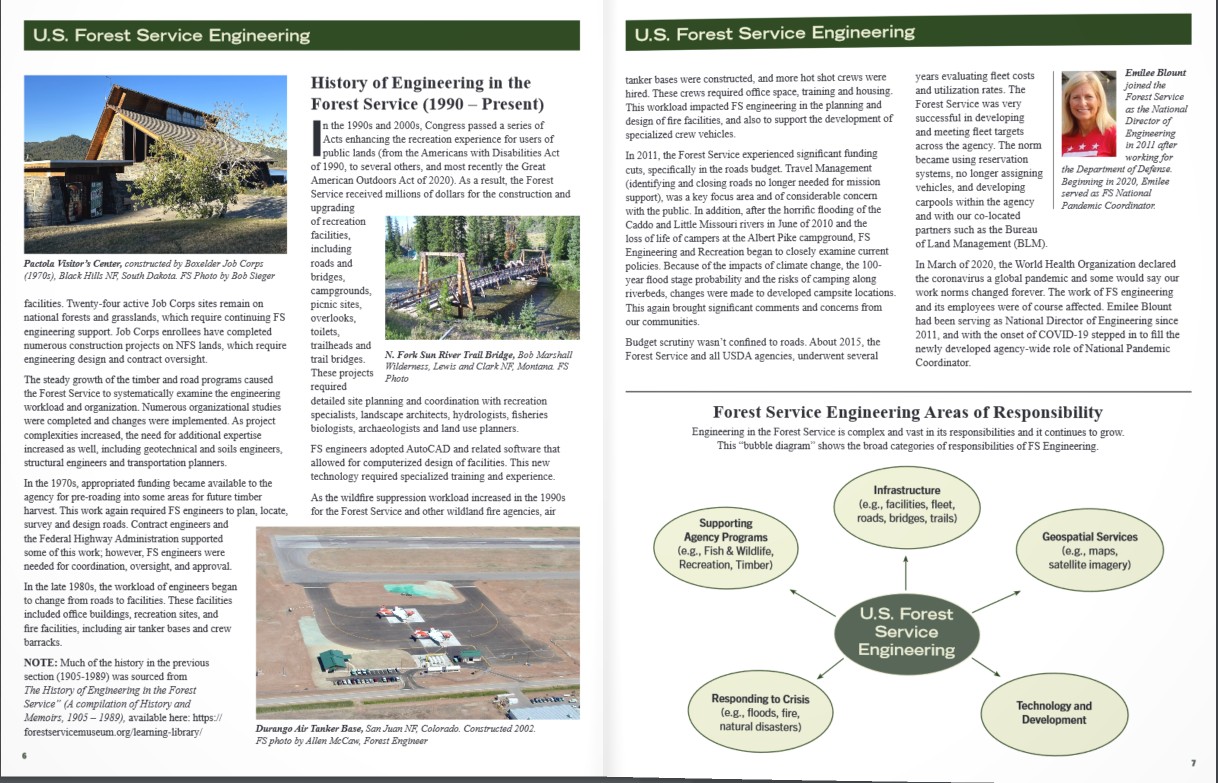
History of Forest Service Engineering at the National Museum of Forest Service History


Above, one page of the newsletter.

The National Museum of Forest Service History had a terrific newsletter this month with a history and update on Forest Service Engineering.  They tend not to be in the news much, except for local papers, so shout-out to all FS engineers, current and retired! Not much drama, just doing their very important work, day in and day out.

Here’s a link to the newsletter.  There are great historic photos.  If you are interested in learning more about any of the topics, or prefer a different format, head to this link.

Feel free to share stories in the comments.


Chief Moore Announces FS Temporary Housing Refund

Here is a link; letter from Chief Moore

Let me begin by saying thank you.  Thank you for sharing your ideas and stories at our all-employee forums and the many other avenues for sharing. We heard you and are using that information to work with employees and the department to find solutions to the housing affordability crisis. 

Today, alongside Secretary Vilsack and Under Secretary Wilkes, I am pleased to announce a temporary housing refund that we estimate will benefit 4,500-5,500 employees in Forest Service housing through the end of fiscal year 2024. This refund will cover half the rent for the following Forest Service employees in government-owned housing:  

1. GS 1, step 1, through GS 10, step 10 

2. Wage-grade employees 

The refund also will cover 10% of the rent for employees GS level 11, step 1, through GS 13, step 10. 

This temporary housing refund will address the March 10 annual rental rate increase and will be retroactive to that date. Secretary Vilsack, Under Secretary Wilkes and the National Federation of Federal Employees were key to getting this refund and I am including messages of support they asked me to directly deliver to you at the bottom of this email. Employees will receive the refund within 9 to 11 weeks. It will be provided within our existing budget; we will make trade-offs to focus on this high-priority need. 

The amount of rent charged for government civilian quarters is determined according to government policy described in Circular A-45. The bipartisan Wildfire Commission has recommended review and potential updates to these policies. We and the Office of Management and Budget (OMB) are reviewing these recommendations.

The temporary housing refund is provided under the Secretary’s emergency subsistence authority under Section 5 of the Department of Agriculture Organic Act of 1956, 7 U.S.C. 2228, which was delegated to Under Secretary Wilkes and the Chief of the Forest Service. This emergency subsistence authority authorizes the Secretary of Agriculture to provide subsistence, including for quarters, during emergency conditions. 

Since this refund relies upon specific emergency conditions, it is temporary while emergency conditions last. USDA’s Forest Service anticipates leveraging the emergency authority for no more than a year while we concurrently work on government policy changes that address the emergency conditions. Once emergency conditions are addressed, the Forest Service will provide a 60-day advance notice to employees announcing the end of the emergency housing refund. If you live in government-owned housing, there will be future information sessions to help you understand the housing refund and answer any questions you may have. These sessions are tentatively scheduled for the week of July 8. More information will be provided, to include virtual invitation links. Frequently asked questions are available on the National Housing Hub SharePoint site.


I also want to acknowledge that this refund doesn’t benefit all our employees. Housing affordability significantly affects the lives of employees across the agency. We are taking this action with the authority and resources available to us. We need to use all the tools in our toolbox, even if they aren’t as far-reaching as we’d like. We continue to: 

1. Submit housing-specific budget requests for congressional consideration through the annual budget process. 

2. Use all possible funds from the FY 2024 budget to prioritize investments in employee housing. 

3. Finalize the National Housing Strategy, a comprehensive plan that will assist the agency in addressing the affordability, availability and condition of Forest Service housing. 

4. Continue to make progress and administer our existing Quarters Program thanks to employees like our national housing project manager, Procurement and Property Services housing managers, and district-based tenant managers. 

5. Collaborate with NFFE. 

These collective efforts are consistent with our needs and align with the recommendations of the bipartisan Wildland Fire Mitigation and Management Commission. We continue to explore other creative opportunities to assist you with obtaining affordable housing. I want to emphasize our unwavering commitment to ensuring you have access to safe, comfortable and affordable housing near your duty station.  


Your well-being is of utmost importance to us, and we will persist in our efforts to provide you with the support and resources you need to thrive in your role for the Forest Service. Thank you for your hard work and dedication.  

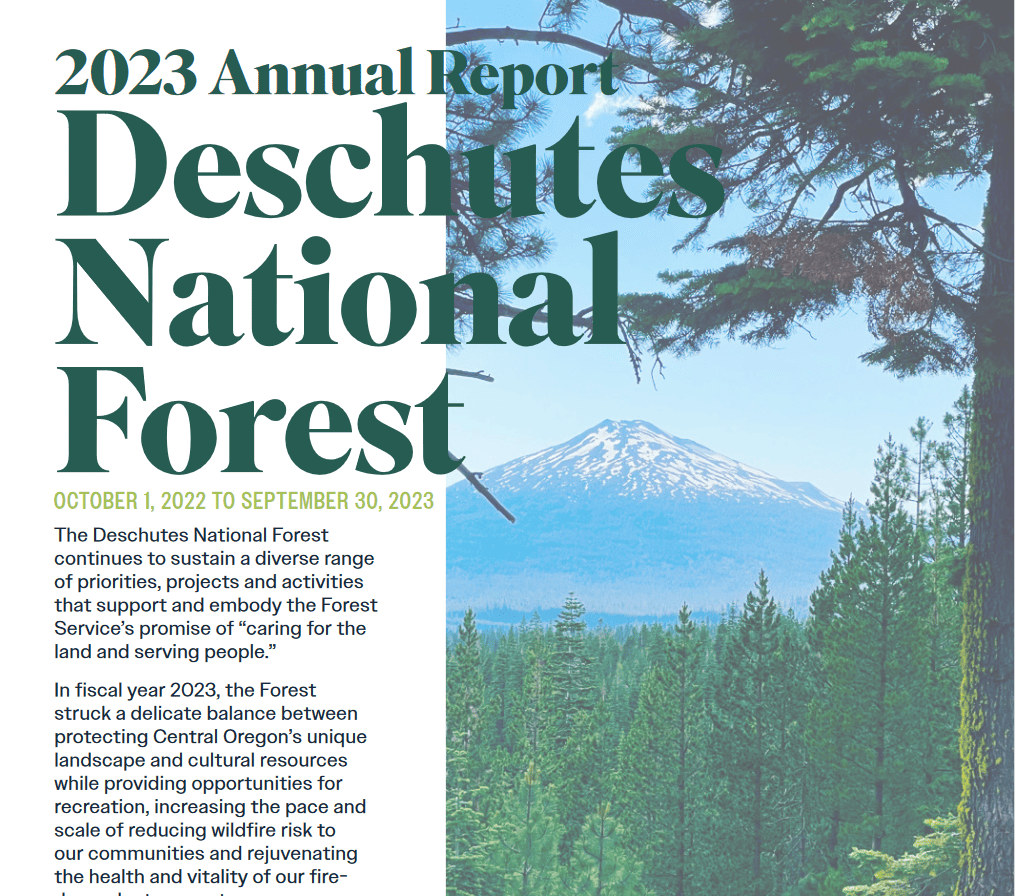
Deschutes National Forest Annual Report 2023


Thanks to the Old Smokeys’ mailing list for this.  I’m up for posting any Forest annual reports that folks send.  We’re always talking about things people disagree about, controversies and difficulties.   I can’t even get journalists interested in the Stanislaus success story.  I think it’s important to try to highlight all the great work that Forest Service employees are doing.

Here’s the link.  Lots of great work and great photos.  Thanks Deschutes (and for this publication)!

Firefighter Pay: Something We All Agree on? Op-ed by Steve Ellis


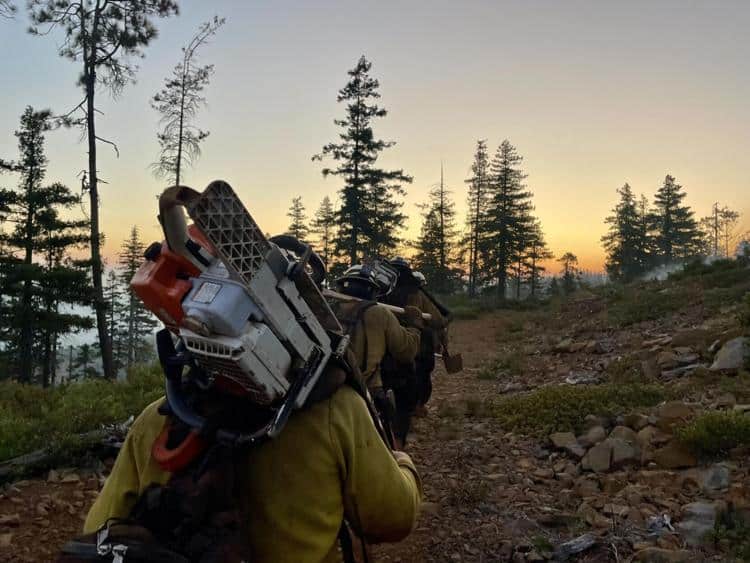
Mad River Hotshots set out in the morning to work on the Smith River Complex in Oregon in September.
Inciweb

Many of our public policy issues are too important to fall prey to “death by partisan tomfoolery.”  Firefighter pay is one of them.  Probably too “small” in the eyes of some to be anything more than a political football; maybe, just maybe, it’s the right size to be influenced by folks like us reaching our to our Congressional folks, Tweet Xing, or however people think they might influence the process.  Here’s an op-ed by Steve Ellis of the National Association of Forest Service Retirees in the Bend Bulletin. If you can’t access the link, try different devices/browsers, I’ve had success with some but not others.

Wildland firefighter pay is not a partisan game

Our federal wildland firefighters need our help, and time is of the essence. The Infrastructure Investments and Jobs Act of 2021 provided funding to increase base salaries for federal wildland firefighters up to $20,000 or 50% of their current wages in an effort to address historically and comparatively low pay and widespread staffing shortages. However, without action, that funding expired in September 2023. Although Congress extended the current funding levels through the three separate stopgap measures, they have yet to pass a permanent solution, and the next congressional deadline for a solution is March 1. The National Federation of Federal Employees estimates up to half of wildland firefighters might possibly leave the federal service if Congress does not permanently secure their pay and benefits.

The National Association of Forest Service Retirees is dedicated to sustaining the Forest Service mission by adapting to the challenges of today and tomorrow. We believe Congress and our country should work to ensure that these brave men and women who put their lives on the fireline to protect human life, our communities, watersheds, wildlife and fisheries habitat, and other forest and rangeland values, should not have their employment fraught with financial insecurity and instability. Their commitment and sacrifice should allow them to provide a living wage for themselves and their families.

Forest Service Chief Randy Moore recently met with our organization’s board of directors and told us that many federal firefighters cannot afford housing, and some are even living out of their cars. We understand that such a pay reduction could amount to up to $20,000 for some of these firefighters, forcing them to leave personal and family decisions in the hands of Congress. Alternatively, many might leave the service for more assured compensation and stability. Solidifying these benefits would help to successfully implement the National Cohesive Wildland Fire Strategy and the recommendations from the Congressional Wildland Fire Commission. At the most basic human level, it’s simply the right thing to do.

This is one of the factors that can contribute to a shortage of federal wildland firefighters, and the timing couldn’t be more important. While we may not yet be in the thick of wildfire season, agencies are actively finishing the recruiting for the upcoming season. Timeliness is important for meeting the hiring demands for the needs for this summer. This is not a United States issue alone. Last year the federal wildland fire community responded across Canada to support our northern neighbors and personnel have been assisting in Chile. Our international agreement with Australia and New Zealand is ready for implementation.

It could be argued that the longer Congress waits, the more our elected officials are putting our communities at risk. This shouldn’t be another “partisan game” over which party will get their way. We are talking about real communities that could be left without adequate services due to insufficient staffing, or firefighters leaving the service. We are talking about real men and women with a duty to provide for their families. We are also talking about putting our firefighters in harm’s way by stretching them too thin. We are conceivably talking about life-and-death consequences for firefighters and anyone who lives within the possible reach of wildfires as a result of Congress’ inaction. For Oregonians, that’s most of us.

It’s time for Congress to fix this issue, permanently.

Steve Ellis is chair of the National Association of Forest Service Retirees and lives in Beavercreek, Oregon.

Donate Now: National Museum of Forest Service History Has Opportunity for Up to $500K Match


I don’t usually make donation requests for anything besides TSW, but this is an amazing opportunity for the Museum.  A group of  dedicated folks, current employees, retirees and a wide array of partners, have been working on the Museum since at least the 90’s and groundbreaking in Missoula is THIS spring (!).

The National Museum of Forest Service History is close to finalizing our Capital Campaign to build the National Conservation Legacy Center in Missoula, Montana. Once it is built, the Center will be a one-of-a-kind, world class destination. It will showcase America’s conservation history – the U.S. Forest Service, its people, partners, and legacy.

If you’ve ever thought about donating, now would be the time, because donations will be matched (individual or corporate!).  Please forward this post to anyone who might be interested..

BIG NEWS!
Donor has offered us up to $500,000. IF WE CAN MATCH IT!

Our highest priority continues to be completing the Capital Campaign for the National Conservation Legacy Center (CLC), the flagship building on our Missoula campus. We will break ground this spring but still need to raise funds to ensure all costs are covered for both the building and exhibition.  Here’s the website.. the video of the Museum is above.


MORE ON THE BIG NEWS
: At the end of December, one of our long-time donors, offered to help us finish the capital campaign. He and his wife will donate up to $500,000 by matching every new cash donation (both individual and corporate) we can raise by June 30,2024. In essence, any new capital campaign cash donation we receive by June 30,2024 will be doubled! Our very generous donor has provided us a tremendous opportunity to complete the capital campaign!


A Three Sisters Wilderness Trailhead Presence: As Summers Went By

With apologies to Les and to readers, Les had sent me a series and I got them out of order.  He recently sent me the correct order, so here goes…-Sharon

By Les Joslin

I often reflect on the variety of people and predicaments experienced during my Green Lakes Trailhead summer duties. A few anecdotes make one believe just about anything could happen there. That, of course, meant volunteer information specialists and I had to be ready for just about anything.

A Couple Wilderness Old-Timers

On July 7, 1995, Forbes W. “Buck” Rogers of Spokane, Washington, and John Barton of Bend, Oregon, visited the Green Lakes Trailhead Information Station. Mr. Barton had been the Sparks Lake recreation guard in the summer of 1964 and Mr. Barton the first Bend Ranger District wilderness guard in the summer of 1965. I enjoyed their stories of those days, particularly when Buck told me part of his job in 1964 was to bury the garbage visitors left behind in the Green Lakes basin—before the Wilderness Act of 1964 had been signed that September, and John told me part of his job in 1965 was to dig it up and pack it out. In those days, they told me, the parking area and trailhead were across Fall Creek from their current location, and both had stayed in the old Fall Creek Guard Station cabin just a few hundred yards north of the current trailhead. We ambled up that way, poked around in the pumice, and actually found a small piece of green-painted wood from the structure.

A Shooting Incident

On July 29, 1995, I heard gunshots to the west of the Green Lakes Trailhead Information Station. Within a couple of minutes, visitors drove in and reported a man indiscriminately shooting at the Devil’s Garden not far west of my location.  I reported the incident to Central Oregon Dispatch, and within fifteen minutes a Forest Service law enforcement officer arrived, arrested the person at gunpoint, and took him to the Deschutes County Jail.

A Fire on Devils Hill

My daughter Wendy, who served 17 days as a volunteer wilderness information specialist in 1996, was staffing the Green Lakes Trailhead Information Station on July 26 when a violent lightning storm ignited a fire on Devils Hill just over a mile to the northwest. In response to her report of the smoke to Central Oregon Dispatch, she watched eight smokejumpers jump the fire about 30 minutes later. I often wonder if this experience influenced her toward studying forestry at Oregon State University.

A Los Angeles Times Writer

On August 23, 1996, John McKinney, Los Angeles Times hiking columnist, visited the Green Lakes Trailhead Information Station. He was researching his book Great Walks of North America: The Pacific Northwest, published by Henry Holt and Company in 1997, for which I provided him information and photographs and in which he profiles my wilderness service and my wilderness education project. “When hikers meet a helpful wilderness ranger, it adds to their experience and makes their trek all the more special,” he quoted me.

A Controversial Fee Program

In 1997 it fell to me to help implement the Pacific Northwest Region’s controversial Trail Park Pass program mandated by the Federal Lands Recreation Enhancement Act of 1996. By that act Congress permitted—and, for all practical purposes, required—federal land management agencies to charge fees to cover recreation facility operation expenses previously covered by appropriated funds. In the Pacific Northwest Region of the National Forest System, wilderness visitors in “participating national forests” paid a parking fee at wilderness trailheads.

Public protests resulted and cost my project some good trailhead volunteers. I couldn’t blame them for not wanting to be targets of the more vitriolic protesters. Others stuck, helped explain that Congress had required the Forest Service to charge user fees in lieu of reduced appropriated funds to maintain recreation facilities including wilderness trails, and we sold $6,337 worth of the passes at the station that summer. Those receipts increased to $7,975 in 1998 but decreased to less than a third of that sum in 1999 as more visitors purchased annual passes prior to visiting and day passes became available at self-service pay stations. Although the public increasingly accepted the fees, protests continued as the system evolved pursuant to subsequent acts and programs.